





The Top 100 Most Visited Websites in the USA (August 2026)
by Shai Belinsky10 Min.
Sep 29, 2026
 Research Intelligence
No man is an island. That classic saying also applies to analysis. Just as humans struggle on their own, data analysis and company growth are virtually impossible to achieve with your data alone.
When you’re analyzing your internal strengths, weaknesses, opportunities, and threats in a SWOT analysis, having access to the industry data keeps you connected to the bigger picture and provides key information about external opportunities to optimize your business plan.
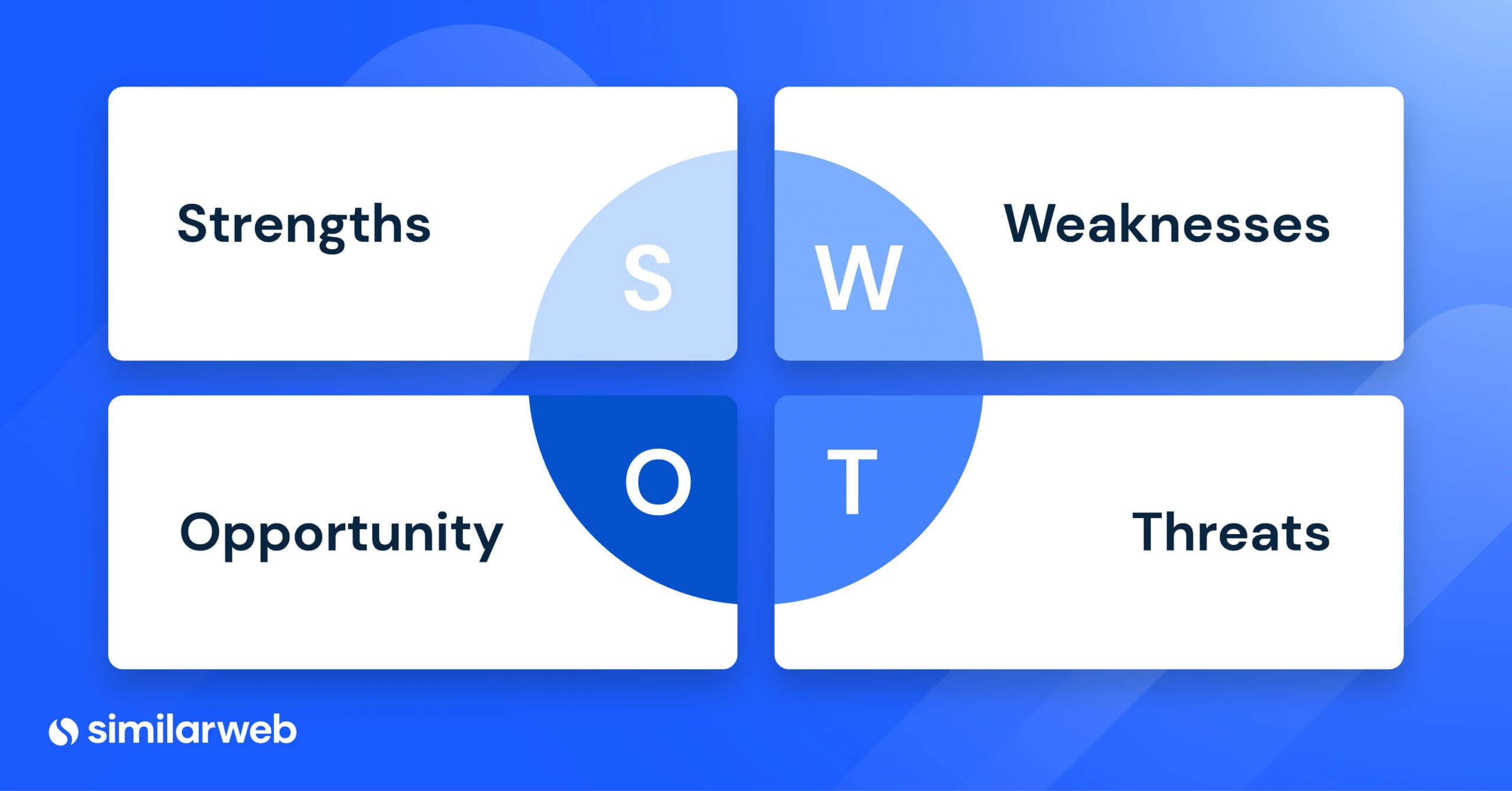
In an industry SWOT analysis, you focus on your larger industry with company and market research. The metrics important to your industry are going to be different from others. In this article, we’ll break down SWOT analysis using a few key industries as examples – marketing, media and publishers, retail, and gaming. We’ll show how you can use industry traffic and web metrics effectively to accelerate your strategy.
We’ll also provide hands-on examples based on accurate benchmarks to inform your strategic planning process.
Gaining a competitive advantage over your rivals and industry starts with asking the right questions and metrics.
This lets you manage your growth with more confidence and less guesswork. With the right metrics and data, you can be more proactive and less reactive. Instead of simply following market trends, you can create and influence them in accordance with your company’s needs.
Here are some of the questions to kickstart a digital marketing industry SWOT analysis:
In the following paragraphs, we’ll present you with some industry examples, including actual benchmark data, so you’ll see how the industry SWOT analysis works.
A SWOT analysis template can help you keep track of your company’s strengths and external environment over time. Download our free, easy-to-use template now.
Online media sites thrive on traffic volume. Publishers want visitors to spend enough time-consuming content on multiple pages. The metrics you’ll monitor for this industry are therefore different from others, which might focus more on conversion.
For effective strategic management, you’ll want to know where your traffic is coming from and which devices people use to access your site. Characterizing your audience according to website demographics and behavior is equally useful.
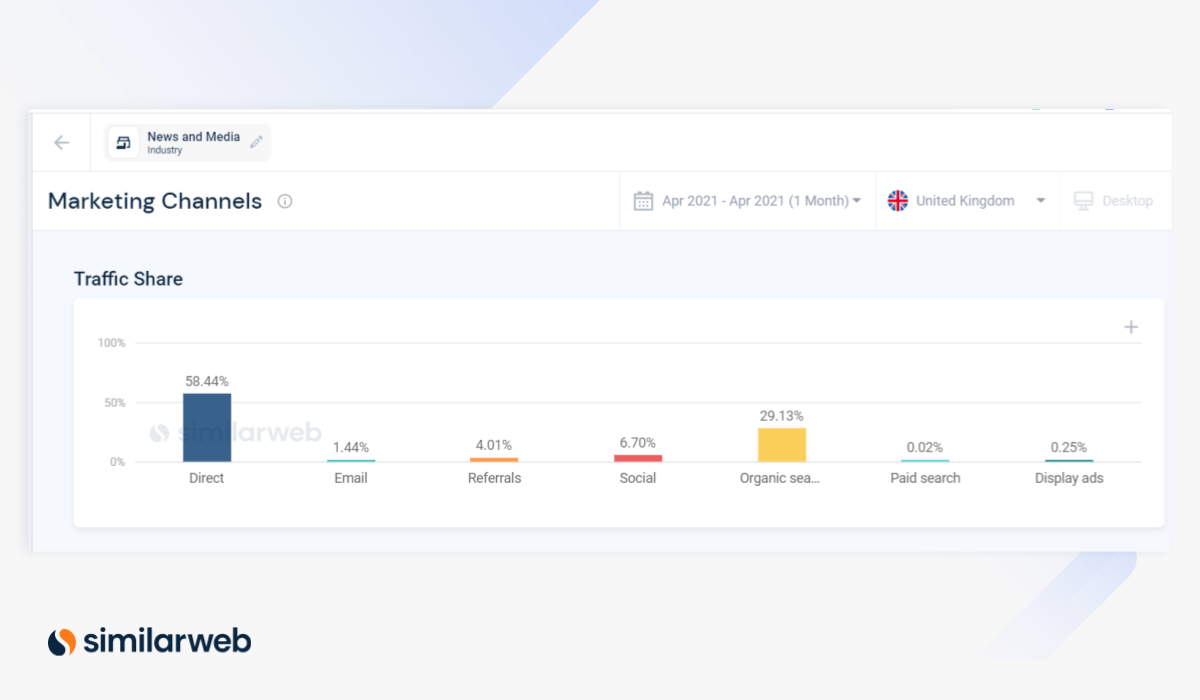
To get an idea of where these numbers position you in the market, let’s look at some significant industry benchmarks.
To see how this translates into a typical business model in the practice of strategic decision-making, let’s look at an example. We’ll imagine you run a major metropolitan news site in California, such as the Los Angeles Times, and publish both local and international news.
The key takeaways: Targeting keywords of Hollywood-related news about stars that are popular with millennials can help you capitalize on your opportunity with the millennial audience. Using Similarweb’s keyword research tools, you can find the specific keywords and trending topics that drive traffic to competitors’ sites and find the ones you should optimize.
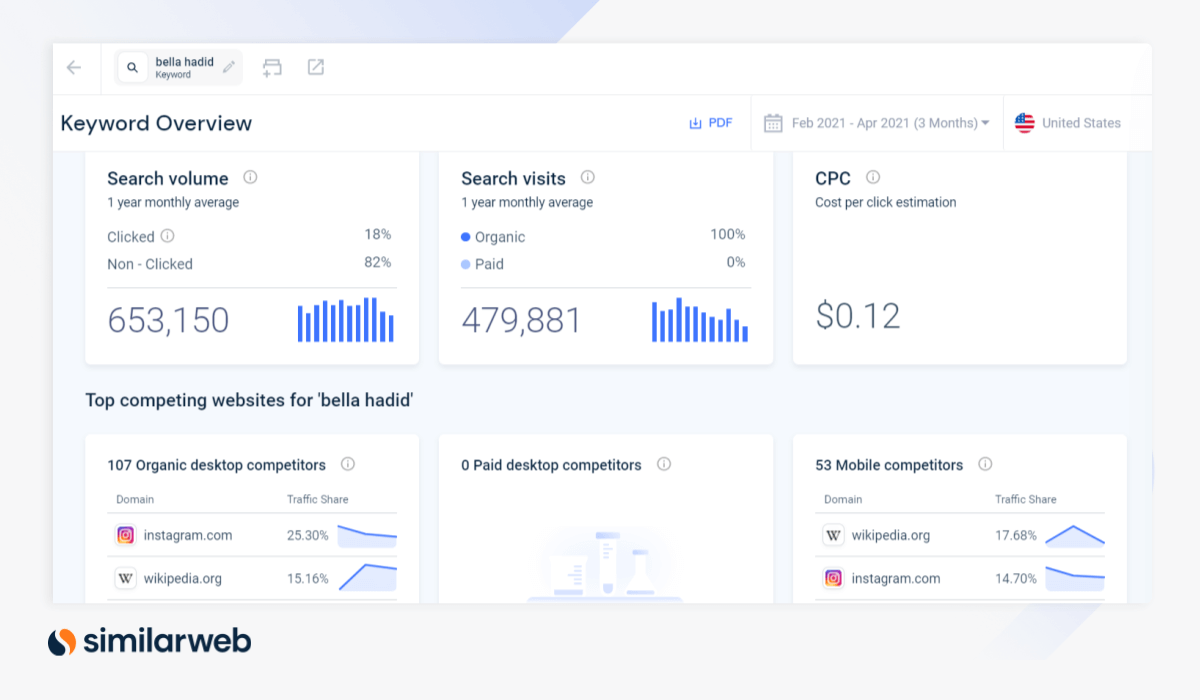
You can also think about expanding social media platforms to attract younger readers. This industry SWOT analysis can be integrated into your strategic plan regularly.
eCommerce conversion rate is the number one metric to monitor if you’re a CPG or retail business.
After all, the better your conversion rate (CVR), the more revenue. To understand why you are or are not reaching your business planning goals, you need to deep-dive into the conversion funnel. Pinpoint the relevant metrics that represent your funnel stages and discover where you get prospects to engage and where you lose them.
Then benchmark to see what is considered normal in this category.
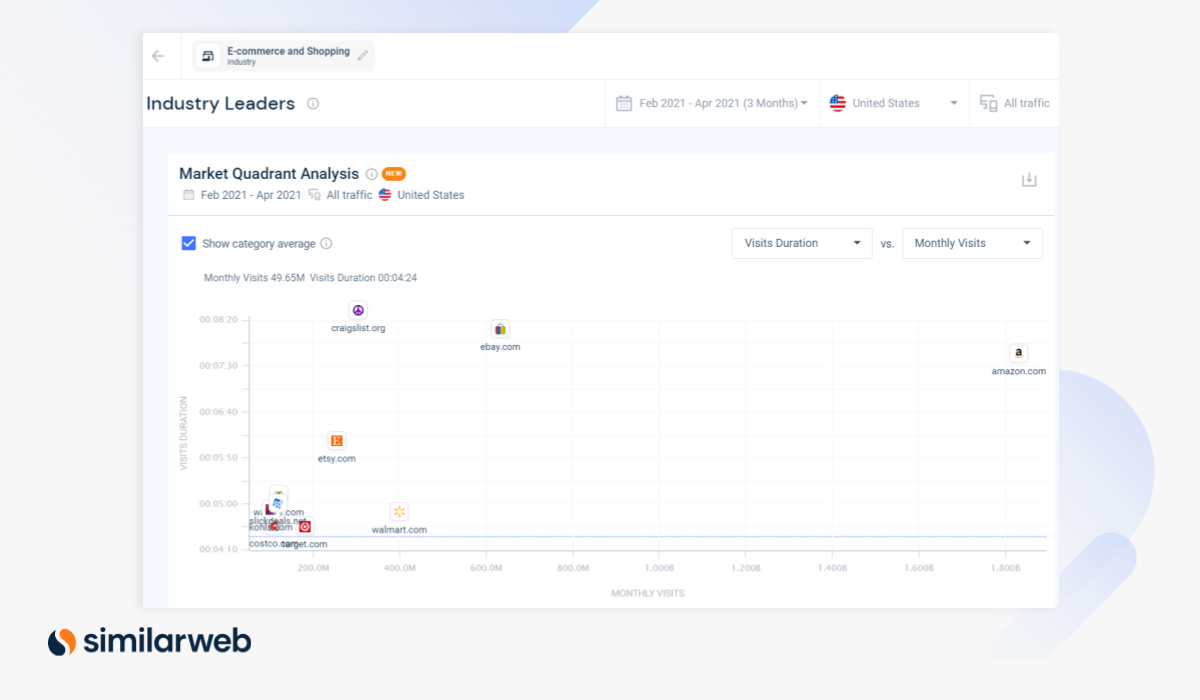
Here’s what your industry benchmarks tell you:
How can you use competitive benchmarks in your SWOT analysis? You’d define your type of company and compare your data to similar companies in size, location, and shopping category.
Let’s say you’re a retail startup for pet foods and supplies and have only recently launched your eCommerce site in the U.S. (for now). You compare your data to sites like chewy.com, petco.com, and petsmart.com.
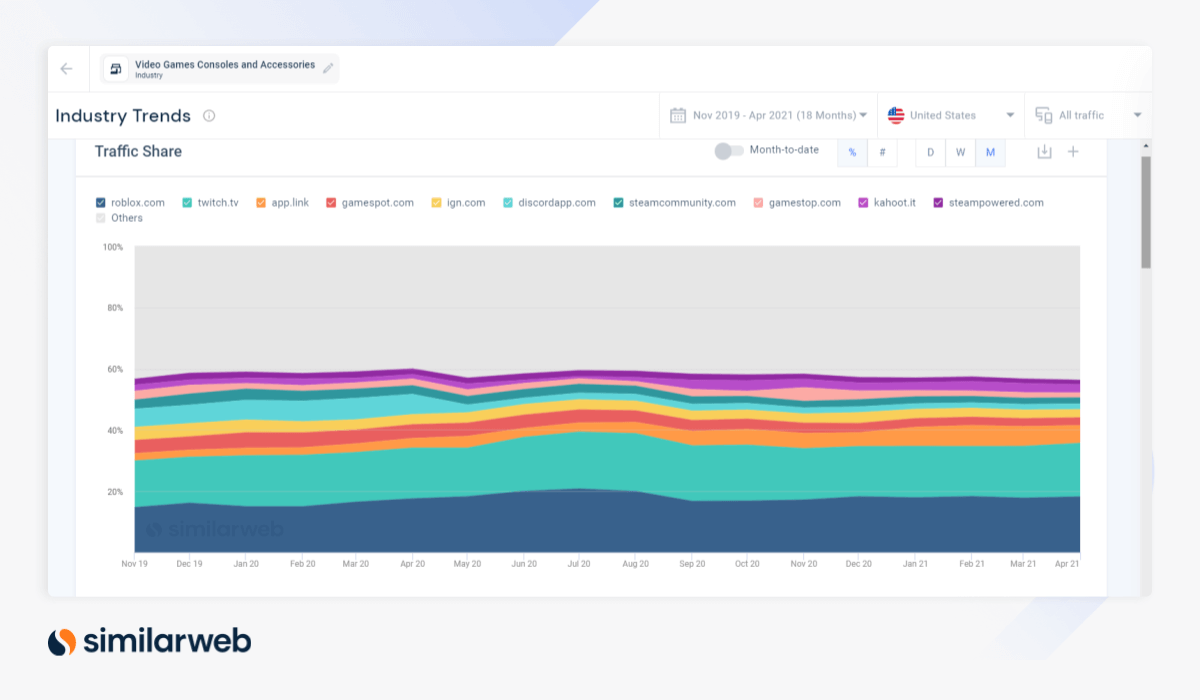
A good gaming site is one that people stick to and find various video games they enjoy spending time on.
At the same time, you need to keep drawing in new users. To evaluate your success, you’ll explore stickiness and engagement metrics alongside the performance of your new products’ marketing channels.
One of the unique challenges for gaming sites is graphics on mobile devices, so device use is another internal factor to follow to keep your business strategy on track.
Here’s what the industry benchmarks tell you:
For a SWOT analysis example, let’s imagine you are running one of the leading free gaming sites.
Similarweb’s Web Intelligence tool provides the most comprehensive data set to compare your performance metrics to industry leaders, your industry average, or a selection of competitors. You can drill down into the specific metrics that matter for your industry and automatically get the percentage of your traffic share (with no math required).
Similarweb makes benchmarking using real-time accurate data seamless.
Try Similarweb’s Research Intelligence now and upgrade your industry SWOT analysis for better strategizing.

This blog post was written by Ruth M. Trucks.
What are the SWOT for industry?
The SWOT analysis of an industry uncovers internal and external factors that influence a company’s performance. Threats and opportunities are considered external factors, while strengths and weaknesses are often internally related.
What are the threats in business?
Some examples of threats in business include financial issues, economic uncertainty, and attracting and retaining talent.

by Molly Winik
Senior Content Marketing Manager
Molly has 8+ years of experience in marketing, content creation, and PR. Her work has been featured on Mention, The Times of Israel, and Culture Trip.
The Top 100 Most Visited Websites in the USA (August 2026)
Similarweb Named in Forrester's Answer Engine Optimization Technologies Landscape, Q3 2026

Anthropic IPO: What Claude's Web and App Data Show
Contact us to set up a call with a market research specialist
