The Top 100 Most Visited Websites in the World (August 2026)
by Shai Belinsky10 Min.
Sep 17, 2026
 Research Intelligence
Expanding your business in the same market is a crucial step for success. Strategies like seizing untapped opportunities, aggressive pricing, and better distribution, allow businesses to increase their market share. These methods make their products more attractive to current customers and encourage competitors’ customers to switch.
By focusing on market penetration, companies can grow without the complexity and cost of entering new markets. In this article, we’ll explain how to calculate market penetration and discuss the strategies, tools, and techniques businesses use to strengthen their market position in established markets.
Market penetration is a metric businesses use to gauge how thoroughly a product or service has saturated its target market. A high market penetration rate signifies strong brand recognition, popularity, and preference, reflecting the company’s competitive edge in the industry. It also indicates customer loyalty and satisfaction.
For startups and new ventures, market penetration measures the success of their entry into the market. For established companies, it helps assess engagement levels in existing markets and identifies areas for improvement, even when overall sales seem healthy.
Market penetration is also a critical business activity, which typically includes identifying a target market, analyzing existing players and consumer interests, investigating competitor strategies, and identifying opportunities for growth. These tactics help secure and expand market share while supporting customer acquisition and retention.
To calculate the market penetration rate, you need two key figures: the number of customers your company has secured and the total size of your target market. The formula for calculating the market penetration rate is:
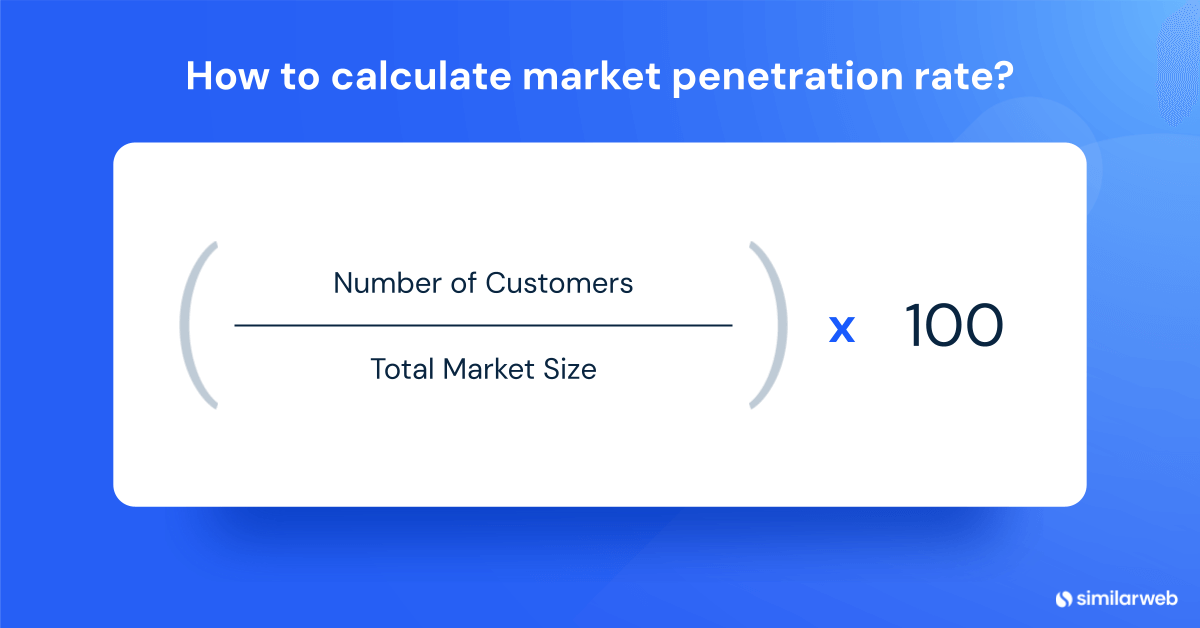
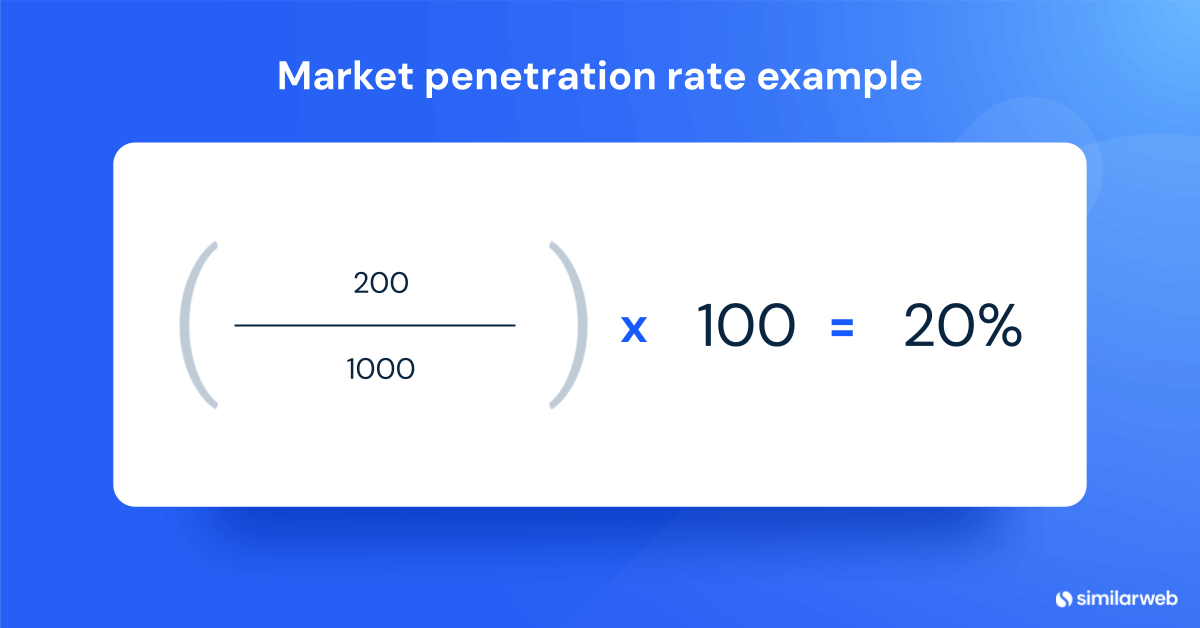
This formula gives you a percentage that reflects how much of the potential market your product or service has captured. For instance, if there are 1,000 potential customers in your market and your business has secured 200 of them, your market penetration rate is 20%:
Alternatively, you can calculate market penetration using revenue data instead of customer counts. In this case, the formula becomes:
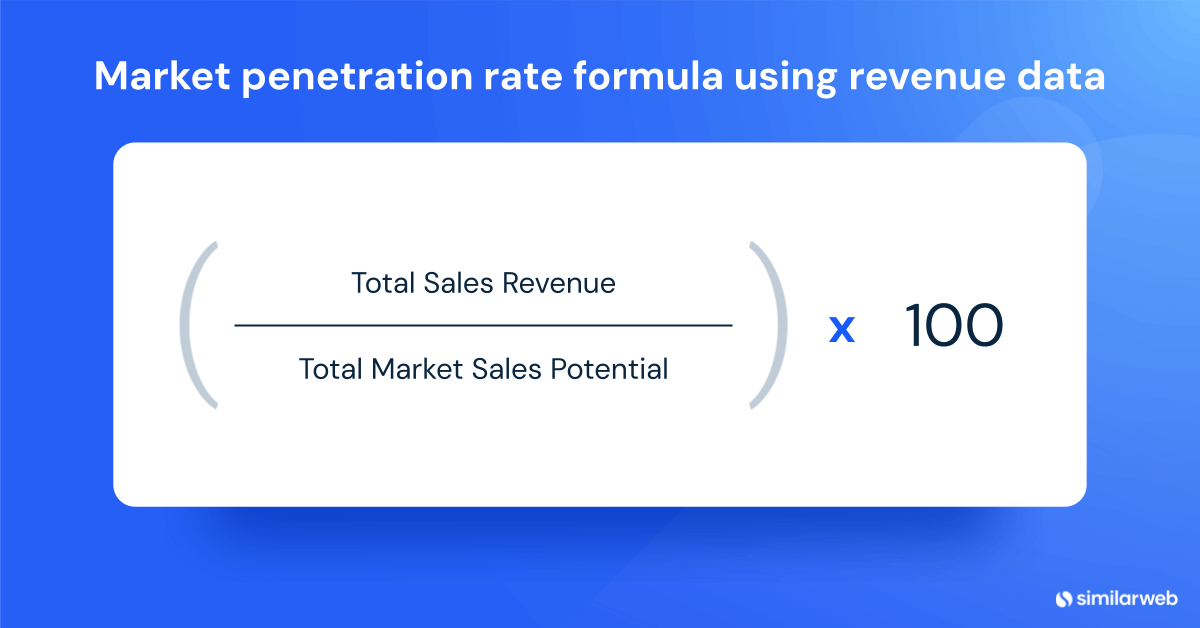
This version of the formula is particularly useful for industries where transaction values vary significantly, as it focuses on the monetary impact rather than customer counts.
By calculating and tracking your market penetration rate over time, you can assess your growth relative to the competition, refine your strategies, and identify untapped opportunities for increasing your market presence.
Though often used interchangeably, market penetration and market share represent different concepts in business strategy.
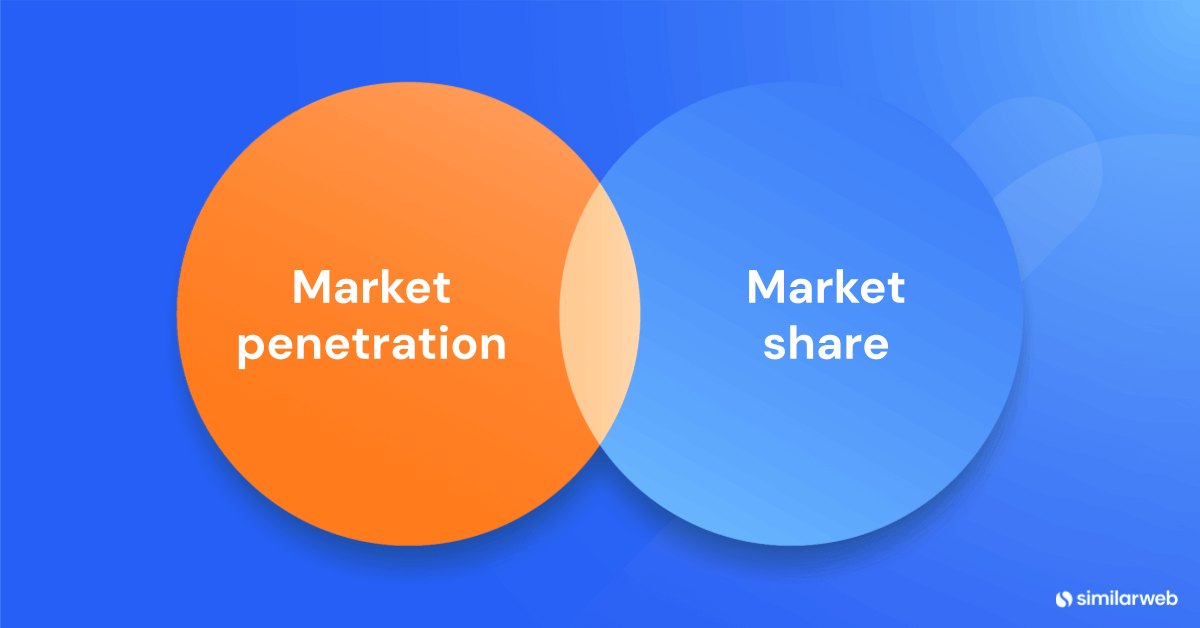
Market penetration measures how much of your potential market you’ve captured – essentially, the share of customers who use your product among all those who could. This metric reflects brand strength, customer loyalty, and the effectiveness of efforts to convert potential buyers into actual users.
Market share is your slice of total sales in the industry relative to competitors. It’s a snapshot of your business’s competitiveness in terms of revenue or units sold, providing insight into your standing against rivals.
Both metrics are crucial for performance evaluation. Market share assesses your position in the competitive landscape, while market penetration focuses on engagement within your customer base.
Achieving strong market penetration requires a strategic, step-by-step approach that aligns with your business goals. Here’s a guide to help you deepen your presence in existing markets effectively:
To identify your target market, identify the relevant industry or niche, then segment your audience based on demographic, geographic, and behavioral factors. Assess the unique characteristics of the population that align with your product or service offering.
Traditionally, surveys, market research reports, and customer feedback were used to gather this data. Today, digital competitor analysis tools like Similarweb can provide rich data on target markets, instantly and with low effort.
For example, if you are researching the global furniture market, Similarweb’s market segmentation report shows the size and growth over time of related industries.
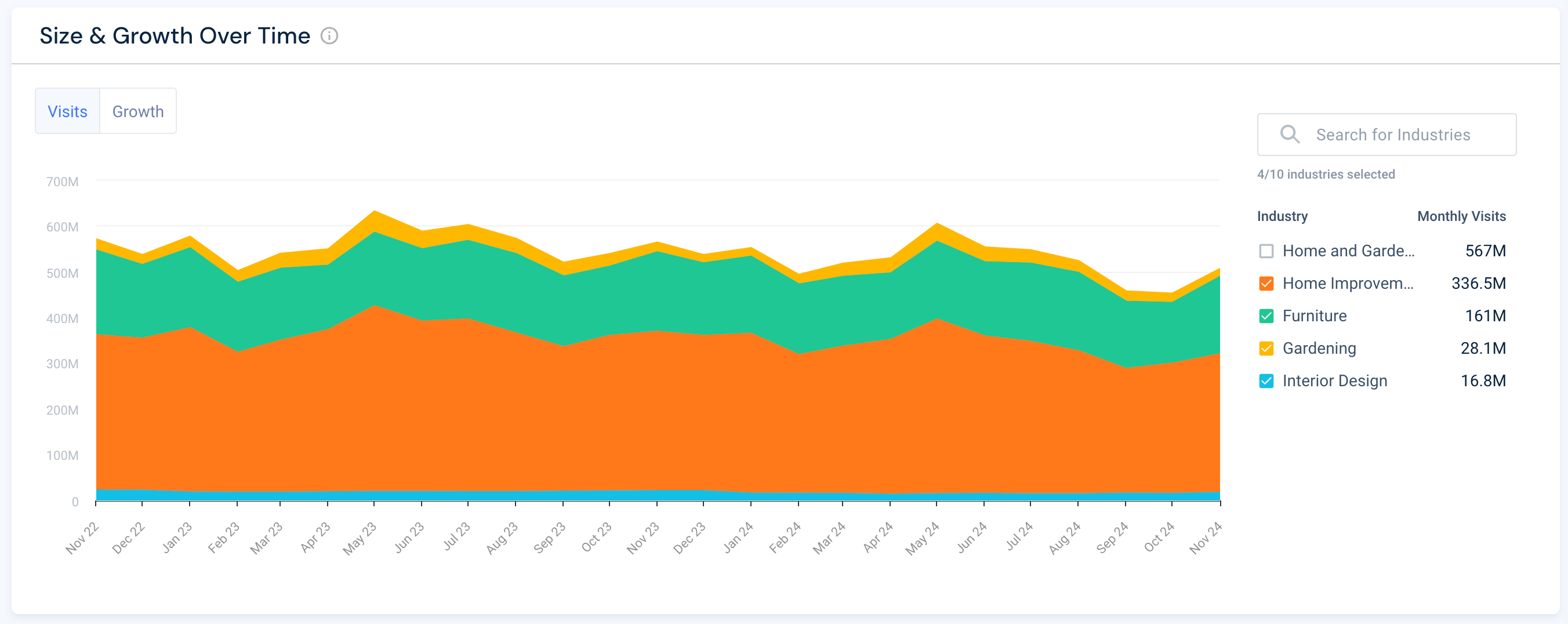
Market analysis can help you better understand consumer needs, preferences, and purchasing habits. This process ensures that your marketing and sales efforts are concentrated on a specific, high-potential audience.
Additionally, create detailed customer personas to represent your ideal buyers. These personas provide insights into your customers’ motivations, challenges, and decision-making processes, helping refine your strategies to address their specific needs.
Understanding consumer interests requires an in-depth analysis of trends, preferences, and unmet needs within the market. Social media analytics, focus groups, industry reports, and digital competitor intelligence platforms can help uncover what drives consumer behavior. Use this information to position your offerings in a way that resonates with your audience.
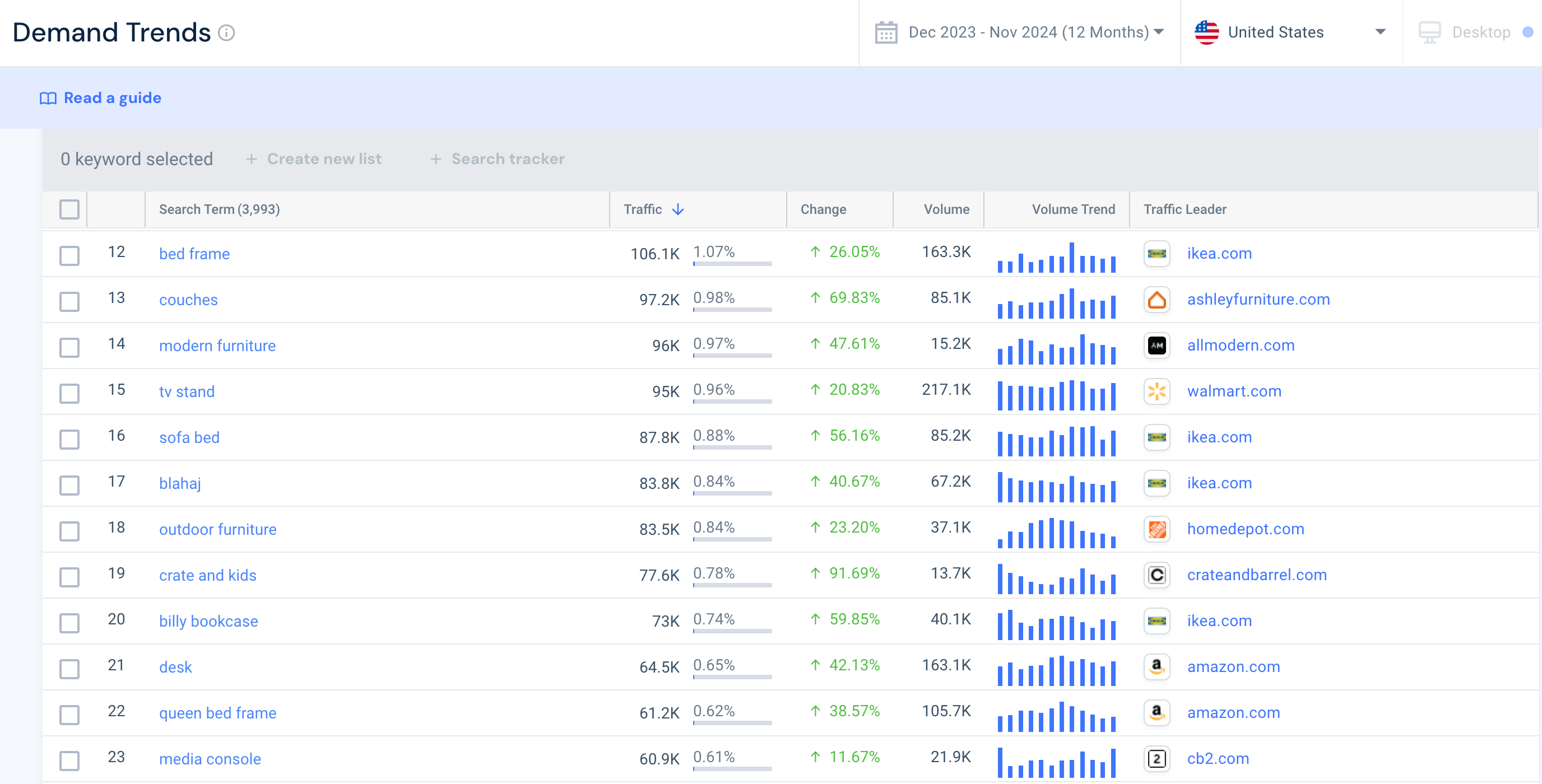
For example, Using Similarweb’s Demand Analysis tool, we can see the demand trends report shows hot topics searched by the audience. Below is the report for the furniture market in the US, filtered to show high-growth, non-branded keywords. For each term, you can see the traffic leader who uses it to capture traffic.
The next step is to identify the main competitors in your market. Analyze their products, pricing, marketing strategies, and customer engagement methods. This intelligence will allow you to differentiate your offerings and develop strategies that capitalize on market gaps or weaknesses in competitors’ approaches.
Similarweb’s Players report shows the main competitors by website traffic:
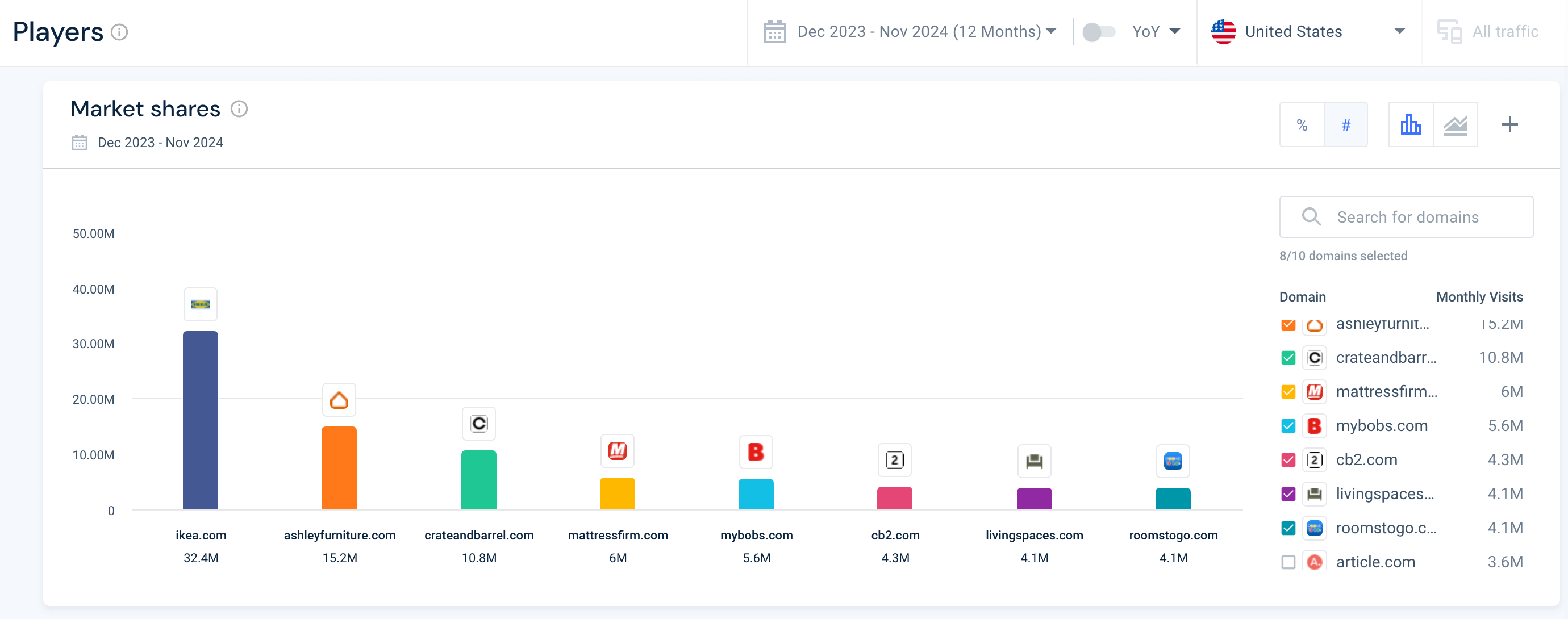
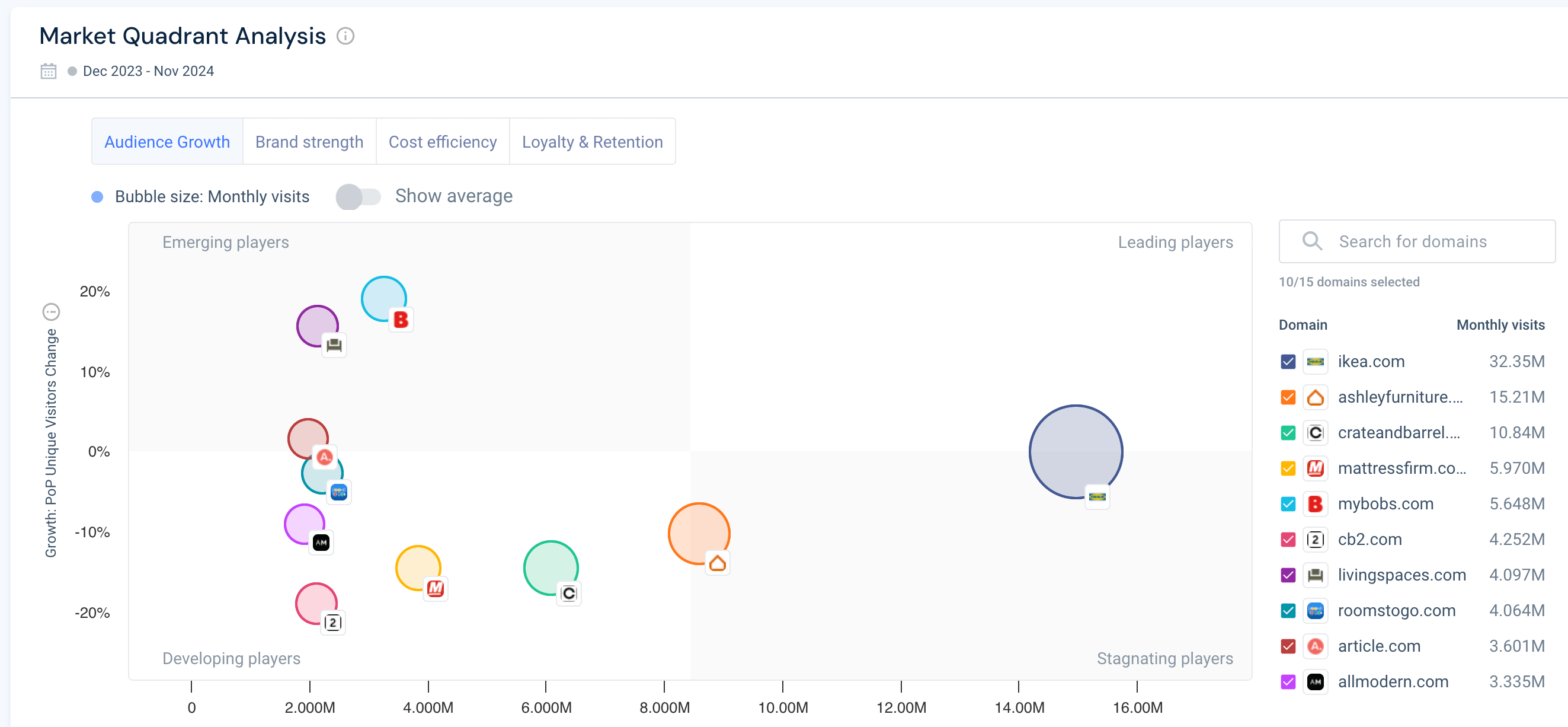
You can also see a quadrant analysis showing the relative strengths of these competitors. It is interesting to investigate emerging players like livingspaces.com, who have a high rate of growth.
A thorough analysis of competitor strategies provides insights into what works and what doesn’t in your market. Assess their organic search strategy, advertising campaigns, product features, pricing tactics, and customer service practices. Identifying patterns in their successes and failures can guide your decision-making and help you craft a more compelling strategy.
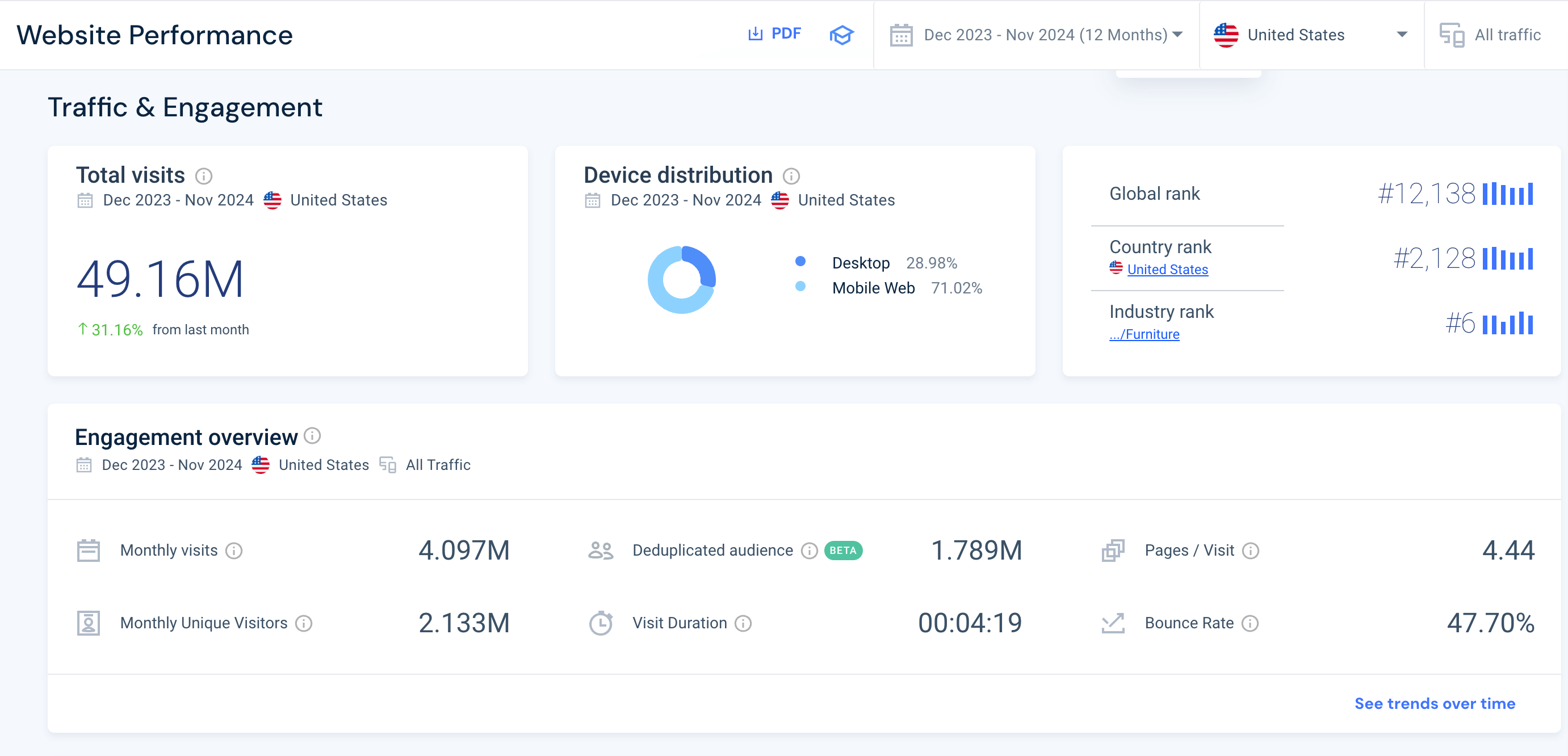
Similarweb’s Website Analysis shows detailed information about competitors in the space. For example, you can see detailed traffic metrics for the emerging competitor, livingspaces.com:
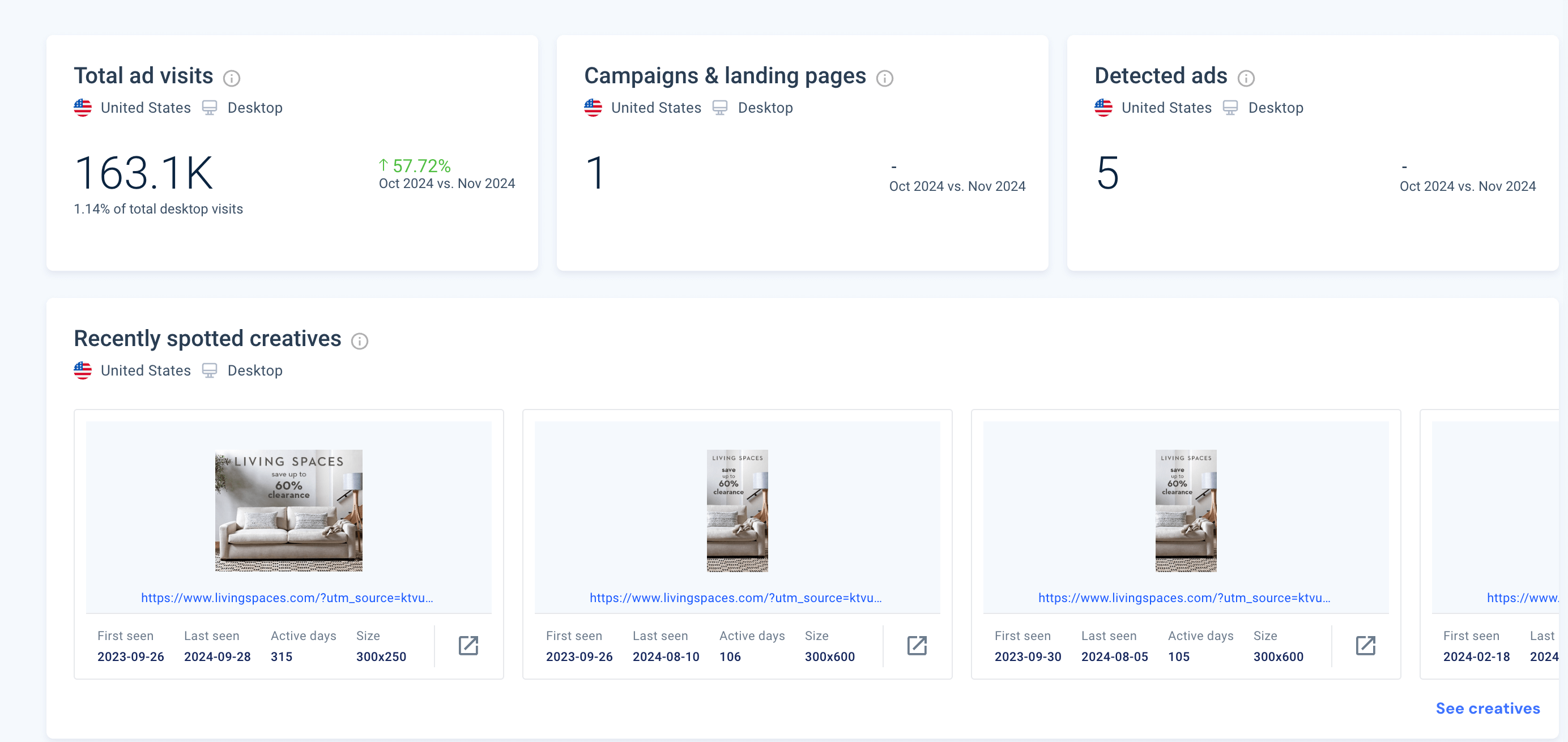
You can drill down further to analyze the competitor’s marketing activities, such as online advertising campaigns.
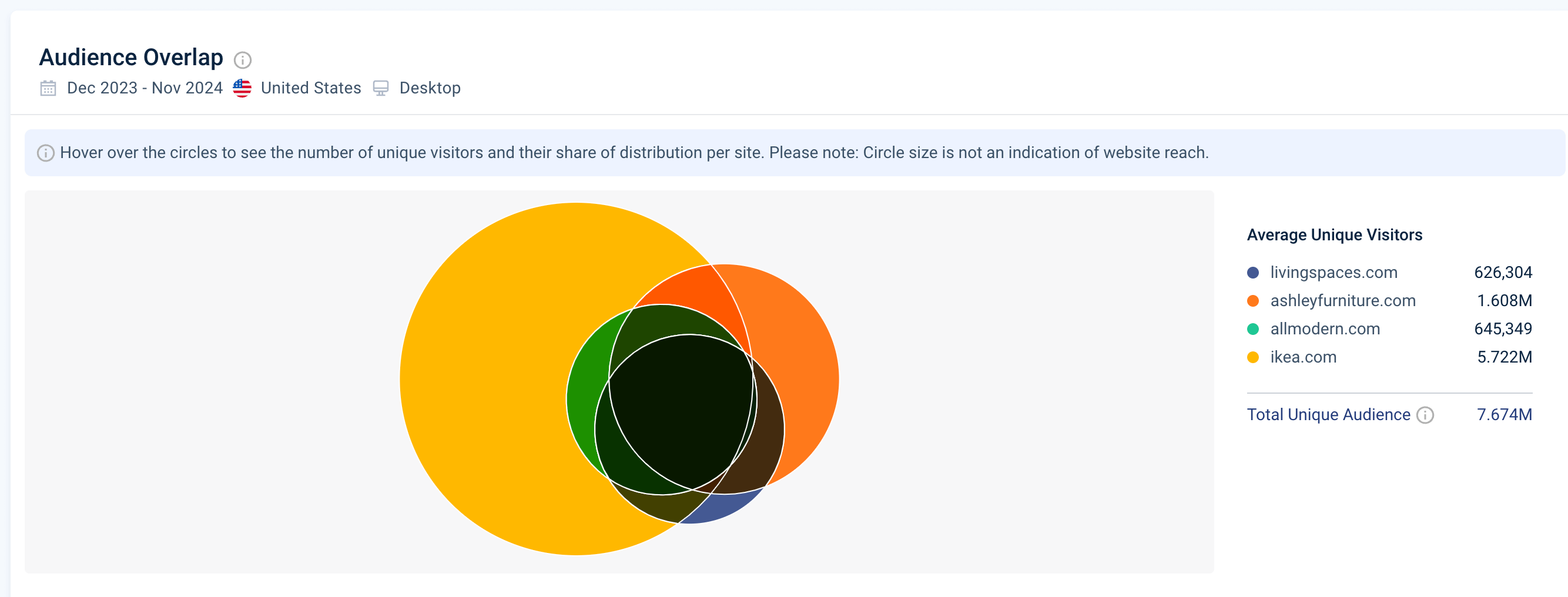
Similarweb also lets you check the overlap of a competitor’s traffic with your own, which shows untapped traffic potential. For example, here is a visualization of audience overlap between four competitors in the US furniture market.
Use analytical tools like SWOT analysis (Strengths, Weaknesses, Opportunities, Threats) to evaluate where you stand compared to competitors. For example, if a rival has strong organic search activity but does not invest in online advertising, you can get an edge by advertising on relevant channels.
Look for untapped opportunities by understanding emerging trends, customer feedback, and technological advancements. Expanding into untapped segments or regions can open up new revenue streams.
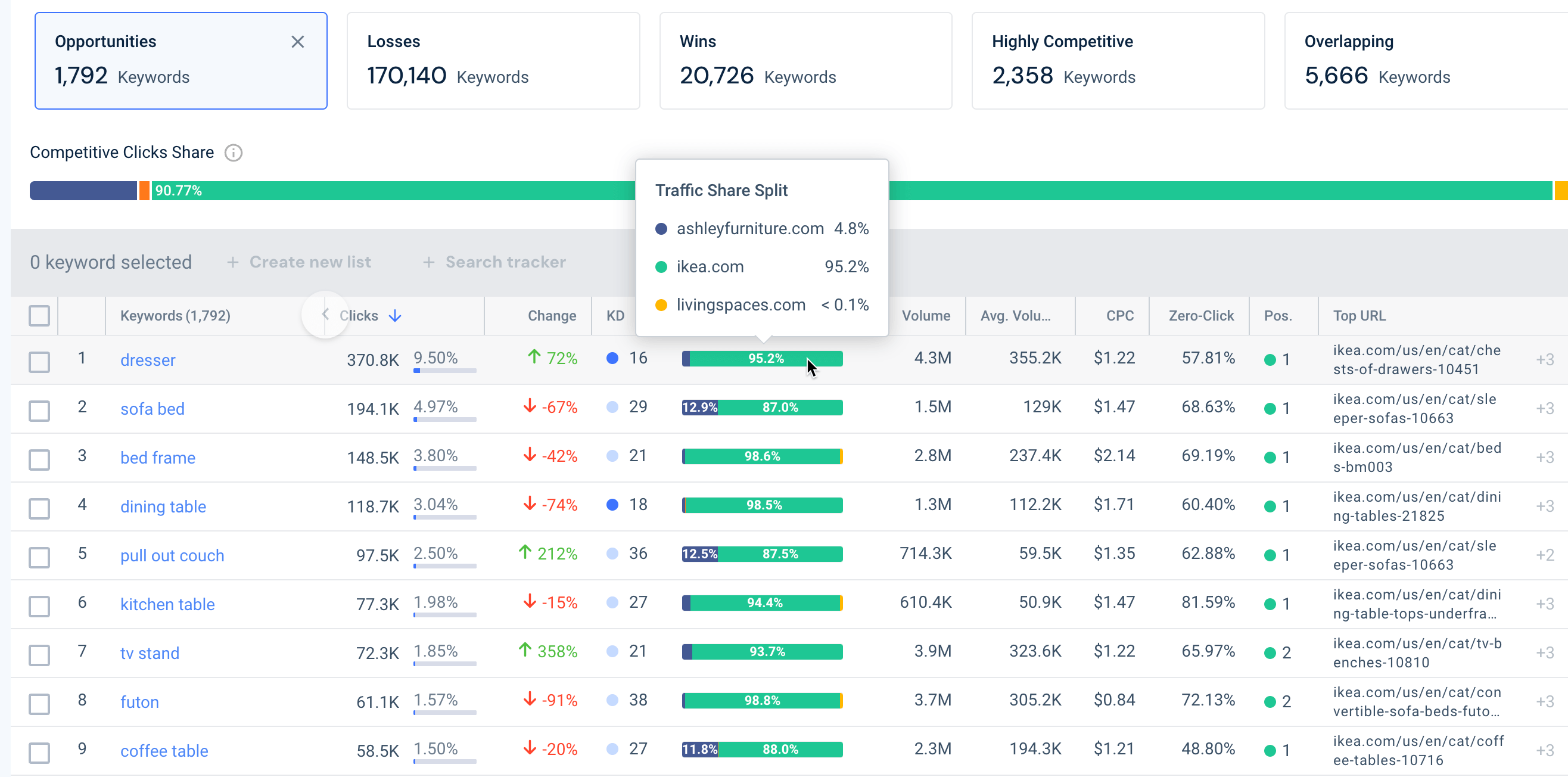
For example, Similarweb shows organic opportunities—keywords for which competitors have significant traffic but your website does not.
Innovating your product or service to solve unmet needs is another avenue for growth. Incorporate features or improvements that address common customer complaints or adapt to new use cases. This approach not only attracts new customers but also strengthens loyalty among existing ones.
Once your strategy is defined, implement it with a well-structured plan. Set clear objectives and timelines, assign responsibilities, and allocate resources. Ensure your marketing, sales, and operational teams are aligned and equipped to execute their roles effectively.
Leverage multi-channel marketing to reach your audience where they are most active, whether through organic search, social media, email campaigns, or in-store promotions.
Continuous monitoring is critical to maintaining and improving market penetration. Use KPIs such as sales growth, customer acquisition rates, and market share to assess your strategy’s effectiveness.
Analyze data from customer feedback, surveys, web analytics tools, and digital intelligence platforms like Similarweb to identify areas for improvement. Repeating any of the steps described earlier in this section can uncover new insights and show you what’s working and what’s not. Flexibility and adaptability are vital for sustaining growth.
Understanding the benefits and drawbacks of market penetration is essential for making strategic decisions. By weighing these factors, companies can determine if it is worthwhile to invest in market penetration activities.
Here are real-life examples of successful market penetration:
Amazon’s Prime Membership is a standout example of successful market penetration. The company offers benefits such as free two-day shipping, exclusive deals, and access to digital services like Prime Video and Prime Music. These perks attract new customers and encourage frequent purchases from existing members.
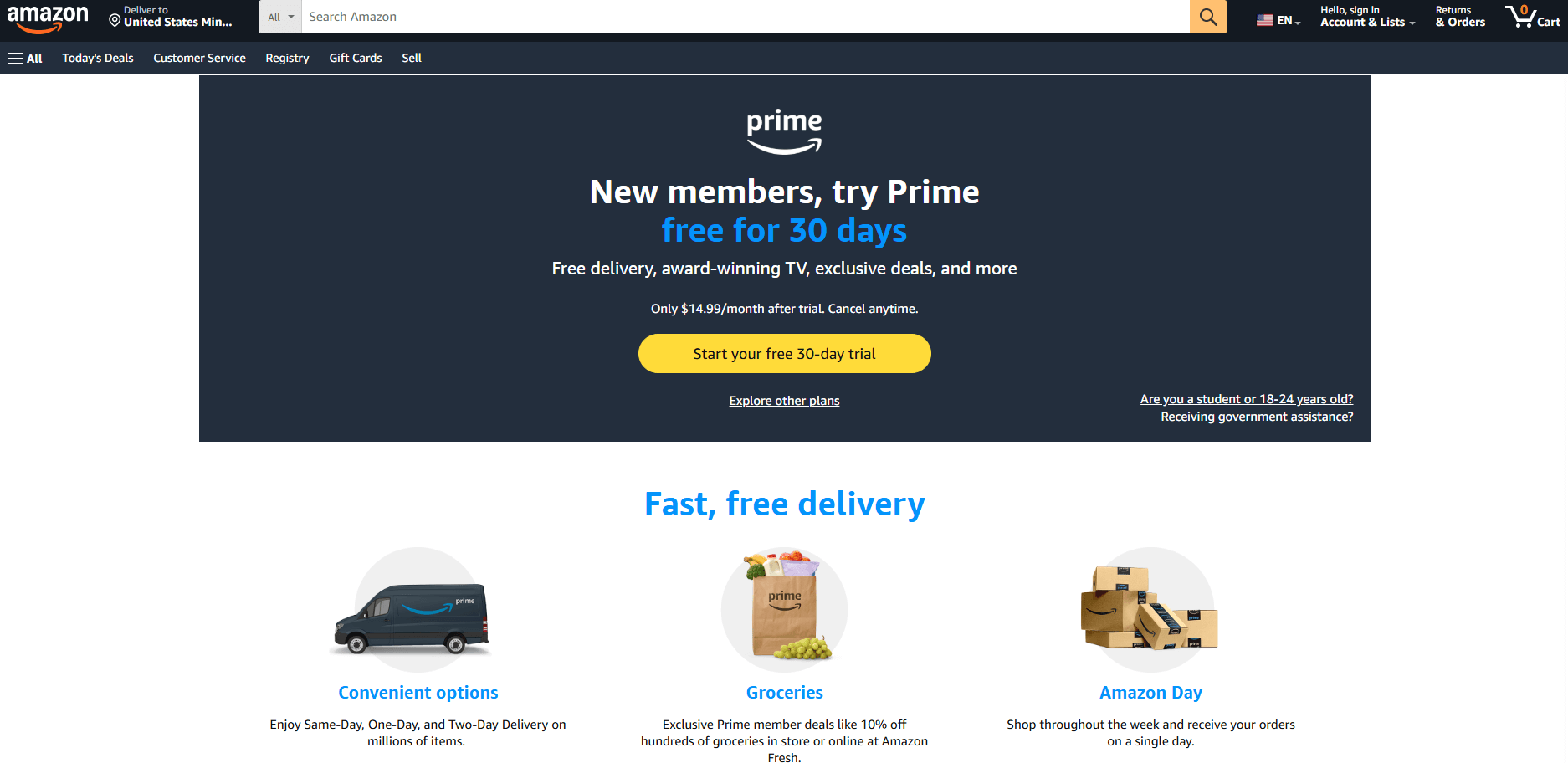
The bundling of these services into an “all-inclusive” package strengthens customer loyalty and increases the value of each subscription. This strategy not only boosts Amazon’s revenue but also deepens its foothold in various markets by creating a competitive advantage.
McDonald’s has used strategic pricing and product diversification to support their market penetration efforts. Its Value Meals and Dollar Menu provide affordable options that attract budget-conscious customers, while menu items like breakfast options and healthier alternatives cater to evolving consumer preferences.
Additionally, McDonald’s adapts its menu to local tastes in international markets, such as offering the McSpicy Paneer Burger in India. These efforts have broadened its customer base and solidified its position as a leader in the fast-food industry.

Coca-Cola’s “Share a Coke” campaign personalized its product by printing popular names on bottles, encouraging customers to buy bottles for themselves or as gifts. This creative marketing initiative drove emotional engagement, increased brand visibility, and boosted sales across multiple markets.

By aligning with customer sentiments and creating a social media buzz, Coca-Cola successfully improved market penetration.
Walmart employs aggressive pricing strategies, including everyday low prices and discounts, to attract customers and increase market share. This approach appeals to price-sensitive consumers and ensures Walmart remains a go-to retailer in both urban and rural markets.
Additionally, Walmart’s investment in expanding its online presence and improving delivery logistics has broadened its customer reach.
When carrying out market penetration activities, here are a few tried-and-tested tactics that can give your business the edge.
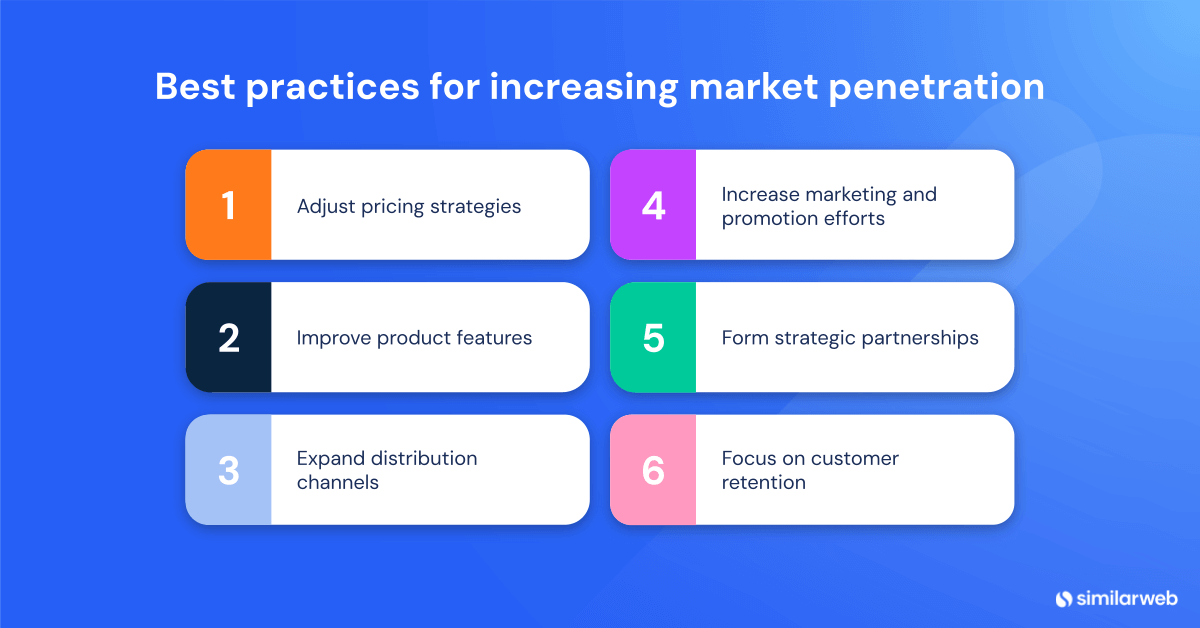
Revisiting your pricing model is one of the most effective ways to capture market share. Implementing discounts, promotions, and competitive pricing can attract cost-conscious consumers and entice competitors’ customers to switch. These tactics help increase sales volume and strengthen your brand’s market presence.
Improving your product’s features and quality to better meet customer needs can significantly boost its appeal. Gathering feedback from your existing customer base and using it to refine your offerings ensures that your products or services remain relevant and competitive in the market, ultimately driving higher adoption rates.
Widening your distribution network makes your products more accessible to a broader audience. This could involve partnering with additional retailers, entering new online marketplaces, or creating innovative distribution methods. Greater availability often translates to increased customer acquisition and stronger market penetration.
Investing in marketing and promotional activities is crucial for boosting brand awareness. Extensive campaigns across digital, social media, and traditional platforms can reach diverse audiences and create a lasting impression. Consistent messaging and strategic advertising improve visibility and drive engagement.
Collaborating with other businesses or forming alliances can provide access to their customer bases, effectively increasing your market penetration. Partnerships often lead to mutually beneficial outcomes, expanding reach and resources beyond what each company could achieve independently.
Prioritizing customer retention is as important as attracting new customers. Implementing loyalty programs and delivering exceptional customer service fosters repeat business and builds a loyal customer base. Satisfied customers often become brand advocates, helping spread positive word-of-mouth and driving new customer acquisition.
By executing these strategies, businesses can successfully increase market penetration, boost sales, and solidify their position in existing markets. Consistent effort in these areas ensures sustainable growth and long-term success.
Effective market penetration relies on actionable insights, and the right tools can provide the data needed to establish your presence in existing markets. Here are some key technologies that businesses can leverage for market penetration analysis:
Market research platforms such as Similarweb provide insights into market size, customer preferences, competitive positioning and marketing tactics. This information helps businesses identify market gaps and opportunities to refine their products, services, and marketing strategies accordingly.
Tools like Google Analytics and Tableau offer valuable insights into first-party data owned by your organization or partners, shedding light on customer behavior, preferences, and purchasing patterns. By analyzing this data, companies can tailor their strategies to better align with customer needs and preferences.
CRMs like HubSpot and Salesforce help businesses manage interactions with current and potential customers. These systems collect and store customer information, enabling companies to build stronger relationships, increase customer retention, and boost sales through personalized engagement and marketing.
Tools like Hootsuite and Buffer simplify the management of social media campaigns across multiple platforms. By tracking engagement and campaign performance, businesses can optimize their digital marketing efforts to reach target audiences more effectively and increase brand awareness.
Predictive analytics tools can forecast market trends and customer behavior, helping businesses stay ahead of the competition. These tools provide insights into emerging trends and potential market shifts, enabling companies to make proactive adjustments to their strategies.
Access to timely and accurate data empowers companies to remain competitive and responsive to market changes, improving their foothold in existing markets.
Market penetration is a critical metric for both new and established businesses, providing a clear measure of how deeply a product or service has embedded itself within a target market. High penetration rates often signal strong brand loyalty, effective marketing, and a solid competitive position.
With Similarweb’s competitive intelligence and market research tools, you can understand your presence in existing markets and identify opportunities for growth.
Using the strategies outlined in this article—from analyzing existing markets and audiences to sizing up competitors and their marketing tactics—you can increase engagement and capture a larger share of your market.
What is market penetration?
Market penetration measures how much of a target market a business has captured with its product or service. It reflects customer adoption and brand presence within the market.
What is the difference between market penetration and market share?
Market penetration gauges how much of the potential market a business has converted into customers, while market share focuses on a company’s sales relative to competitors in the industry.
What strategies can increase market penetration?
Strategies include adjusting pricing models, innovating on product features, expanding distribution channels, boosting marketing efforts, forming strategic partnerships, and focusing on customer retention.
What are some examples of successful market penetration?
Examples include Amazon’s Prime Membership, McDonald’s menu diversification, Coca-Cola’s “Share a Coke” campaign, and Walmart’s competitive pricing strategies.
Why is monitoring market penetration important?
Tracking market penetration helps businesses assess their growth, refine strategies, and identify untapped opportunities, ensuring sustained market presence and competitive advantage.
What tools are useful for market penetration analysis?
Tools like Similarweb, Google Analytics, and CRM platforms such as Salesforce provide insights into market trends, customer behavior, and competitor strategies, aiding in effective decision-making.

Principal Product Marketing Manager
Daniel brings 10+ years of marketing experience, specializing in both B2B and B2C audiences. He thrives at managing delivery of projects, consistently developing concepts that drive impact.
Contact us to set up a call with a market research specialist