





Top Ecommerce Companies in the USA: The 100 Brands Winning the Traffic Race in 2026
by Inbar Eytan6 Min.
Aug 30, 2026
 Research Intelligence
Knowing the right steps in market segmentation saves time and helps you reach vital insights faster.
The process of market segmentation involves three phases:
This article will help you create segments that make sense for your business, complement your research strategy, and drive insights that have the power to impact your bottom line.
Choosing the right criteria for market segmentation is not as simple as it seems. Segmentation builds on data, and you need robust data analytics to keep your segments precise. You’ll see why shortly.
How do you segment your market? By dividing your potential customers into smaller, more specific groups, or customer segments. It involves intensive research and a deep understanding of the total addressable market and your target audience. Splitting the market into sub-groups makes it more approachable and helps you create more targeted and curated marketing materials for different audiences. Utilizing Similarweb’s Data-as-a-Service can provide the real-time, comprehensive data needed to enhance the accuracy of your market segmentation efforts, ensuring your segments are based on the most current and relevant insights.
How can markets be segmented? While still relevant, markets aren’t just defined by audience geography or demographics. You may want to add behavioral segmentation to identify target markets more accurately or consider psychographic criteria to determine your audience’s interests and values. You’ll need to correlate the segmentation types to create targeted campaigns.
Don’t forget some prospects belong to more than one segment. By creating these audience sub-groups, you could find opportunities to combine different types of segmentation.
Market segmentation may start small with personalized email sequences or segment-specific banners. But, eventually, it will affect your business on a larger scale. Oh, and there are plenty more reasons to learn the steps in market segmentation.
Take a look ⬇️ ⬇️ ⬇️
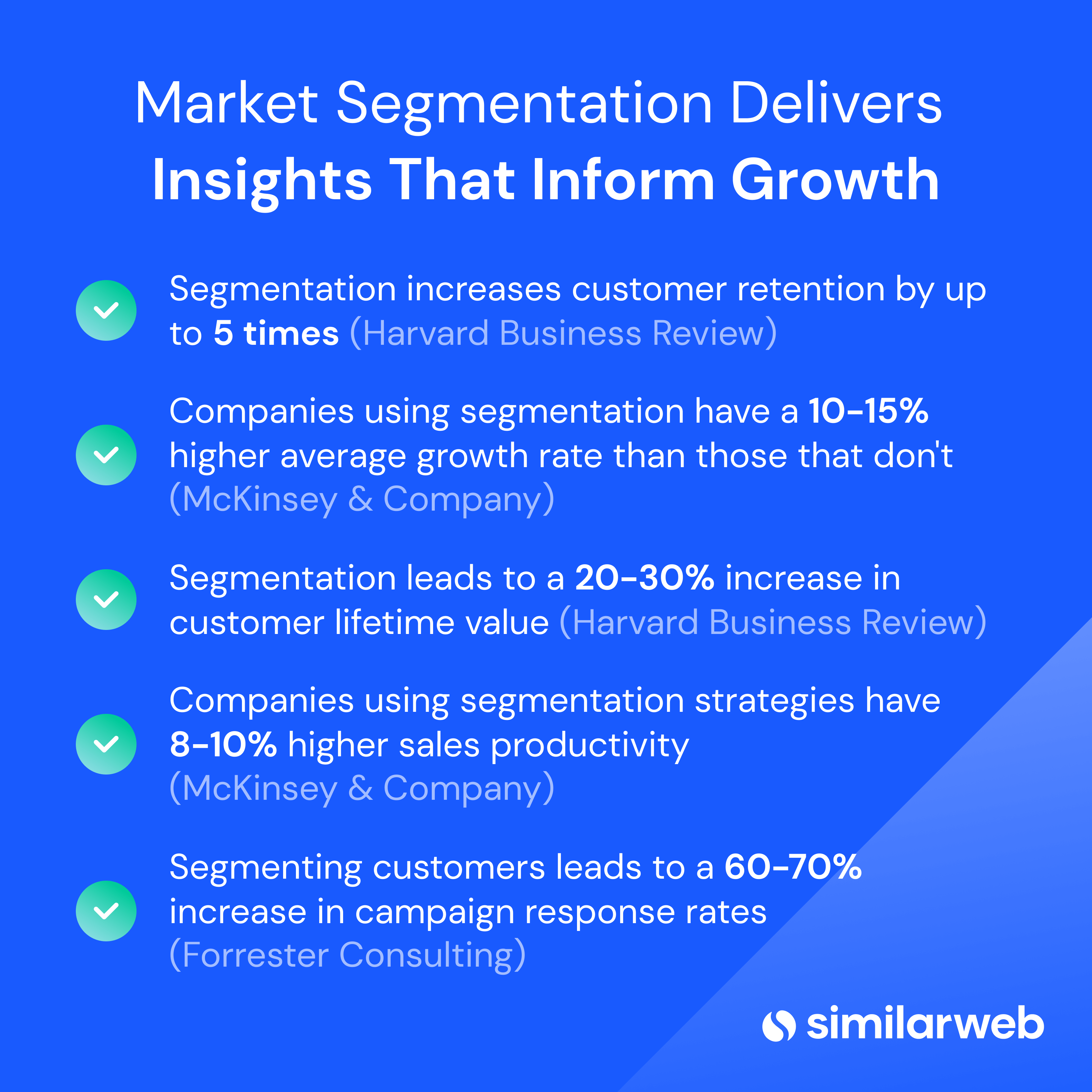
Success in a digital environment often depends on the quality of your insights. Your strategy is only as good as the data it uses. Let’s see what information you need to segment the market and how to put it to use.
Start by defining your market and collect information about your customer base through market research. Dig into the data of your closest competitors to understand their market position and where you can win back traffic share. Take it further by benchmarking against industry standards and conducting a SWOT analysis to fully understand your strengths, weaknesses, opportunities, and threats.
The process of market segmentation involves a structured audience analysis. The more comprehensive your data, the better you can identify groups and address their needs, so we recommend using various research techniques and types.
Learn about demographics, behavior, preferences, and trends. Again, benchmark against the competition. You may stumble upon market segments or niches you didn’t consider.
If you already have a buyer persona, skip this step. But it’s always good to double-check and review. Markets are dynamic, and you need to be aware of changes. Forming several buyer personas can help you clearly define and address different segments.
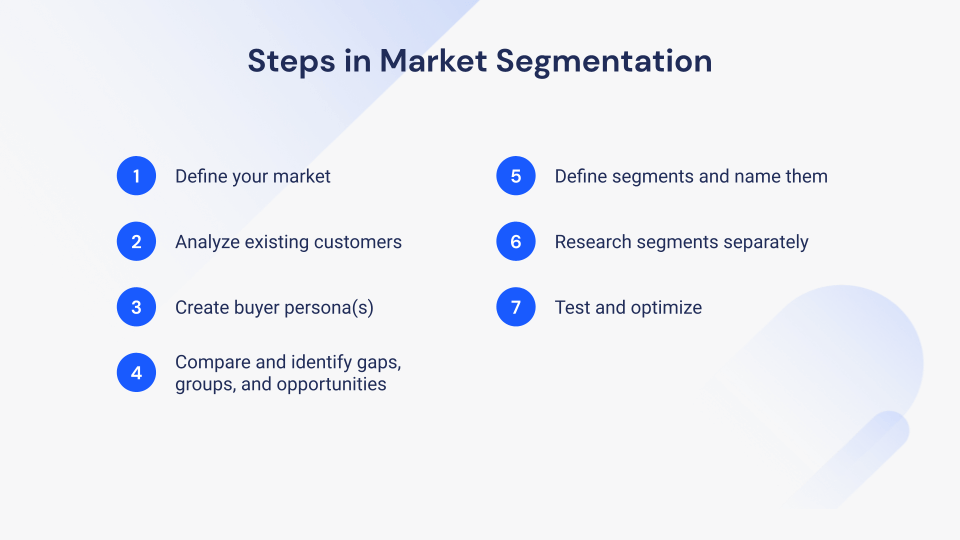
Comparing the data from the first three steps helps you identify gaps in the market. You can define an audience you previously didn’t cover or discover groups with common interests or behaviors that you can target collectively. Map the audience to identify market segmentation opportunities. Here are possible questions to ask:
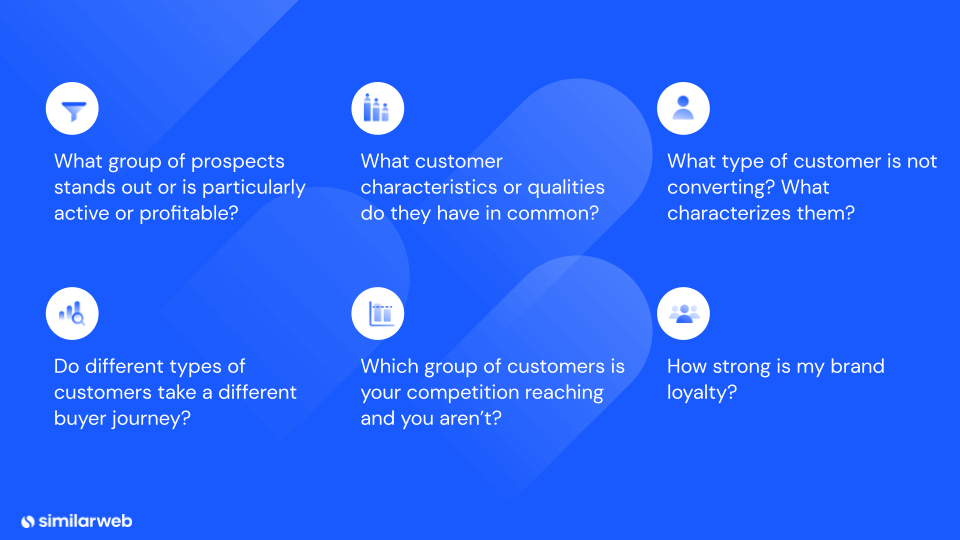
Based on what the different groups have in common, define your market segments. Set data-based criteria that let you allocate prospects to segments and track performance. Make sure each target segment is clearly defined so anyone on your team knows exactly what niche you are referring to.
That’s it. You’ve segmented your market and can start creating funnels, campaigns, and messages accordingly. Before you jump into any creative activity, use your market research tool again, but this time for each segment individually. Follow these steps:
Monitor the results of your new segmentation strategy. Test different approaches and keep evaluating for continuous improvement.
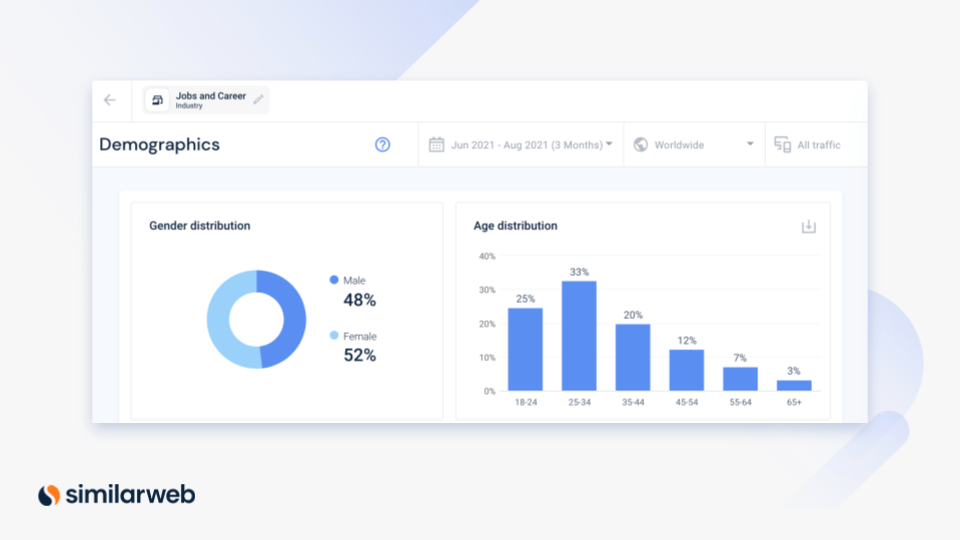
Pros:
Cons:
Market segmentation will only yield significant results if coupled with data-driven insights. Even in a niche market, you can still segment your audience to create more personalized marketing efforts and enhanced user experience.
Similarweb gives you the tools you need for the in-depth research and market analysis behind every successful strategy.

What are the 4 main types of market segmentation?
Demographic, psychographic, behavioral, and geographic segmentation are the four main market segmentation types.
What are the steps of market segmentation?
The steps of market segmentation can be consolidated into three phases: research, analysis, and implementation.
Is market segmentation useful?
Yes. Market segmentation allows businesses to identify and target customers based on their specific needs and interests. It enables organizations to tailor products and services to appeal to different customer segments and increase their chances of success. It also helps businesses save money by focusing their resources on the most lucrative segments.

by Liz March
Digital Research Specialist
Liz March has 15 years of experience in content creation. She enjoys the outdoors, F1, and reading, and is pursuing a BSc in Environmental Science.
Top Ecommerce Companies in the USA: The 100 Brands Winning the Traffic Race in 2026

3 of the Sharpest Minds Weigh in on the State of Gen AI in 2026

Contact us to set up a call with a market research specialist
