
 Marketing Intelligence
Ecommerce Keyword Research: Step by Step with Examples

Ensuring your eCommerce website ranks well in search engines isn’t just about choosing the right keywords; it’s about using them strategically. Targeting keywords with buying intent, strong search volume, and manageable competition can directly increase your sales.
In this guide, we’ll walk you through a step-by-step process for choosing the right keywords for ecommerce and share actionable tips for optimizing product, category, and content pages. You’ll see real-life examples of successful ecommerce websites and learn advanced SEO techniques to gain a competitive edge.
What is ecommerce keyword research, and why is it so important?
Ecommerce keyword research involves identifying the search terms that your target audience uses when looking for the products you sell in your ecommerce store. By understanding what potential customers are searching for, you can tailor your product pages, category pages, and content to match their queries and increase your chances of appearing in search results.
Keyword research is a critical part of ecommerce success because it ensures that your products and content are discoverable by potential customers. By targeting the right keywords, you increase your chances of driving organic traffic to your site, which can lead to higher revenue.
Another key benefit is staying ahead of the competition. Identifying keywords your competitors aren’t ranking for allows you to capture untapped market opportunities while also helping you analyze areas where competitors outperform you. Effective keyword research also optimizes your advertising spend. By focusing on low-competition keywords, you can reduce advertising costs while maintaining relevance to your target audience.
Key concepts in ecommerce keyword research
To effectively target the right keywords for your ecommerce site, you need to understand several key concepts that guide keyword selection and optimization.
1. Short-tail vs. long-tail keywords
Short-tail keywords are broad, typically one or two words, and have high search volume but are also highly competitive. For example, ‘running shoes’ is a short-tail keyword. While these can drive a lot of traffic, they’re often too competitive for most sites to rank well and are less likely to result in a conversion because customers are still at the beginning of their buying journey. But these keywords are still valuable because they can help build awareness for your brand among a large number of relevant consumers.
Long-tail keywords are more specific phrases like ‘women’s waterproof trail running shoes.’ These have lower search volume but are less competitive and more likely to convert because they target users with specific needs. Focusing on long-tail keywords can help you attract visitors who are closer to making a purchase.
You can use short-tail and long-tail keywords for different stages of your sales process. Blog posts and category pages can target short-tail keywords that build brand authority and awareness, while product pages typically focus on highly specific, long-tail terms indicating direct buying intent.
2. Search volume
Search volume indicates how often a keyword is searched for on a search engine. It is typically defined as the average number of times a keyword is searched per month on a specific search engine (such as Google or Bing) in a specific region or worldwide.
Keywords with high search volume can bring more traffic, but they’re usually more competitive. Balancing high-volume keywords with those with moderate volume but lower competition is often more effective.
3. Search intent
Understanding search intent is critical to satisfying user needs. Search intent can be informational (looking for information), navigational (trying to find a specific website), commercial (researching products before buying), or transactional (ready to buy).
Matching your content to the right intent boosts your chances of ranking better and driving meaningful traffic. For ecommerce, commercial and transactional intents are particularly valuable because they often lead directly to sales. However, navigational keywords are also important because they can help people already familiar with your business find it more easily. Information keywords should not be ignored because they build awareness among customers who are at the discovery stage and not ready to buy.
4. Keyword difficulty
Keyword difficulty measures how hard it is to rank for a particular keyword. Highly competitive keywords can be tough for smaller or newer sites to target. Similarweb’s Keyword research tools provide difficulty scores that help you evaluate which keywords are realistic targets.
Assessing keyword difficulty is a strategic way to prioritize your efforts. By identifying less competitive keywords, you can achieve quicker wins while building your site’s authority to tackle more challenging terms over time. However, keyword difficulty scores are not always accurate and should be supplemented with other metrics and manual analysis of competitor websites.
5 simple steps to conduct ecommerce keyword research
Here are the practical steps involved in carrying out ecommerce keyword research to find and prioritize the best keywords for your store.

1. Analyze your competitors for keyword ideas
Studying your competitors’ keywords provides valuable insights into their strategies and helps you identify opportunities they might be missing. Similarweb’s competitor analysis tool can help analyze competitor ecommerce websites, see what keywords they rank for, and also identify untapped opportunities, such as keywords that send traffic to competitors but not to you.
The first step is to identify your competitors. Taking Amazon.com as an example, Similarweb’s Search Competitors report shows the top competitors on a grid, with the X axis showing their search traffic and the Y axis showing how much they overlap in search with Amazon. The two competitors that stand out are eBay and Walmart.

Let’s use the Similarweb Website Explorer report to see which keywords drive traffic to these competitors. We’ll filter the report to the US market and exclude branded keywords. The Opportunities tab shows keywords that drive traffic to walmart.com and ebay.com but not to amazon.com.

Because we are looking at the month of November, the top keyword is ‘best black friday deals’ with a volume of 473K searches per month. Walmart received 94% of this traffic, while Amazon received only 5%.
Other searches where eBay or Walmart outperform Amazon include PlayStation 2, Nintendo Switch, and disposable cameras. These keywords can offer valuable opportunities to refine your ecommerce SEO strategy.
Analyzing your competitor keywords can also reveal industry trends and patterns that you might not have considered. By understanding what’s working for others in your niche, you can tailor your approach to capitalize on untapped opportunities and stay competitive.
2. Generate a list of seed keywords
Compile a list of seed keywords. These are keywords that represent topics and subtopics in your niche. You can use a few different sources to build your list:
- Keywords you discovered from your competitor research
- Your own industry knowledge
- Topics you know are most important for your ecommerce business, such as your product categories, features, or unique selling points
- Topics that appear in user reviews
- Topics that appear in relevant social media posts or publications
- Ideas from large language models (LLMs) like ChatGPT
Make sure to include informational, commercial, and transactional keywords—you can decide later how to prioritize.
Seed keywords are the main ideas and themes that define your business, helping you build a comprehensive list of terms to explore further.
3. Expand your keyword list using tools
Similarweb Keyword Generator can help expand your initial list of keywords and evaluate them. These tools provide suggestions based on your seed keywords and offer insights into search volume, competition, and trends. You can discover additional keywords that people frequently use, including long-tail variations.
Here are Similarweb’s keyword suggestions for our example keyword seed list, filtered by transactional keywords to see those with the highest buying intent.

You can also see keyword suggestions for Amazon.com with Similarweb’s Amazon Keyword Tool. Here are popular searches on Amazon related to Nintendo Switch 2:

It’s also interesting to see which keywords are trending. Similarweb is the only keyword research tool that shows real-time search volumes. At the time we ran the report. Nintendo Switch 2 was about to come out and appeared to be a hot trend.

Note: Similarweb shows keyword data for Google, Amazon, and YouTube. In the above examples, we used Google.
With a diversified keyword list based on real search data, you can better meet the needs of different user intents and maximize your search visibility.
4. Filter and prioritize your keywords
Choosing the right keywords is a balancing act between search volume, competition, and relevance to your business. You can use the Similarweb Keyword Generator to filter your list based on these criteria.
Similarweb shows the following keyword metrics:
-
- 28 day volume: Up-to-date search volume for the past month (unique to Similarweb)
- Average volume: Average monthly search volume for the selected time period (a standard metric you’ll see in most keyword research tools)
- Yearly trend: Visualization of the search volume trend over time
- Zero-click searches: How many of the searches stay on Google and don’t click through to websites, which is another unique data point provided by Similarweb
- KD: Keyword difficulty, reflecting how competitive the search landscape is
- Intent: Whether the keyword is Navigational, Informational, or Transactional
- CPC: The cost per click of advertising on Google for this audience, which can show its commercial potential
- Leader: Which competitor receives the most search traffic from the keyword
Focus on keywords that have a good balance of search volume and competition, and prioritize transactional keywords that align with your buyer personas. Use Similarweb’s zero-click search data to avoid keywords that are a waste of time, because they do not send much traffic to anyone.
5. Group keywords into clusters
Organizing keywords into clusters by topic or intent makes optimization easier and more effective.
For example, similar long-tail keywords can be grouped together to target a single product page, related product pages can be grouped into categories, and clusters can also be built around industry topics or promotions. Clustering keywords can improve SEO performance and ensure comprehensive coverage of related topics.
For example, we can use Similarweb to discover keywords related to the Black Friday sale and create a keyword list, which can be used to build keyword clusters.

You can then see overall stats for your list, such as total search volume and trends over time. Naturally, this keyword list peaks in traffic in November.

This approach also helps create a more structured and logical content hierarchy on your site. By grouping related keywords, you can create interlinked content that enhances the user experience and promotes engagement on your website.
Optimizing your ecommerce pages
Once you’ve researched and identified the right keywords, the next step is to strategically incorporate them into various parts of your website to improve your search engine rankings and maximize their impact.
1. Product page optimization
Optimizing ecommerce product pages with the right keywords is a crucial step to improving search engine visibility and driving organic traffic. Here are key practices:
Select the right keywords for your product pages
- Integrate transactional keywords that indicate purchase intent (e.g., ‘buy leather handbags)
- Use long-tail keywords that are more specific and less competitive (e.g., ‘women’s waterproof leather handbags’)
Align product descriptions with keywords
- Create unique descriptions for each product that align with the keywords you discovered
- Highlight features, benefits, and use cases while naturally incorporating primary and secondary keywords
- Avoid duplicate content to maintain search engine credibility
- Avoid ‘keyword stuffing’, which is the excessive usage of keywords, and write product descriptions for humans, not search engines.
Optimize meta tags
- Craft descriptive, keyword-rich title tags that set clear expectations for buyers
- Write compelling meta descriptions with calls-to-action (CTAs) like ‘Shop now for premium leather handbags’
Use SEO-friendly URLs
- Include clear, readable, and keyword-rich URLs (e.g., /accessories/women-waterproof-leather-handbag)
- Avoid generic or unclear structures like /product123
Invest in high-quality visual content
- Use relevant, compelling, high-quality images and videos, if relevant, on each product page, which improves page quality and can also help you appear in image search
- Add descriptive alt text to product images, including relevant keywords
- Compress images to reduce load times without compromising quality to improve both user experience and SEO performance
Incorporate user-generated content (UGC)
- Encourage customer reviews and testimonials to generate fresh, keyword-rich content
- Build a careful process for engagement and moderation to ensure that UGC is high-quality, positive, and supportive of your brand
- Display user-generated content prominently to build trust and credibility with prospective buyers
2. Category page optimization
Optimizing category pages requires striking a balance between effective keyword usage and maintaining a clean, user-friendly design. Below are strategies to enhance SEO while preserving usability:
Target keywords strategically
- Focus on transactional keywords: Prioritize keywords with purchase intent (e.g., ‘buy dining room furniture’) over informational terms
- Consider creating highly focused categories: If possible, create categories that target more long-tail keywords to improve ranking and conversion. For example, it can be more optimal to build a category about ‘extendable dining tables’ (search volume 1,300) than just ‘dining tables’ (search volume 22,300) to attract more targeted traffic with lower competition.
Focus on user experience
- Use minimalist layouts: Place a brief introduction at the top of the page and reserve more detailed text for the bottom, ensuring that visual elements dominate
- Employ collapsible sections: Include expandable ‘read more’ options to hide additional text while maintaining a clean appearance
- Simplify navigation: Ensure filters and links make it easy to browse subcategories
- Highlight product details: Include product names, prices, and short descriptions directly visible in the layout
Add keyword-rich, relevant informational content
- Create concise category descriptions: Add a short introductory paragraph with the primary keyword to give context to the product group
- Optimize for context: Use the target keyword naturally in headings, subheadings, and brief descriptions within the category page
- Add FAQs: Address common questions about the category to include keyword-rich, user-relevant information without disrupting usability
- Use shopping guides: Offer concise tips or guides tailored to the category to improve engagement and keyword relevance
Optimize meta elements
- Title tags: Write keyword-focused, engaging title tags to attract search engine clicks
- Meta descriptions: Use compelling calls-to-action (e.g., ‘Premium extendable dining tables at unbeatable prices!’) to enhance click-through rates
3. Content marketing and blogging
Effective content marketing through blogging can drive organic traffic, establish authority, and generate leads. Use keyword research tools to identify high-interest, low-difficulty informational keywords.
Here are SEO best practices that can help you build a successful ecommerce blog:
Define SEO goals
- Establish authority: Publish well-researched, high-quality content to position your brand as a thought leader
- Generate leads: Include compelling calls-to-action to convert readers into customers, or add them to mailing lists and loyalty programs
Create quality content
- Focus on readability: Use short paragraphs, subheadings, and bullet points to structure content for easy comprehension
- Satisfy search intent: Provide useful, relevant, and detailed answers to user queries
- E-E-A-T (Experience, Expertise, Authoritativeness, and Trustworthiness): Ensure content is written by experts and is accurate, well-written, and demonstrates personal experience
Implement on-page SEO best practices
- Include keywords strategically: Place target keywords in titles, meta descriptions, URLs, and throughout the content naturally
- Link internally: Connect blog posts to relevant pages on your site to enhance navigation and keyword relevance
- Add alt text to images: Use descriptive, keyword-rich alt text to improve image SEO
Update older content
- Refresh outdated posts: Update facts, revise for current search intent, and optimize for readability
- Track performance: Use the Similarweb Rank Tracker to monitor keyword rankings and optimize content accordingly

Examples of well-optimized ecommerce pages
1. Product Pages
Glossier: Comprehensive, keyword-optimized product details

What they optimized:
Glossier’s product pages offer clean, minimalist designs paired with detailed product descriptions, which are closely aligned with keywords. These descriptions explain the product’s purpose, how to use it, and its benefits. This strategy assists users in making informed comparisons and ensures search traffic is highly relevant.
What we can learn:
Detailed product descriptions are vital for educating customers, particularly those unfamiliar with a product or category. By aligning with keywords and providing concise and highly useful information, Glossier improves SEO performance while also improving the likelihood of conversions and purchases.
BlendJet: Improving Engagement with Trust Badges and Guarantees

What they optimized:
BlendJet uses trust badges and prominently highlights their free returns policy. These elements address potential customer concerns about site trustworthiness and product quality. The inclusion of guarantees, like a money-back offer, gives hesitant buyers confidence to complete a purchase without fear of dissatisfaction.
What we can learn:
For ecommerce sites, trust-building elements are crucial, especially for first-time visitors. They not only boost conversions by removing common purchase barriers but also enhance SEO by reducing bounce rates and increasing engagement. Search engines favor pages that deliver a satisfying user experience, keeping visitors engaged rather than returning to search results.
2. Category pages
ASOS: Prioritizing user experience and mobile optimization

What they optimized:
ASOS excels in several key areas:
- Filtering and sorting options: The filtering system allows users to quickly narrow down their search by size, color, price, and more, ensuring a smooth shopping experience
- High-quality visuals: Consistent, high-resolution product images create a visually appealing and professional look
- Clear product information: Detailed product descriptions and attributes help shoppers make informed decisions, reducing uncertainty and returns
- Accessible CTAs: Prominent ‘Add to Bag’ and wishlist buttons make it easy for users to act quickly
- Mobile optimization: ASOS’s responsive design caters to mobile shoppers and loads quickly on mobile devices
- Fast load times: Their optimized site speed ensures smooth browsing, reducing frustration and cart abandonment
What we can learn:
ASOS demonstrates that combining strong visual elements with functional features like filtering tools and mobile responsiveness can create an engaging shopping experience, which also improves SEO performance. In particular, fast mobile performance can significantly impact search engine ranking.
IKEA: Clear navigation that boosts SEO and conversion

What they optimized:
- Consistent visual design: IKEA ensures a uniform layout and high-quality imagery across its category pages, simplifying product comparison and enhancing overall aesthetics
- Faceted navigation: Intuitive filters (e.g., by material, price range, and availability) make it easy for users to find suitable products
- Customer reviews: Displaying product ratings and reviews provides valuable social proof, helping build trust with potential buyers
- Quick view features: Hover-based quick view options allow shoppers to see product details without leaving the category page, streamlining the browsing experience
- Pagination and infinite scroll: By balancing these features, IKEA ensures fast loading times and a smooth user experience
What we can learn:
IKEA highlights the importance of intuitive navigation, which also creates a clear structure and relevant links for search engines to follow. Trust-building elements like reviews and quick access to information enhance usability and reduce bounce rates.
3. Content marketing and blogging
Northern Brewer: Educating customers through expert content

What they optimized:
Northern Brewer focuses on customer education, with an entire learning hub that includes step-by-step guides like ‘Homebrewing 101,’ instructional videos, and tools such as priming sugar and refractometer calculators. This content simplifies the steep learning curve of homebrewing, making it accessible to beginners while weaving product recommendations naturally into the educational material.
What we can learn:
Educational content builds trust and provides value, which fosters customer loyalty and drives sales. This is a great way to target high-volume informational keywords and build awareness in earlier stages of the buying journey. By embedding product links within helpful resources, Northern Brewer offers a seamless way for customers to discover relevant products while learning.
Lunya: Storytelling with practical value

What they optimized:
Lunya’s blog features interviews with interesting personalities, such as DJs and entrepreneurs, that combine relatable storytelling with practical advice. For instance, an interview with Leslie Kirchhoff includes her journey, tips for relaxation, a cocktail recipe, and a sleep ritual playlist. Throughout, relevant products like the washable silk tee set she is wearing are linked subtly but effectively, with a ‘Shop the Story’ section tying it together at the end.
What we can learn:
Storytelling humanizes a brand, making it relatable and engaging. Compelling stories can also generate industry buzz and authoritative links, which can boost search performance for the entire site. By integrating product links into compelling stories, Lunya maintains a balance between entertainment and promotion. Adding practical elements like recipes and playlists provides genuine value, enhancing the user experience and driving product interest organically.
Advanced keyword research strategies
To stay competitive in ecommerce SEO, basic keyword research skills aren’t enough. Advanced techniques are needed to stay ahead of the ever-evolving SEO game.
1. Leveraging semantic SEO
Semantic search analyzes queries based on meaning and intent rather than just matching exact keyword strings. Search engines determine the context of your content by analyzing the words surrounding your main keyword. This means you don’t need to force specific variations. Instead, writing naturally should provide the necessary context.
For example, if your main keyword is ‘leather handbags,’ search engines can infer relevance from related terms within your content, such as terms that relate to the material and quality of the bags, such as ‘top-grain leather’ or ‘suede.’ You can also add terms related to brands, design features, color, style, fashion, and more. By including all of these terms, Google will understand what you are referring to without you stuffing endless variations of your keyword into the content.
2. Utilizing seasonal and trend-based keywords
Capitalizing on seasonal and trend-based keywords can significantly boost your ecommerce site’s visibility during peak times. By targeting keywords related to holidays, events, or seasonal trends, you can capture timely search traffic and engage users with relevant content.
Similarweb can help you monitor keyword trends, stay ahead of emerging search patterns, and align your marketing efforts with current consumer interests. This can help you maximize your share of seasonal traffic and convert timely visitors into customers.
3. Entity analysis for e-commerce SEO
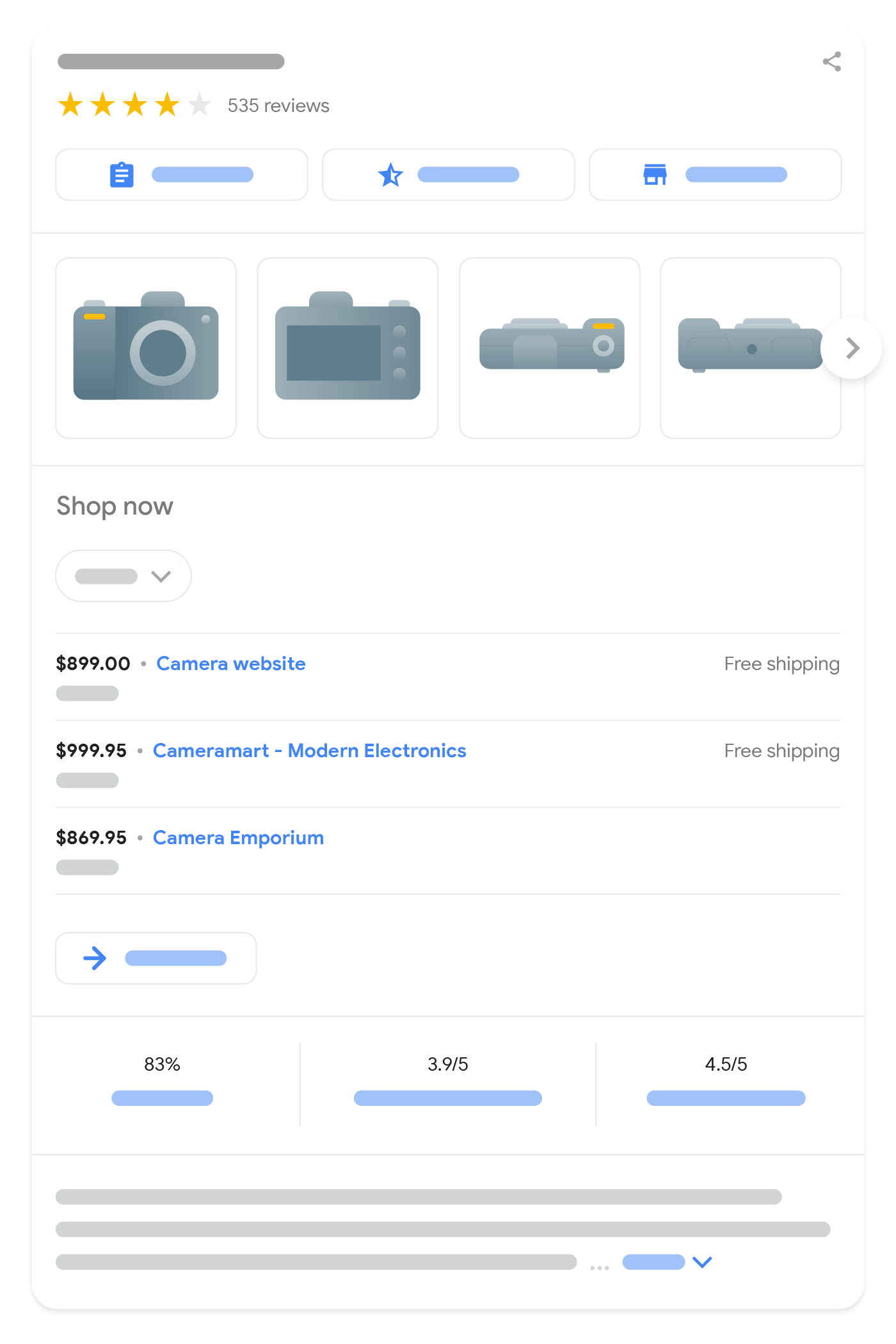
Entity analysis helps ensure the accuracy and relevance of search results by focusing on real-world entities such as products, brands, or locations. For ecommerce websites, using structured data and schema markup to describe your products in detail helps search engines better understand and display your content in rich results.
Structured data can provide information such as product reviews, prices, and availability, which can appear directly in search results and attract more clicks. By implementing schema markup, you can increase your chances of appearing in rich snippets, improve your search visibility, and enhance the user experience.

Image Source: Google
What are short-tail and long-tail keywords, and why are they important?4. Using LLMs for keyword research
The integration of advanced language models (LLMs) into ecommerce keyword research is transforming how marketers discover and prioritize search terms. These tools enable the identification of emerging trends, prediction of user intent, and development of a more comprehensive keyword strategy with less effort. This is particularly valuable for large ecommerce sites managing thousands or even millions of products.
5 common keyword research mistakes to avoid
Keyword research is a crucial component of a successful ecommerce SEO strategy, but common pitfalls can hinder your results. Below are five of the most frequent mistakes and how to avoid them.
1. Focusing solely on high-volume keywords
Many ecommerce businesses prioritize keywords with high search volumes, assuming they will drive the most traffic. However, these keywords are often highly competitive and may not align with the purchasing intent of the audience. Ignoring long-tail keywords or niche-specific terms can result in missed opportunities for targeting users further along the buying journey.
2. Neglecting search intent
Failing to align keywords with user intent leads to poorly optimized content that doesn’t satisfy audience needs. For example, using informational keywords on product pages or transactional keywords in blog posts can reduce relevancy and increase bounce rates. Always consider whether the content matches what users are searching for when they use a specific keyword.
3. Overlooking competitor analysis
Ignoring competitors and their keyword strategies can leave gaps in understanding market dynamics. SEO competitor analysis reveals valuable insights about successful keywords and untapped opportunities. Without it, businesses risk investing in less effective keywords while competitors dominate the search results.
4. Keyword stuffing
Overloading content with repetitive keywords not only harms readability but also violates search engine guidelines. Keyword stuffing on ecommerce product or category pages can lead to penalties that reduce ranking for those pages and the site in general.
5. Ignoring updates and trends
Search behaviors evolve over time, influenced by new products offered on the market, trends, and seasonal patterns. Periodically revisiting and refreshing keyword strategies makes sure your ecommerce site aligns with the latest consumer trends
Using Similarweb to drive ecommerce success with strategic keyword research
Effective keyword research is the backbone of a successful ecommerce SEO strategy. By understanding your audience’s search intent, prioritizing the right keywords, and leveraging tools like Similarweb for unique insights like real-time search volumes and zero-click searches, you can optimize your site to attract highly relevant traffic.
Whether you’re focusing on product pages, category pages, or blog content, aligning your keywords with user needs ensures better search visibility, increased conversions, and higher revenue.
FAQs
What is ecommerce keyword research?
Ecommerce keyword research involves identifying the search terms your target audience uses when looking for products like the ones you sell. These keywords help optimize your product pages, category pages, and content to match user queries and improve your chances of appearing in search results.
How does search intent affect keyword selection?
Search intent refers to the reason behind a search query. Keywords with commercial or transactional intent are valuable for ecommerce, as they often lead to purchases. Informational keywords can build awareness, while navigational keywords help users find your business directly.
What is keyword difficulty, and how should it guide strategy?
Keyword difficulty measures how hard it is to rank for a specific keyword. High-difficulty keywords are competitive and challenging for newer sites, while low-difficulty terms offer quicker wins. Prioritizing keywords with manageable difficulty levels can improve your SEO results over time.
How can competitor analysis improve your keyword research?
Competitor analysis reveals the keywords driving traffic to your competitors. This helps identify untapped opportunities and industry trends, allowing you to target keywords they may be missing and refine your strategy.
What are seed keywords, and why are they necessary?
Seed keywords are broad terms or topics central to your business. They form the foundation for expanding your keyword list using tools or further research, helping to build a comprehensive and targeted keyword strategy.
What tools can help expand your keyword list?
Keyword tools like Similarweb’s Keyword Generator provide suggestions based on seed keywords, offering insights into search volume, competition, and trends. These tools help uncover additional opportunities, including long-tail keywords.
How do you prioritize keywords for your ecommerce site?
Focus on keywords with a balance of search volume, competition, and relevance. Prioritize transactional keywords with high buying intent and consider metrics like keyword difficulty, cost per click (CPC), and zero-click searches to refine your list.
What is keyword clustering, and how does it help SEO?
Keyword clustering involves grouping related keywords by topic. This strategy improves content organization, enhances interlinking, and ensures comprehensive topic coverage, resulting in better SEO performance.
How should you optimize product pages with keywords?
Incorporate transactional and long-tail keywords into product descriptions, meta tags, and alt text. Avoid keyword stuffing and focus on writing for users. Use high-quality images and encourage user-generated content like reviews for added keyword relevance.
Why is content marketing important for ecommerce SEO?
Content marketing helps target informational keywords, build brand authority, and drive organic traffic. Blogging with optimized content aligned to user intent can attract potential customers at various stages of their buying journey.
What advanced strategies can enhance keyword research?
Advanced strategies include using semantic SEO, seasonal trends, and structured data. These approaches help improve relevance, capture timely traffic, and enhance the visibility of your ecommerce site in search results.

Related Posts


Market Intelligence vs. Competitive Intelligence: What’s the Difference?





The #1 keyword research tool
Give it a try or talk to our marketing team — don’t worry, it’s free!