




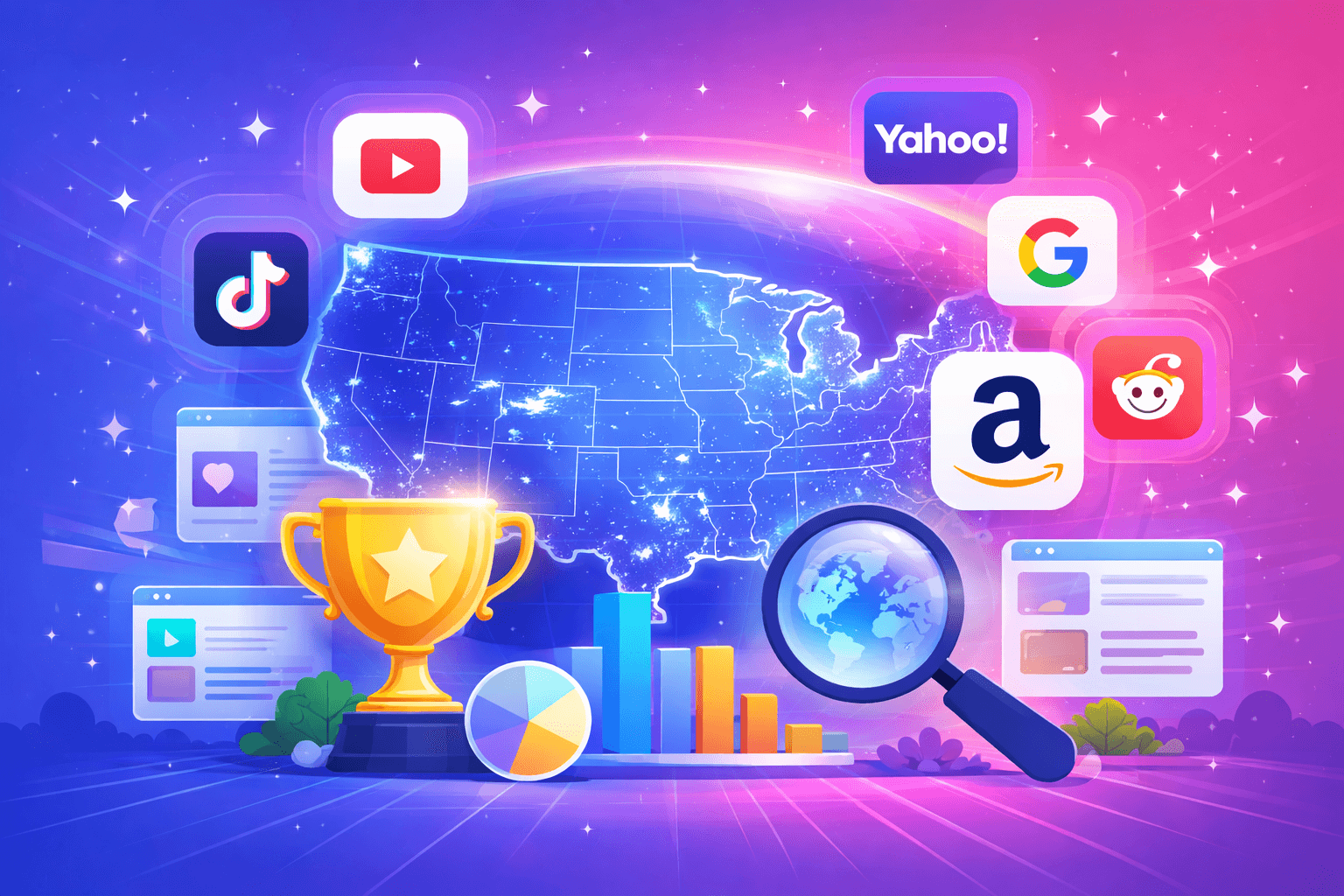

The Top 100 Most Visited Websites in the USA (August 2026)
by Shai Belinsky10 Min.
Sep 29, 2026
Let’s play a game. List all of the tech buzzwords you know in 15 seconds. Ready? Set? Go!
Big data, machine learning (ML), artificial intelligence (AI), data mining, predictive analytics, data governance, DaaS, SaaS…
OK stop!
Did DaaS or SaaS make your list?
When it comes to tech buzzwords, DaaS and SaaS are the ones to know. These service models are continually changing how businesses operate and grow. Both are essential, but they operate in very different ways. Knowing what one fits your business goal is the key to unlocking their true potential.
While both are transformative business models that leverage cloud technology, they serve distinct purposes. SaaS provides ready-to-use tools for efficiency, while DaaS empowers businesses with scalable, high-quality data tailored to specific needs. For organizations becoming increasingly data-savvy, understanding these differences is essential to choosing the right solution.
In this blog, we’ll examine DaaS vs. SaaS, a comparison that might change your perspective on data and technology.
Think of DaaS as your on-demand data hub. Just as streaming services provide instant access to your favorite shows and movies, DaaS delivers critical, ready-to-use data to fuel decision-making and innovation exactly when and where you need it.
DaaS removes the need to maintain complex data pipelines or internal infrastructure. Instead, it allows businesses to access real-time metrics, historical trends, and granular insights through seamless API integration and other delivery methods tailored to your unique workflows.
This model is particularly powerful for businesses that prioritize agility and scalability. With DaaS, teams can effortlessly integrate data into analytics platforms, customer relationship management (CRM) systems, or machine learning models, enabling them to adapt quickly to evolving market demands and unlock the full potential of data-driven strategies.
DaaS is your ticket to smarter, faster, data-driven decisions. Need more information? Our complete guide on Data-as-a-Service is all you need.
SaaS, or Software-as-a-Service, is like subscribing to a gym membership instead of buying all the equipment yourself. With a gym membership, you gain access to a wide range of tools, facilities, and expert services without needing to worry about maintenance or setup. Similarly, SaaS provides businesses with access to powerful, enterprise-grade software without the need to manage infrastructure or handle updates.
Delivered through the cloud, SaaS allows you to use software applications directly from any device with an internet connection—no installations, hardware, or IT involvement. Just log in and get to work.
This includes:
For businesses that prioritize ease of use and scalability, SaaS is a cost-effective solution that grows with their needs. It eliminates the burden of software management, letting teams focus on achieving their goals while relying on a trusted provider to handle the heavy lifting.
While DaaS and SaaS both leverage cloud-based technology, their roles in a business ecosystem differ significantly. Understanding these differences can help you choose the right model for your specific needs.
The primary distinction lies in what each delivers. SaaS focuses on providing tools and applications that help you complete specific tasks—think CRM software, project management platforms, or marketing automation tools.
DaaS, by contrast, delivers high-quality, enriched data that powers decision-making and analytics. DaaS provides the foundation, offering customizable, actionable data that can be integrated into various systems, including SaaS platforms, analytics dashboards, or machine learning models.
SaaS simplifies task execution, offering intuitive software that enables users to collaborate, analyze, or automate workflows without technical complexity. For instance, marketing teams might use SaaS tools like HubSpot to run campaigns or Slack to improve team communication.
DaaS complements these tools by providing the underlying data. Imagine a sales team using DaaS to enrich their CRM with detailed prospect data, such as web traffic or firmographic information. That enriched dataset can then flow into a SaaS platform like Salesforce, enabling more targeted outreach and better pipeline management. Together, DaaS and SaaS form an interdependent system—SaaS operationalizes the data, while DaaS provides insights.
As businesses mature in their data strategies, a noticeable shift is occurring—from SaaS-first workflows to DaaS-driven integrations. This evolution reflects the growing need for custom insights and deeper integration with proprietary systems. Organizations are becoming more data-savvy, building the infrastructure necessary to harness the full potential of DaaS.
For companies prioritizing scalability, agility, and data-driven strategies, DaaS offers unparalleled flexibility. Meanwhile, SaaS continues to play a critical role in democratizing access to powerful tools for teams that need immediate solutions without technical overhead.
By understanding these differences and their complementary nature, businesses can create a technology stack that blends the strengths of both models, enabling smarter decisions and streamlined operations.

Use Cases:
Advantages:
Use Cases:
Advantages:
Similarweb is a data company. Data isn’t just what we do—it’s who we are. And when it comes to delivering that data, we have options. Whether you love the simplicity of an all-in-one platform or prefer data at scale, Similarweb’s got you covered.
The depth and breadth of our data cover everything from website performance and search trends to technographics and audience demographics. Our data spans billions of digital interactions, millions of websites, and thousands of apps, giving you unparalleled visibility into the digital world.
Some teams thrive on the visual insights and ready-to-use tools in our SaaS platform. Others want the flexibility of plugging the data directly into their workflows via DaaS solutions like APIs and data feed services.
What really makes us unique is how different teams across your business – marketing, sales, analysts, and more – can unlock insights to build and optimize strategies to achieve their goals.
Want to know how we make this possible? This is how:
Similarweb’s Data-as-a-Service solutions offer direct access to our vast, enriched datasets, which map every corner of the digital world. Whether you’re integrating data into your analytics systems, building custom dashboards, or feeding machine learning models, we ensure you get the data – how, when, and where you need it.


Similarweb’s SaaS platform transforms data into actionable insights through its user-friendly interface. It allows you to explore website performance, track competitors, and uncover growth opportunities—all without the need for technical expertise.
Here’s how different teams capture value from our platform:
Marketing teams use the Similarweb platform to uncover what’s driving their competitors’ success and fine-tune their own strategies.


Sales teams leverage Similarweb’s Sales Intelligence platform to understand their prospects’ digital behavior and craft personalized outreach.

Executives turn to Similarweb for high-level market intelligence that informs critical business decisions.

Whether you want to crush the competition, uncover untapped opportunities, or become your team’s go-to data hero, Similarweb’s got you covered.
So, what are you waiting for? Let’s take your data game from good to extraordinary. It’s time to make smarter moves and bolder decisions for bigger wins—starting now.
What’s the difference between DaaS and SaaS?
DaaS (Data as a Service) delivers raw, customizable data that you can integrate into your own systems via APIs, data feeds, or custom delivery methods. It’s ideal for teams that want flexibility and control over how they use data. SaaS (Software as a Service), on the other hand, provides ready-to-use tools and insights through an intuitive platform, perfect for teams who want actionable data without technical complexity.
Can I use Similarweb’s DaaS and SaaS together?
Absolutely! Many businesses combine our DaaS and SaaS solutions for the best of both worlds. For example, you might use the SaaS platform to analyze market trends and track competitors while leveraging APIs or data feeds to pull raw data into your own custom analytics dashboards for deeper exploration.
Who benefits most from Similarweb’s solutions?
Similarweb is designed for a wide range of personas:
How does Similarweb’s data stand out?
It’s the sheer depth, breadth, and accuracy of our data that makes us unique. We cover billions of digital interactions, millions of websites, and thousands of apps across a wide range of industries. Whether you’re tracking website traffic, uncovering search trends, or analyzing competitor strategies, Similarweb provides the most comprehensive view of the digital world available.
by Andrea Pash
Senior Content Marketing Manager
Andrea, with her extensive marketing background and 15+ years in finance, pulls insight and crafts content for Stock Intelligence & DaaS at Similarweb. A UC Irvine grad, she's a concert lover and avid traveler.
The Top 100 Most Visited Websites in the USA (August 2026)
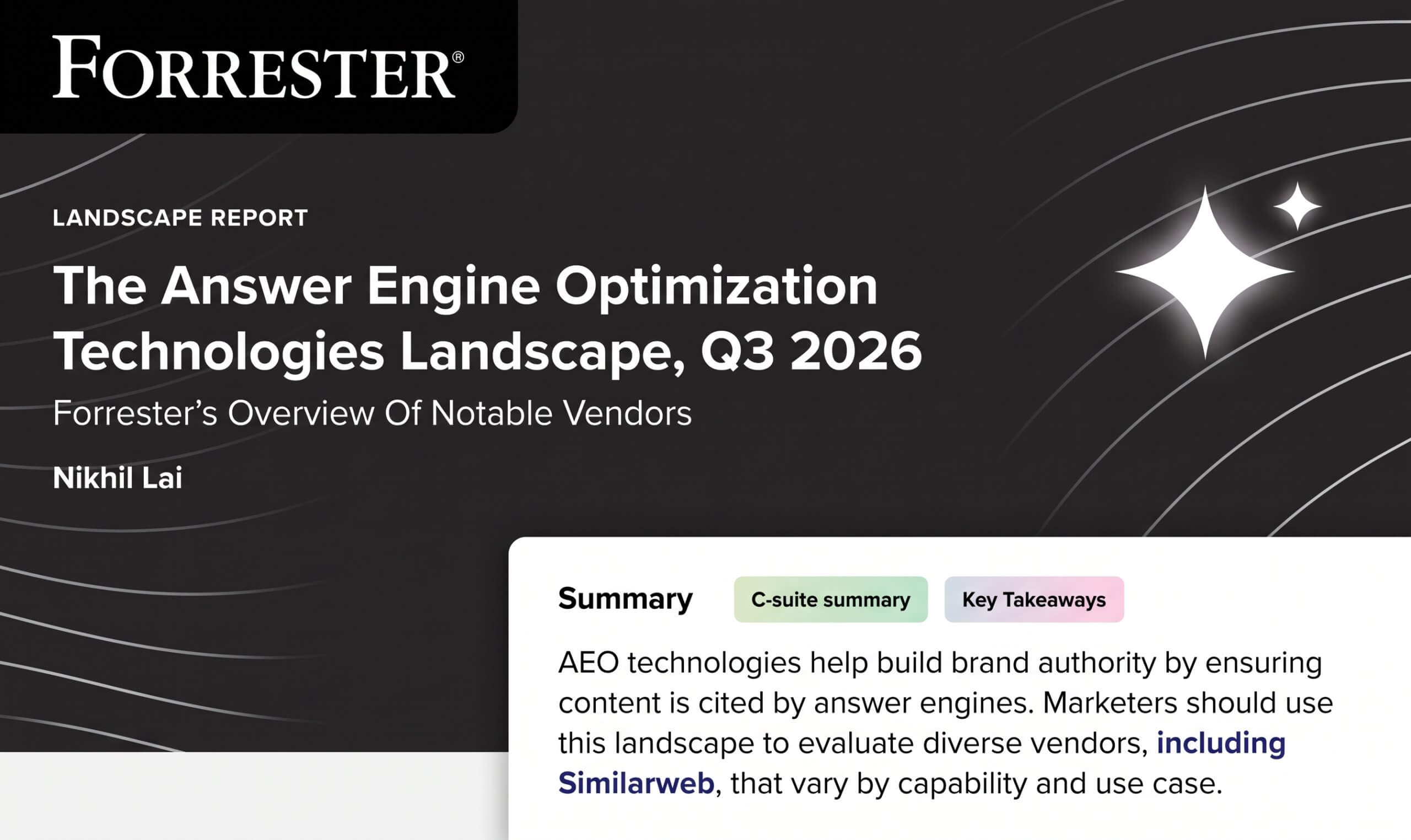
Similarweb Named in Forrester's Answer Engine Optimization Technologies Landscape, Q3 2026
Anthropic IPO: What Claude's Web and App Data Show
Harness the power of data with Similarweb’s APIs to drive smarter business decisions
