






The Top 100 Most Visited Websites in the USA (August 2026)
by Shai Belinsky10 Min.
Sep 29, 2026
 Marketing Intelligence
Affiliate marketing is a very dynamic marketing strategy with several common approaches. This can make it difficult to know how, or where, to begin creating an affiliate program for your brand and products. This blog will help you increase your website traffic and sales by providing a breakdown of what affiliate marketing is, and how to find, empower and manage high-quality affiliates, as well as explore factors that need to be considered when defining goals for your affiliate program.
Affiliate marketing is a common marketing strategy used to drive sales and generate online revenue. It has increased in popularity as digital marketing tactics have taken off. In fact:
Read More: 52 Affiliate Marketing Statistics for 2022
To contextualize the above statistics consider the following:
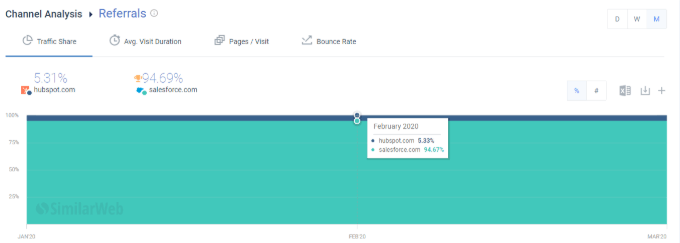
Affiliate marketing has become so popular because it benefits both the referred and the referrer. The referred brand can increase sales while the affiliate earns a commission. Affiliate sales are tracked via links on all relevant sites so both parties know how much traffic the affiliate is bringing and how much commission they’ve earned.
As a rule of thumb, brands need affiliates that are good matches for their products, as opposed to affiliates with the largest audience reach. Along the same lines, it’s better to open an affiliate program with a handful of quality affiliates rather than opting to work with many affiliates that have irrelevant traffic. For example, an affiliate that has millions of football followers would not be an effective partner for a perfume brand.

Ultimately, your affiliate program runs off three main parts – your product, your affiliates, and your customers – to generate a steady flow of quality traffic.
Just as you would recruit for any open position, use multiple avenues to ensure you have found the most relevant, high-quality affiliates for your product. You already have several main channels at your fingertips to explore.
Email: First, you could use your email list to let your subscribers know about your program and ask them to spread the word to potential affiliates and, if fitting, apply. This method allows subscribers to become affiliates and brands to open refer-a-friend programs to create a regular stream of potential affiliate leads.
Your Website: As simple as it sounds, advertise your affiliate program on your site. Anyone who is on your site is already familiar with your brand and probably likes your products.
Social Media: You already have followers on networks such as Facebook, Instagram, and LinkedIn, so why not reach out to them? Promote your affiliate program on all your social channels and then your followers can either apply or share your post – or both.

Remember, when you promote your affiliate program you should always include information that candidates would want to know. For example, include information about your products, your tracking platform, your payment options, and your business’s reputation. Just as importantly, make it easy for candidates to apply.
A great place to start looking for relevant affiliates is by understanding which affiliates your competitors are using. That information gives you an inside look at your competitor’s strategy and playbook so you can get one step ahead of them. There are several tools you can use to do this including Google Alerts, Similarweb and more.
To conduct this research with Google Alerts, set a query for your competitor’s name – every time their name is mentioned in an article you’ll get an alert directly in your inbox so you can track their backlinks, and mentions of the company.
Similarweb has a tool that allows you to compare several competitors’ incoming traffic at once as well as to see the traffic share each wins. This provides insight into which competitors are working with which affiliates and how successful those partnerships are. For example, Afiliza’s Business Development team is responsible for global expansion and partnerships approached Similarweb last year looking to understand more about its competitor’s strategies. Since then, Similarweb Affiliate insights surfaced 35 new partnerships that generated a 2% increase in revenue and improved the ROI of SEM, or paid search, investments by 15%.
Opening an affiliate program isn’t a necessity for all brands, but if you find affiliates are a good match for your products and services, this form of marketing can help drive traffic, and ultimately sales, through the roof.

Consider how your affiliate program will support your existing marketing and sales efforts and tailor your program to your target audience.
If you’re ready to get started building an affiliate marketing strategy for your website or to become a sought-after affiliate marketer download the checklist that fits you below to have the information you need to succeed.
How to Open a Successful Affiliate Program
How to Become a Successful Affiliate

Sr. Marketing Intelligence Specialist
Sarah creates engaging content with over 5 years of experience. She enjoys traveling, family time, baking, and Netflix. Sarah holds a psychology degree from Clark University and lives in Israel.
The Top 100 Most Visited Websites in the USA (August 2026)
Similarweb Named in Forrester's Answer Engine Optimization Technologies Landscape, Q3 2026

Anthropic IPO: What Claude's Web and App Data Show
Give it a try or talk to our marketing team — don’t worry, it’s free!
