


 Marketing Intelligence
Google AI Overviews: How to Track, Measure, and Optimize Visibility in AI Search

The way we search & consume information through Google is evolving as AI-Overviews take center stage. This transformation highlights AI’s growing role in enhancing search results and improving user experience. By enabling search engines to deliver highly targeted information, AI presents new opportunities for content creators to reach broader audiences while also demanding strategic adjustments to stay competitive.
To remain relevant and visible, digital strategies must adapt to these ongoing shifts in search results. AI Overviews have become a central part of the SEO landscape, offering new opportunities for those ready to embrace and leverage these changes.
Summarize with ChatGPT | Google AI | Perplexity | Grok
What are AI Overviews?
AI Overviews appear in the Google search results, usually instead of Rich Snippets. They provide an informative answer, generated by advanced AI algorithms to enhance both search results and user experience. Rather than focusing on granular details, they streamline the search process by providing quick, relevant insights without requiring users to browse multiple pages.
By leveraging natural language processing and data analysis, AI ensures content remains fresh and up to date, meeting the demand for fast, reliable information. Since AI Overviews adapt to user preferences, they play a crucial role in search results, facilitating data retrieval, payment processing, and navigation. As a result, they have become a big part of the evolving SEO landscape.
How do Google AI Overviews impact SEO?
Many SEOs may be wondering: What do these changes mean? Why should this new “featured snippet” affect my SEO strategy or tactics?
AI Overviews are particularly significant for the following reasons:
1. Higher competition for visibility on SERP
AI Overviews are taking over more of the SERP, pushing traditional listings further down and making visibility more competitive.
This means that for many queries, businesses can achieve higher rankings, greater visibility, and expanded audience reach across relevant keywords – only if you’re there.
On the other hand, the businesses that didn’t succeed in ranking in AIO are now competing for the left space on SERP.
2. Increases brand credibility and user trust
While zero-click searches may reduce direct site visits, they enhance user trust and satisfaction by delivering quick, reliable answers. This reinforces brand credibility and keeps users engaged with your content, which is similar to an AI Overview.
3. Lower CTRs on queries that trigger an AI Overview
AI Overviews have substantially lower click-through rates than traditional organic results.
According to Seer Interactive, organic CTR went down to 0.64% when AIO was shown last month.
Organic CTR improved for queries where AIO did not appear. The same study shows 3.97% CTR for queries where an AI Overview was not shown last month.
What do Google AI Overviews look like?
Google AI Overviews provide summarized answers at the top of search results, delivering valuable information in an easily digestible format. These overviews blend text, images, and links to create detailed, context-rich answers. Additional features, such as link cards and the Google Shopping Graph, guide users to further resources for deeper insights when needed.
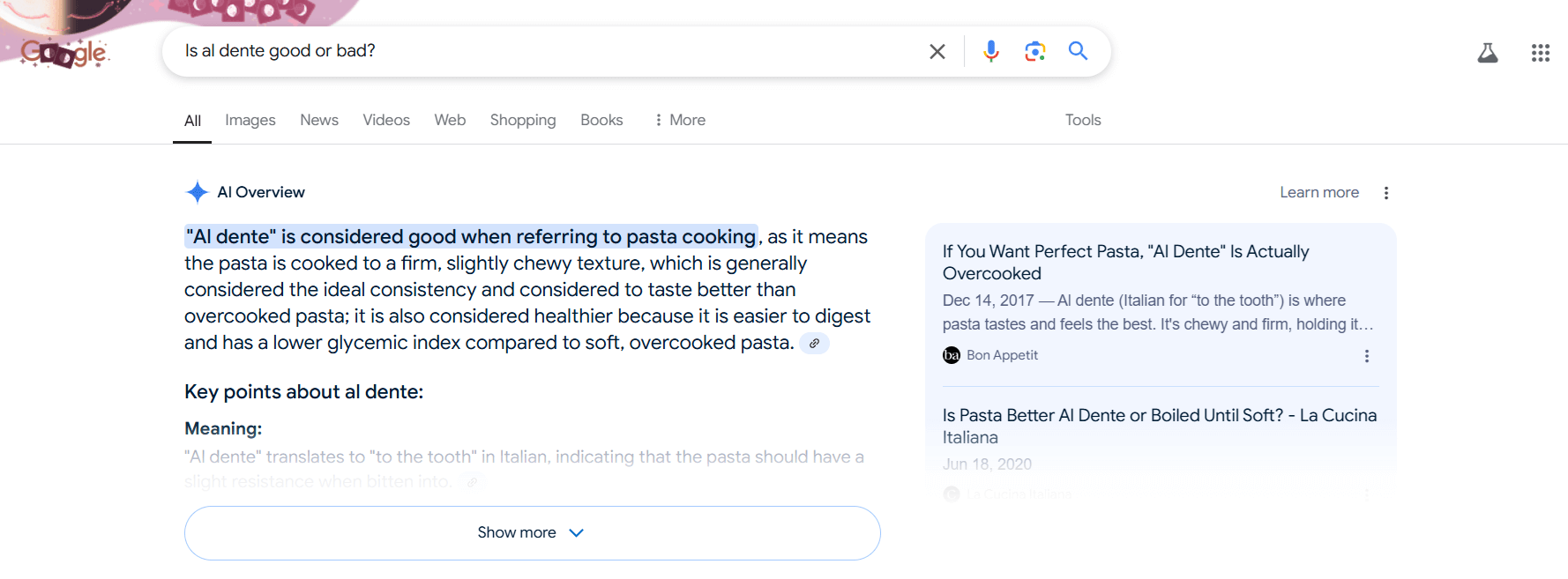
Link cards are integrated into AI Overviews, offering direct access to more in-depth content. This design enhances decision-making by streamlining access to valuable resources. Similarly, the Google Shopping Graph aggregates comprehensive product information, making it a powerful tool for ecommerce SEO and improving the online shopping experience.
Google AI Overviews customizes its content depending on how technical the question is. They might use tables, bullet points, or steps. This flexibility guarantees continued clarity and relevance, accommodating various search requirements and offering a better user experience. This broad range of information sharing demonstrates Google’s focus on efficiency and clarity in search services.
Images and icons play a crucial role in AI Overviews, adding context to concise text and enhancing visual appeal. As these overviews become more prevalent in search results, they drive higher engagement and improve search efficiency, reinforcing Google’s focus on delivering fast, user-friendly experiences.
How to optimize for AI Overviews
As AI Overviews become increasingly prominent, SEOs must adapt by prioritizing quality, relevance, and user intent. They need to refine their strategies to align with AI-driven search results. Here’s how:
1. Increase brand visibility
Building a strong online presence through backlinks and brand mentions helps AI systems understand and rank your content effectively. These signals not only drive direct traffic but also demonstrate authority and value to search engines and AI models.
- Backlinks from reputable sources: When authoritative websites link to your content, it signals trustworthiness and relevance, increasing your chances of being featured in AI Overviews.
- Brand mentions: Even without direct links, brand mentions can boost visibility by reinforcing brand authority, helping AI recognize and prioritize your content in relevant searches.
2. Ensure your pages are indexable
For your content to appear in AI-generated overviews, your pages must be easily crawlable and indexable. Implement proper technical SEO practices to ensure accessibility:
- Use a well-structured XML sitemap to guide search engines through your content
- Optimize your robots.txt file to prevent accidental blocking of important pages
- Avoid noindex tags on critical content that should be indexed
- Minimize excessive JavaScript that could interfere with search engine crawling and indexing
Make your website more AI-friendly
Use Wordlift’s LLM.txt generator to get llms.txt and help AI systems better understand your website.
All you have to do is:
- Enter the homepage URL.
- Choose which links you want to extract—header, navigation, footer, or all.
- Click “Submit” and get your llms.txt file.
- Copy the generated content and save it as llms.txt in your server’s root.
3. Identify search intent and provide a clear, concise answer
Understanding search intent is key to creating content that AI Overviews will display. Similarweb’s Keyword Generator can help identify keyword ideas and their associated search intent, allowing you to create content that aligns with user needs.
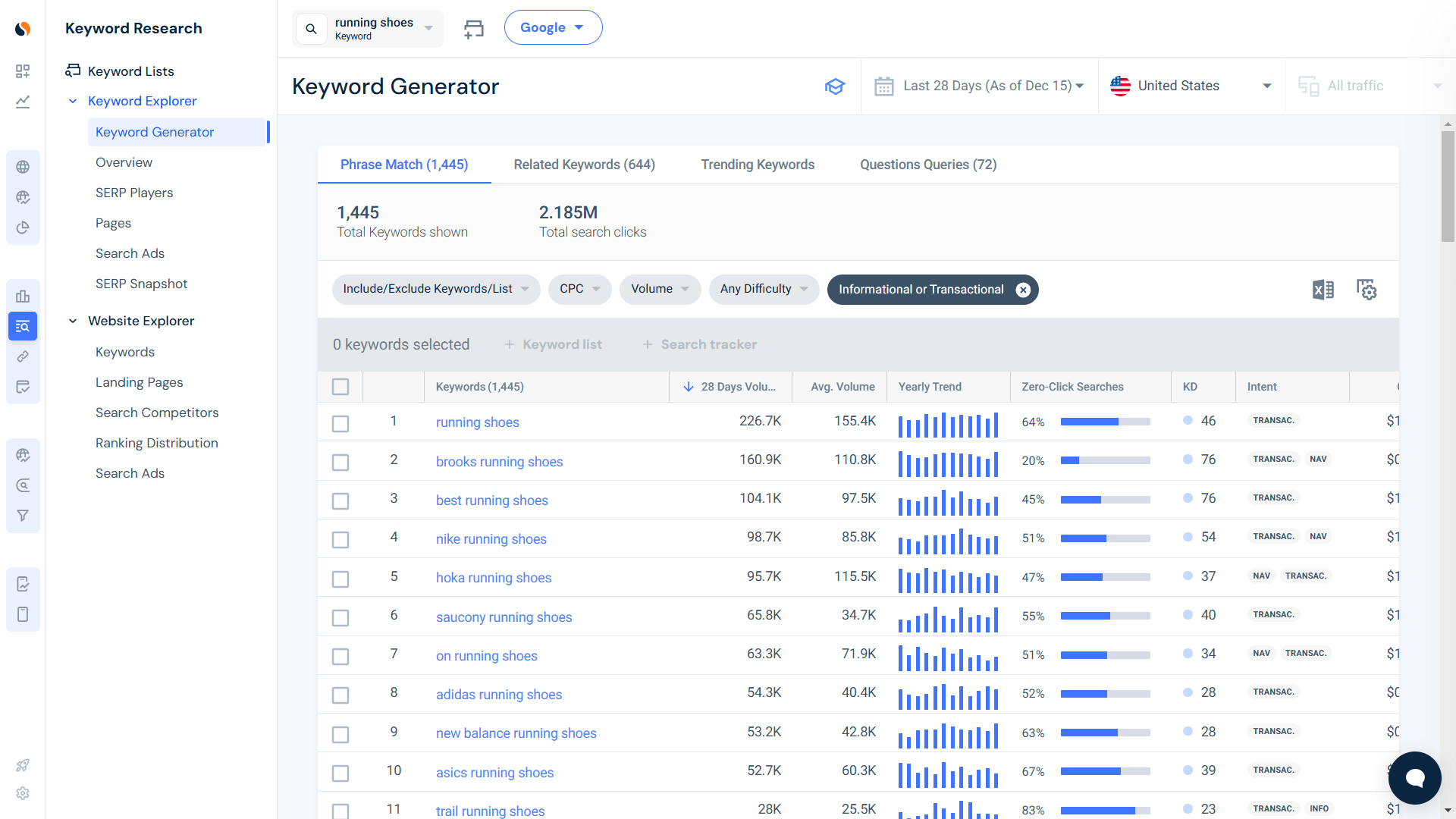
When your content directly addresses user intent, it improves engagement, helps increase retention, and improves site interaction. Providing clear, well-structured answers ensures your content meets AI-driven search expectations, strengthening your site’s authority and visibility in search results.
4. Structure content for a better reading experience
Well-organized content improves readability and understandability, making it easier for both users and AI systems to process. Use clear headings, bullet points, and concise paragraphs to improve navigation within the content as well as engagement rates.
A well-structured format not only benefits human readers but also increases the likelihood of your content being featured in AI Overviews by making key information more accessible and scannable.
5. Create new content specifically addressing different keywords
Stay ahead by regularly updating content or expanding existing material with fresh insights. You can use Similarweb’s Keyword Generator to identify long-tail keywords that address specific queries, ensuring your content remains relevant and valuable.
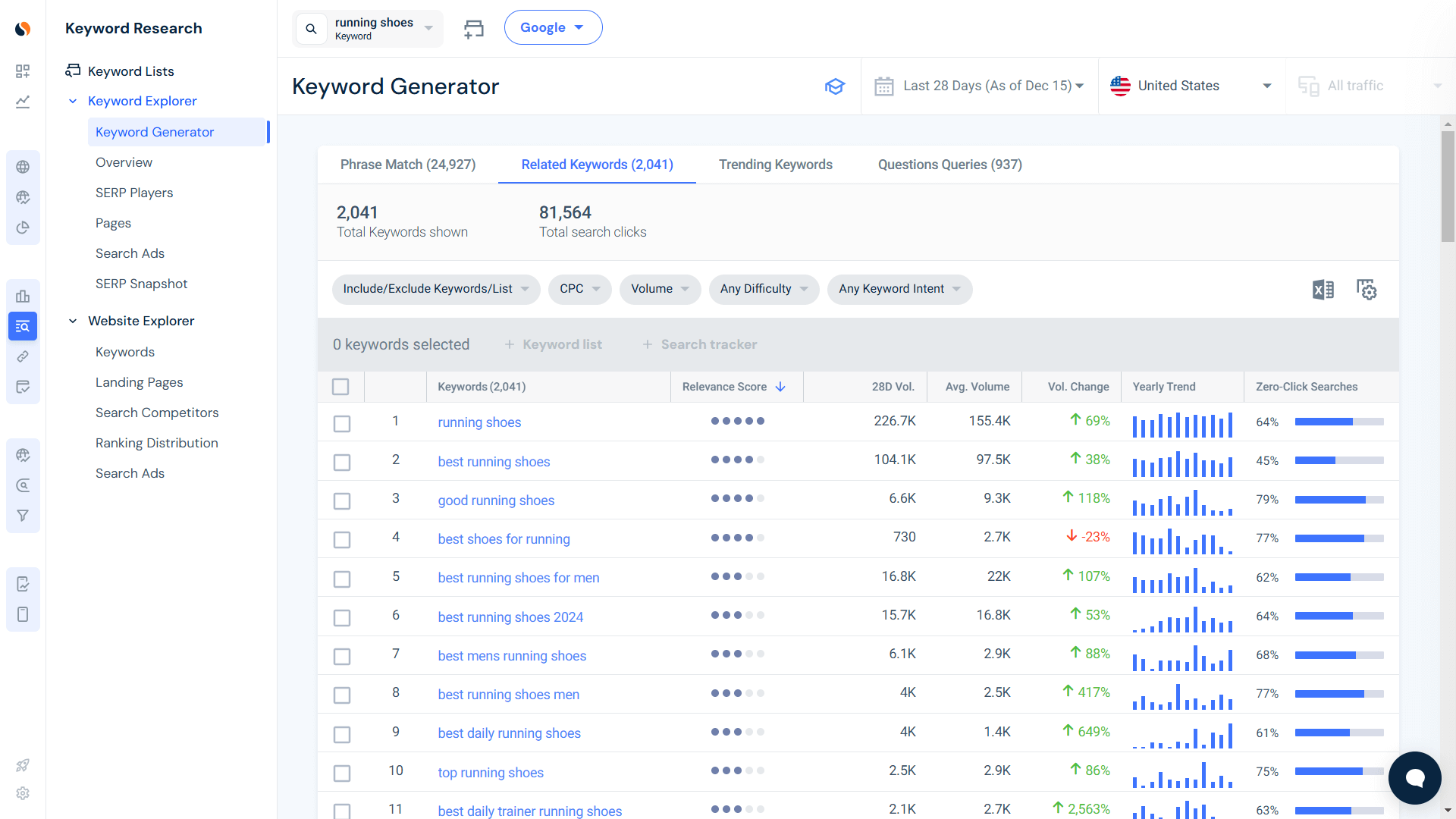
Continuously refining your content attracts new visitors while keeping your existing audience engaged. This approach helps you stay aligned with evolving search algorithms and user demands, increasing the chances of appearing in AI Overviews.
6. Use on-page SEO techniques
Optimize your content by strategically placing keywords in headlines, meta tags, and body text to improve search visibility. Use Similarweb’s tools to gain deeper insights into keyword optimization, ensuring a balance between search engine requirements and user experience.
Effective on-page SEO helps improve your site’s ranking in search results, establishes credibility, increases organic traffic, and increases your chances of appearing in AI Overviews.
7. Boost your site’s ranking for better AI Overviews visibility
Enhancing your website’s ranking requires strategic internal links, high-quality backlinks, and structured data (schema markup) to help search engines better understand your content. Similarweb’s Backlink Checker can provide insights into your link-building strategy and its impact on rankings.
Improving your website’s rank involves utilizing internal links, high-quality backlinks, and schema markups. Tools like Similarweb’s Backlinks Checker provide strategies for understanding link-building impacts.
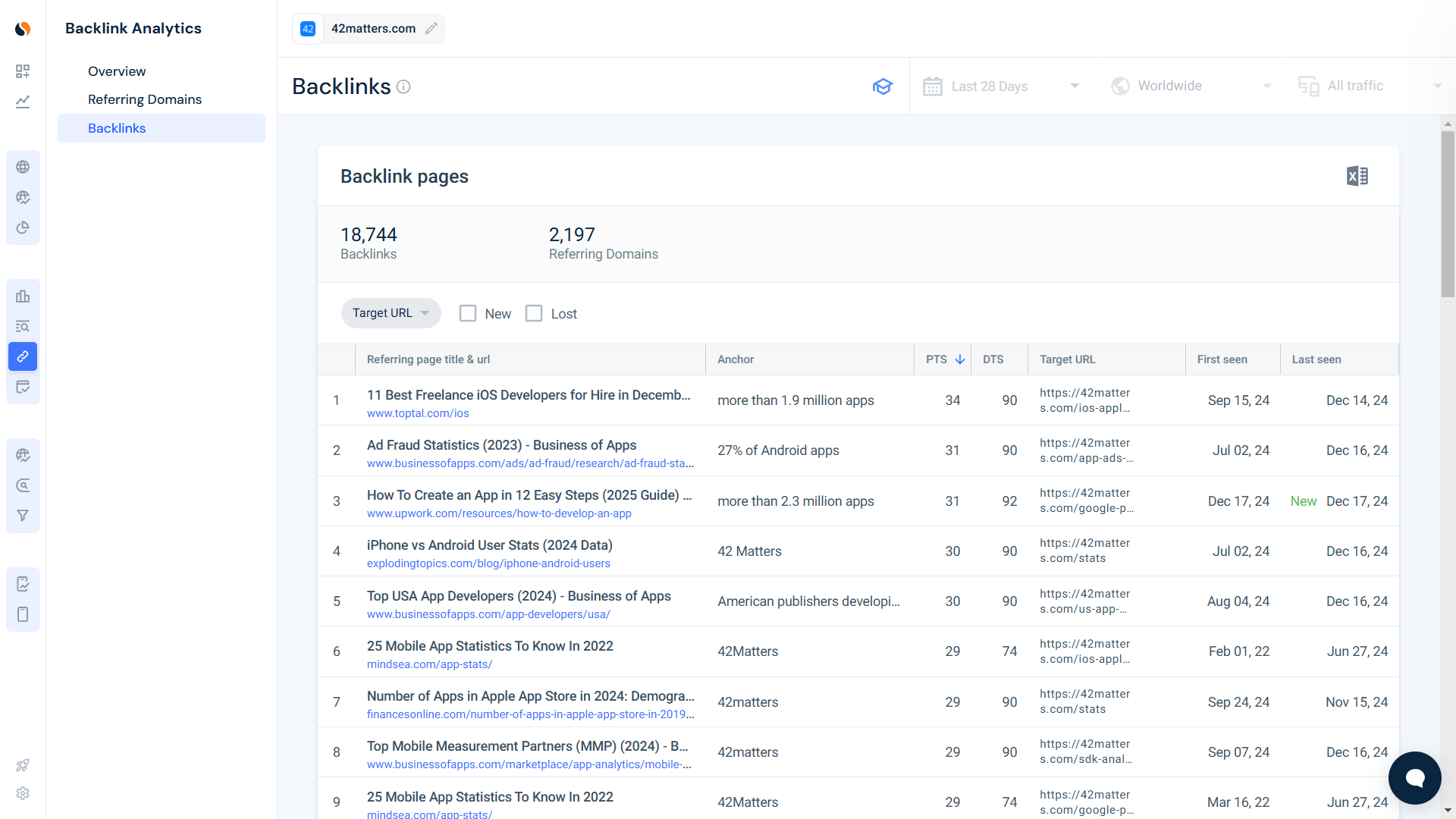
By strengthening these ranking signals, you improve your site’s authority, search visibility, and integration into AI-driven search results, ultimately increasing the likelihood of being featured in AI Overviews.
8. Improve technical SEO
A strong technical foundation improves your site’s visibility and ranking potential. Similarweb’s Site Audit tool provides a comprehensive analysis of key technical SEO aspects, including page speed, navigation, internal linking, and mobile optimization.
- Page speed and performance: Under the Experience section, you’ll find insights into loading times and factors impacting performance. With an evaluation of over 300 metrics (including Core Web Vitals), the tool helps pinpoint areas for speed and user experience improvements.
- Site structure and internal linking: The Discoverability section analyzes your site’s architecture, flagging issues such as broken links and redirects that may weaken your internal linking strategy.
- Mobile optimization: The audit tool also checks your site’s mobile responsiveness, identifying potential configuration issues to ensure a seamless experience across all

9. How to track AI overview keywords
Using Similarweb’s Rank Tracker, you can monitor the performance of your keywords in AI Overviews daily and over time. By analyzing AIO keyword trends, you can refine your SEO strategy to capture more organic traffic.
Under the Rank Tracker tool, click on SERP Features. In this report, look for SERP Feature Presence and see the trends for AI Overviews where your keywords are ranking.

How to prevent your content from appearing in AI Overviews
While appearing in AI Overviews can increase exposure, not everyone actually sees this as beneficial. In fact, some prefer to have selective exposure and would like to incorporate it into their broader content strategy. Here are some recommended methods to manage this:
1. robots.txt
With robots.txt files, you guide search engines on how to scan your site’s pages and which pages they should avoid crawling. Customizing these files allows for tighter control of online content indexing so that they align with specific business strategies.
To do that, you need to add a disallow to your robots.txt for the AI user-agent you want to block, for example:
User-agent: GPTbot
Disallow: /
User-agent: Google-Extended
Disallow: /
2. noindex tags
Using noindex tags can prevent certain pages from being included in search engine indexes. This method is effective if you want certain content to be excluded from AI Overviews. Managing noindex tags wisely prevents blocking important content that adds value to your digital footprint.
3. nosnippet tags
With nosnippet tags, you basically restrict search engines from generating snippets of your content for AI Overviews. These tags selectively manage how summaries of content appear to users, so you will have more tailored control over the engagement experience. When you use a nosnippet, only your preferred content is made subject to AI-driven insights. This allows you to maintain a curated public image.
Tweak your SEO strategies according to the AI Overview’s dynamics
Optimizing for AI Overviews is now a strategic necessity. With Similarweb’s cross-functional SEO tools, you can adjust and adapt your SEO strategy to align with AI Overviews’ dynamics, enhancing visibility and strengthening your competitive position through effective content planning and execution.
By leveraging these optimization practices, businesses can maximize AI Overviews’ prominence, improve search rankings, and establish a strong foundation for future content marketing efforts. As the SEO landscape evolves, early adoption of these strategies ensures long-term success—making proactive SEO adaptation more critical than ever.
FAQs
How can I tell if AI Overviews are causing my organic traffic to drop?
If rankings and impressions remain stable while clicks and CTR decline, AI Overviews are likely absorbing user intent on the SERP. Comparing performance before and after AI Overviews appear for the same keywords helps confirm the impact. This pattern is especially common for informational queries.
Where can I see which of my keywords trigger AI Overviews in Google Search?
AI Overviews can be identified at the keyword level by tracking SERP feature presence alongside rankings. Monitoring these keywords over time reveals where AI-generated summaries appear and whether their coverage is expanding across your search portfolio.
What’s the difference between AI Overview tracking and traditional rank tracking?
Traditional rank tracking measures position in organic results, while AI Overview tracking measures visibility within AI-generated answers. A site can rank well but still lose clicks if an AI Overview appears above it and satisfies the query directly.
Can I compare my site against competitors for AI Overview visibility?
Yes. By tracking which domains are cited within AI Overviews for shared keywords, you can benchmark AI visibility and identify competitors gaining disproportionate exposure as AI Overviews reshape the SERP.
Which metrics matter most when measuring AI Overview impact?
Clicks, CTR, and traffic trends should be analyzed alongside AI Overview presence and citation frequency. Rankings alone are no longer sufficient to explain performance changes when AI-generated summaries appear.
How do AI Overviews affect branded versus non-branded search traffic?
AI Overviews tend to impact non-branded, informational queries more heavily, often reducing clicks while increasing brand exposure. Branded searches are typically less affected, but monitoring both is essential to understand overall demand shifts.
What types of content still earn clicks when AI Overviews answer the query?
Content tied to tools, comparisons, original data, and high-intent decision-making tends to retain clicks. AI Overviews often summarize informational intent but still drive traffic to deeper, action-oriented content.
Should I block my content from appearing in AI Overviews?
Blocking AI Overviews using noindex, nosnippet, or robots.txt is possible but should be approached cautiously. While it may protect clicks in some cases, it also reduces brand exposure and authority in AI-driven search experiences.

Related Posts



Why AI Engines Cite UGC Over Brand Content And How To Leverage It For AEO

AI Mentions vs. AI Citations: What’s the Difference and Why It Matters for GEO


Wondering what Similarweb can do for your business?
Give it a try or talk to our insights team — don’t worry, it’s free!