


 Marketing Intelligence
Technical GEO: 9 Factors That Influence Your AI Visibility

AI-powered search is changing how people discover information online. Visibility is no longer only about ranking in search results. More often, brands win or lose attention based on whether their content is selected, summarized, or cited inside AI-generated answers.
This shift creates a new technical challenge. Even strong content can be ignored if AI systems cannot reliably access it, understand it, or trust it.
That’s where technical GEO comes in.
What is technical GEO?
Technical GEO (Generative Engine Optimization) is the technical foundation that makes your site easy for AI systems to access, understand, extract, and trust, so your content can be included (and cited) in AI-generated answers.
Is technical GEO really different from technical SEO?
In practice, you can say that technical GEO is very similar to technical SEO, but it’s expanded for a world with more crawlers and more retrieval systems. Many AI experiences still depend on traditional web indexes and crawlers, which means the basics (crawlability, indexing, performance) still decide whether you’re even eligible.
Technical GEO is not a replacement for technical SEO. It is an extension of it.
Most of the foundations are the same:
- Pages still need to be crawlable and indexable
- Content still needs to be rendered correctly
- Performance, stability, and security still matter
- Clear site structure and internal linking still help machines understand your content
What has changed is how strict and how literal the interpretation has become.
Traditional technical SEO was designed for search engines that crawled, indexed, and ranked pages. As long as Googlebot could eventually render your content and understand the page, you were usually fine.
Technical GEO adds new constraints:
- More crawlers are involved, and not all of them render JavaScript
- Retrieval systems often extract passages directly, rather than ranking whole pages
- Ambiguity is “punished” faster, because AI systems summarize rather than list results
That leads to a shift in emphasis:
- From ranking signals to retrieval readiness
- From clever optimizations to clarity and consistency
- From page-level optimization to template and system-level reliability
A simple way to think about it is this.
If technical SEO helps your content rank, technical GEO helps your content be used.
You do not need a separate technical stack for GEO, and any technical GEO “tool” people try to sell you on LinkedIn is probably useless.
Why technical GEO matters (even if your content is great)
AI systems can’t cite what they can’t reliably retrieve.
That sounds obvious, but it is the core reason technical GEO matters. Generative AI does not browse the web the way humans do. It relies on crawlers, retrieval systems, and extraction pipelines that are far less forgiving than traditional search engines.
If your key pages are blocked, slow, unstable, hidden behind JavaScript, or difficult to parse, they are less likely to enter the pool of sources AI systems use to build answers. In many cases, they are excluded before relevance or content quality is even evaluated.
This is why strong content alone is no longer enough. You can have the best explanation, the most accurate data, or the most authoritative brand voice, and still be invisible if the technical signals do not support reliable access and extraction.
The technical GEO factors that move the needle
These factors may determine whether your content is eligible to be accessed, extracted, and cited by AI systems. You do not need to optimize for all of them at once, but gaps in any one area can prevent otherwise strong content from being used.
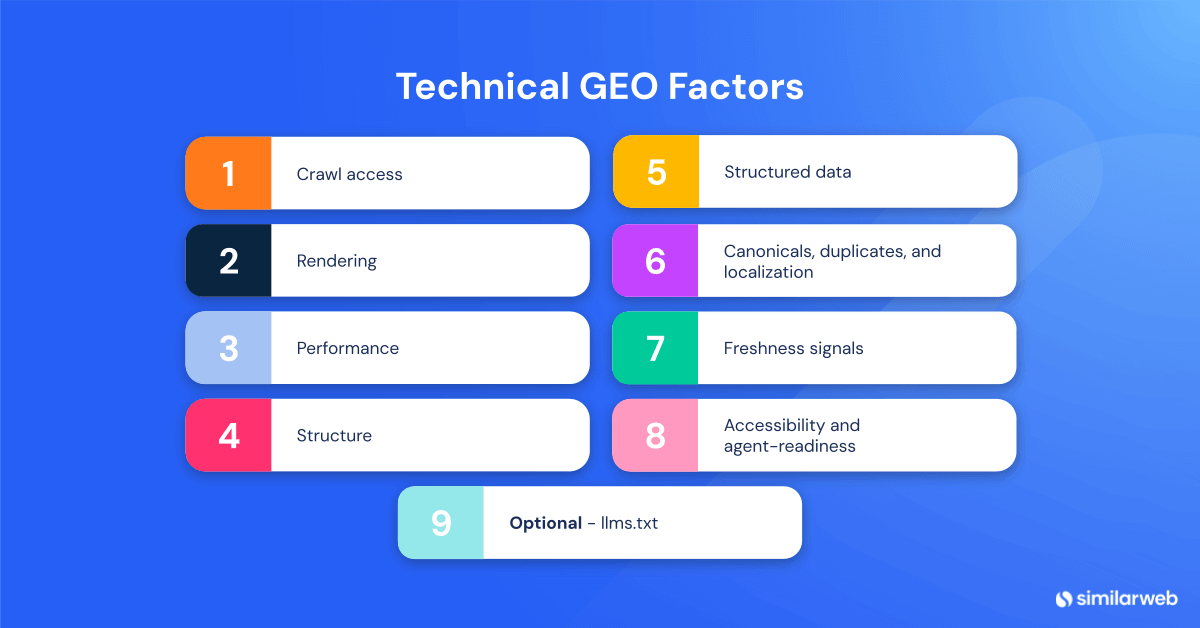
1. Crawl access: let the right bots in (without opening the floodgates)
Start with the boring question: Can the systems that power AI discovery reach your pages?
- Audit your robots.txt, meta robots, and HTTP headers (X-Robots-Tag) for accidental blocking.
- Decide how you want to handle AI crawlers:
- Some organizations allow crawlers to improve citation chances.
- Others restrict crawlers for licensing/training reasons.
I recommend ensuring AI crawlers aren’t disallowed if you want citations, and the crawler vendors themselves publish guidance and user-agent controls (OpenAI, Anthropic, Perplexity).
Practical tip: don’t guess, check server logs to confirm what’s being fetched, by whom, and whether you’re returning 200 vs 403/429. You can use directories like this one to identify and verify AI crawler user agents.
2. Rendering: assume some AI crawlers don’t execute JavaScript
Not all AI systems behave like Googlebot. Some fetch pages via simple HTTP requests and rely heavily on raw HTML.
That’s why it’s important to:
- Keep primary content in clean, crawlable HTML
- Use SSR/SSG or pre-rendering if core content depends on client-side rendering
What to do
- Test what the HTML looks like without executing JS by using your browser’s View Page Source feature, temporarily disabling JavaScript in your browser’s developer tools, or crawling the page in text-only mode using Screaming Frog SEO Spider.
- Make sure the “answer” portion of the page is present in the initial HTML (not injected only after interaction).
3. Performance: treat speed as eligibility, not polish
In classic SEO, speed is a ranking factor. In GEO, speed and stability can determine whether your page is fetched and used at all.
Things you should be focusing on:
- Compress images (WebP/AVIF), lazy load
- Remove render-blocking scripts
- Use a CDN
- Aim for TTFB under ~200ms
4. Structure for extraction: make answers easy to lift
AI systems love content that’s straightforward to extract and quote.
That means:
- Logical URL structure and consistent taxonomy
- Clean heading hierarchy (don’t skip levels)
- Use lists, tables, and step-by-step blocks for “how-to” queries
5. Structured data: reduce ambiguity and strengthen entity understanding
Schema is still one of the most direct “machine-readable” signals you control.
Some schemas I recommend prioritizing:
- FAQPage
- HowTo
- Product/Service
- Article/NewsArticle + Author
- Organization/LocalBusiness
- Review/AggregateRating
- VideoObject/ImageObject
- BreadcrumbList
Also: connect identity signals using schema properties like sameAs (Organization/Person) so models can associate your brand and authors with official profiles.
Note: schema must match visible content and be validated, out-of-date markup can backfire.
6. Canonicals, duplicates, and localization: consistency builds trust
AI systems don’t just follow canonical tags, they also “notice” conflicting versions of the same page.
So:
- Canonicalize properly (and keep page variants consistent)
- Fix duplicate content and parameter sprawl
- Use hreflang correctly for international sites
7. Freshness signals: help systems trust “this is current”
Competitors recommend reinforcing freshness with:
- Accurate publish/modified dates
- XML sitemaps with <lastmod>
- Visible update notes on the page
If you update frequently and care about fast re-crawl, consider protocols that speed indexing, like IndexNow (especially useful in Bing ecosystems).
8. Accessibility and agent-readiness (a rising technical GEO factor)
As AI shifts from “indexing” to “agents navigating pages,” accessibility signals become more practical than theoretical.
OpenAI has explicitly noted that accessible structure (ARIA roles/tags) can help their agent interpret page structure and interactive elements.
Quick wins
- Use proper landmarks (main, nav, article)
- Label interactive controls
- Avoid “mystery meat” UI that hides key info behind unlabeled components
9. Optional – llms.txt
A proposed standard that lets publishers provide AI-friendly crawl guidance via a dedicated llms.txt file.
- Intended to summarize which parts of a site are important for LLMs
- Not universally adopted or officially supported by major AI platforms
- No clear evidence yet that it improves inclusion or citation
Best practice: consider testing it if your team has capacity, but don’t rely on it as a ranking or visibility lever.
How to audit your technical GEO using Similarweb Site Audit
Before you worry about measuring impact, you need to understand whether your site is technically ready to be used by AI systems in the first place.
Large parts of a technical GEO audit look very similar to a technical SEO audit, because the same foundations apply. Crawlability, indexability, rendering, performance, and structure still determine whether your content is even eligible for retrieval.
That is where Similarweb’s Site Audit tool fits in. While it is positioned as a technical SEO tool, it works just as well as a technical GEO audit framework when you look at it through an AI visibility lens.
Crawl and discover your technical readiness
Use Site Audit to crawl and discover your website’s technical status and issues across hundreds of performance and SEO factors.
- Run ad hoc or scheduled crawls on any part of your site
- Crawl large or complex sites without slowing down your machine or your website
- Identify blocked, broken, or inaccessible pages that AI systems would never be able to retrieve
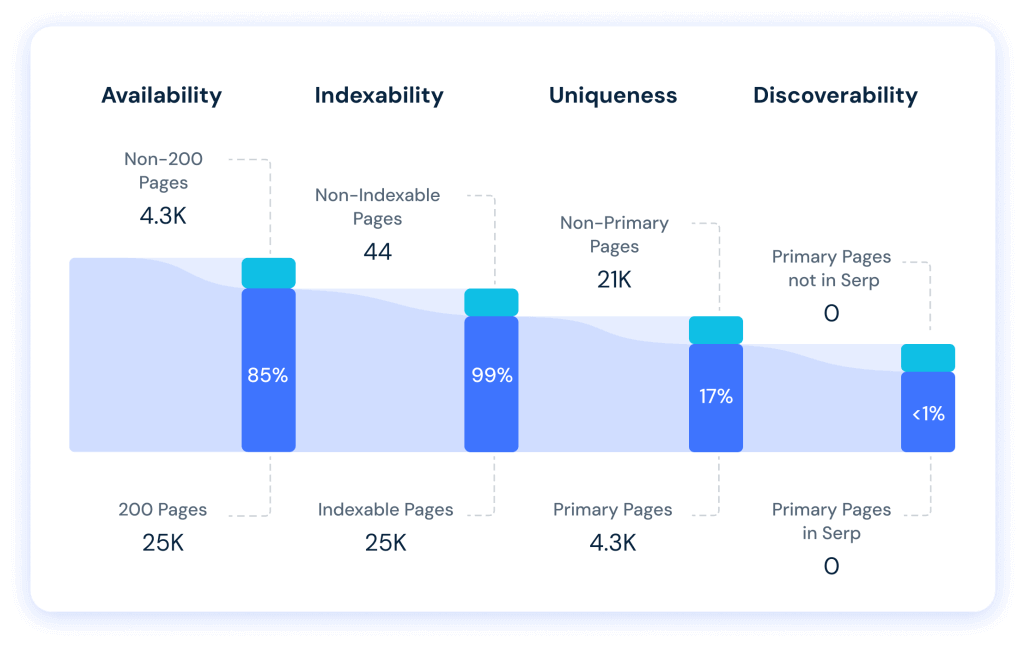
If an AI crawler cannot reach or fully load a page, that page cannot be cited.
Audit rendering, performance, and UX signals
AI systems tend to favor pages that are fast, stable, and easy to parse.
With Site Audit, you can:
- Review page speed and performance issues across 300-plus technical factors
- Identify rendering problems that may hide content from non-JavaScript crawlers
- Surface UX and Core Web Vitals issues that affect eligibility and trust
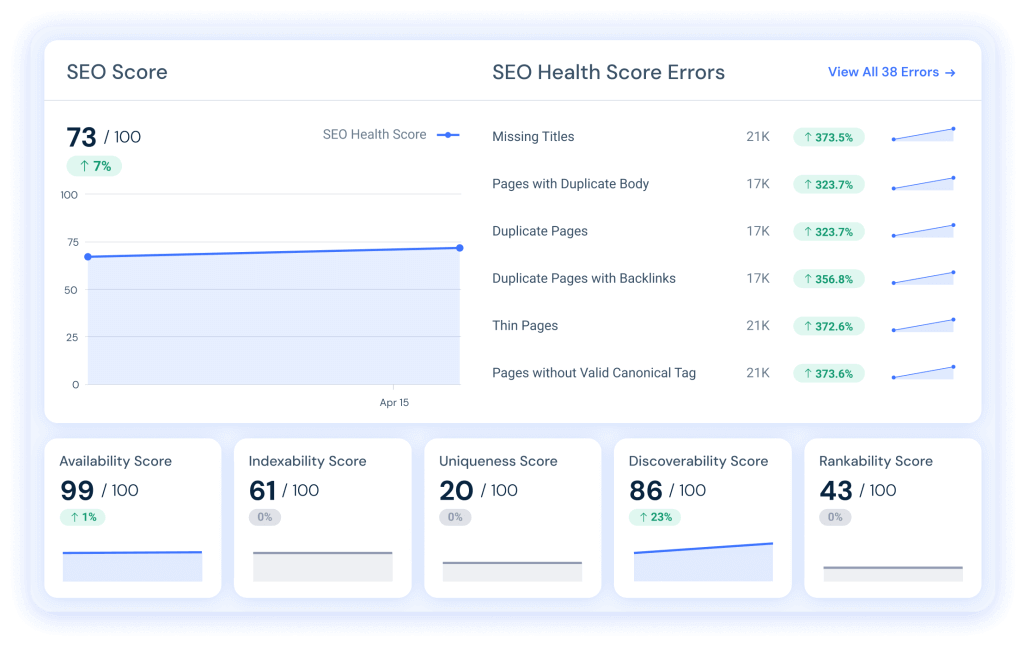
Small technical fixes at this stage can have an outsized impact on whether your content is usable by AI systems.
Prioritize fixes that actually matter
One of the hardest parts of technical GEO is knowing what to fix first.
Site Audit helps by:
- Grouping issues by severity and impact
- Highlighting problems across the visibility funnel, from indexability and rankability through to experience
- Benchmarking your site against industry standards so you can spot the biggest gaps
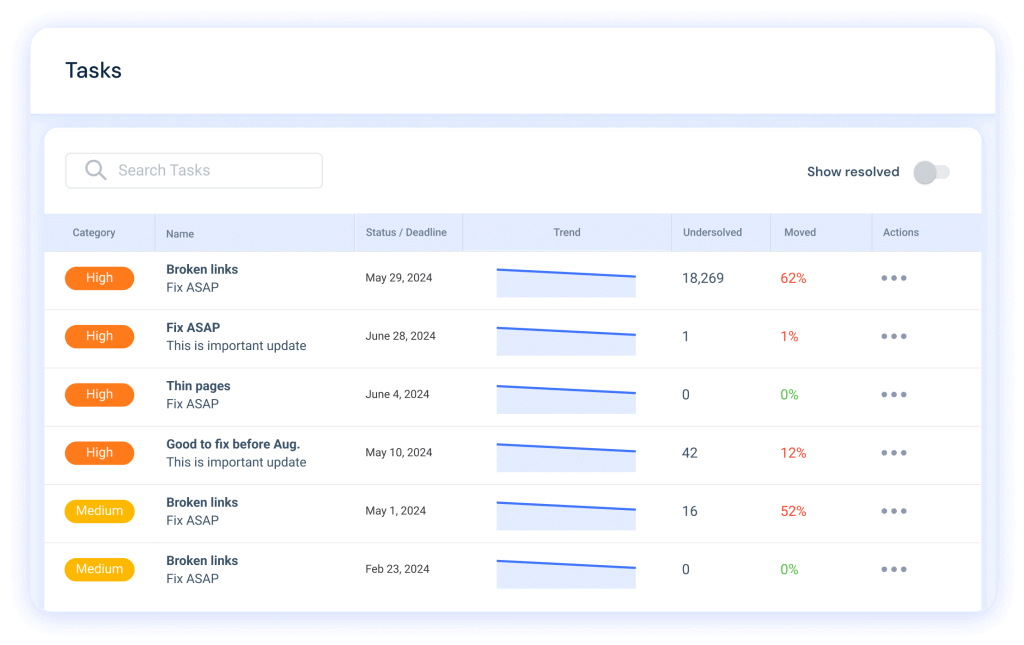
This makes it easier to focus on fixes that improve both traditional SEO performance and AI readiness.
Make technical GEO an ongoing process
AI search behavior is evolving quickly, and technical issues tend to creep back over time.
Use Site Audit to:
- Schedule recurring crawls
- Track changes and regressions over time
- Share reports and findings with SEO, content, and engineering teams
Technical GEO is not a one-time project. It is an ongoing hygiene process that ensures your content remains accessible, reliable, and usable as AI systems continue to change.
How to monitor technical GEO changes with Similarweb AI Brand Visibility
Fixing technical issues is only half the work. The other half is understanding whether those changes actually improve how your brand shows up in AI-generated answers over time.
This is where Similarweb’s AI Brand Visibility tool comes into play. While it is not a technical auditing tool, it is a powerful way to observe the impact of technical GEO improvements.
Track visibility trends over time
AI Brand Visibility allows you to track how often your brand appears in AI search answers for the topics that matter to you.
Because the data is tracked over time, you can:
- Monitor whether your brand starts appearing more frequently after technical fixes are deployed
- Identify upward or downward trends in AI visibility for key topics
- Spot early signals that your content is becoming more usable by AI systems
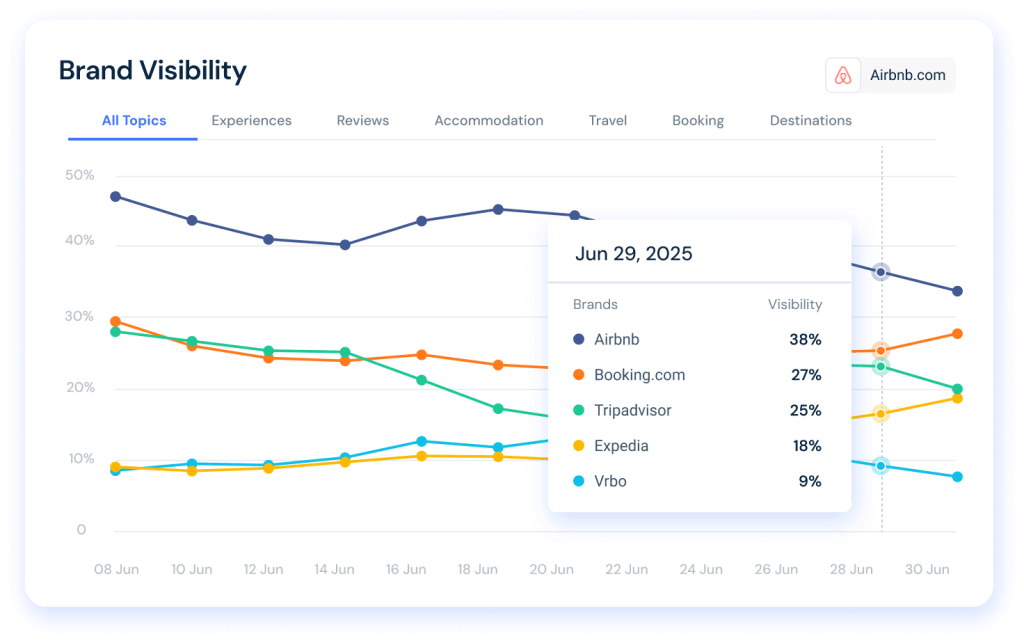
This makes it possible to correlate technical improvements with changes in real AI visibility.
See if technical fixes lead to more citations
One of the clearest signs that technical GEO is working is citation behavior.
With the AI Citation Analysis tool, you can:
- See whether your site is being cited as a source in AI-generated answers
- Track which pages or domains influence mentions for specific topics
- Identify whether changes to crawlability, rendering, or structure lead to more cited URLs from your site
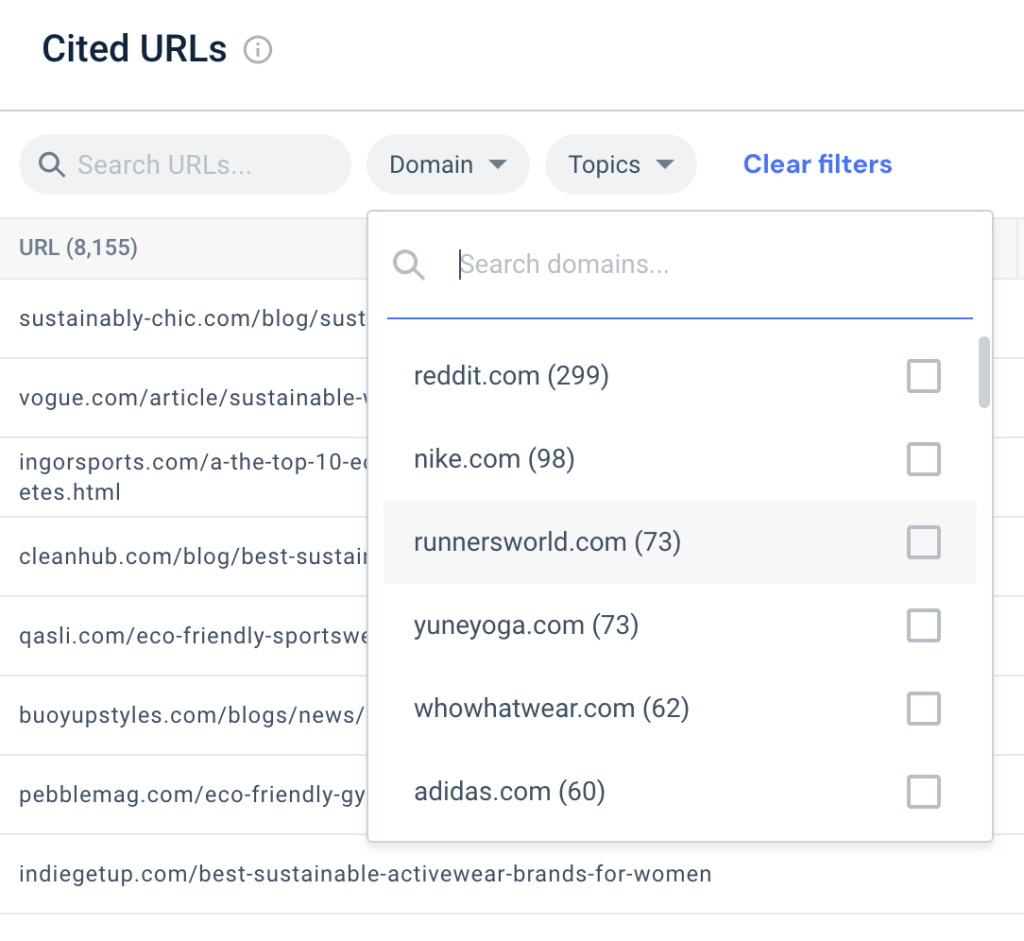
If your pages become easier to crawl, render, and extract from, they are more likely to be used as sources.
Understand prompts and topics where visibility changes
Technical improvements do not affect all prompts equally.
Similarweb’s AI Prompt Analysis tool helps you:
- See the prompts behind each topic you track
- Understand where your brand starts appearing or disappearing in answers
- Connect technical readiness with specific types of questions or intents
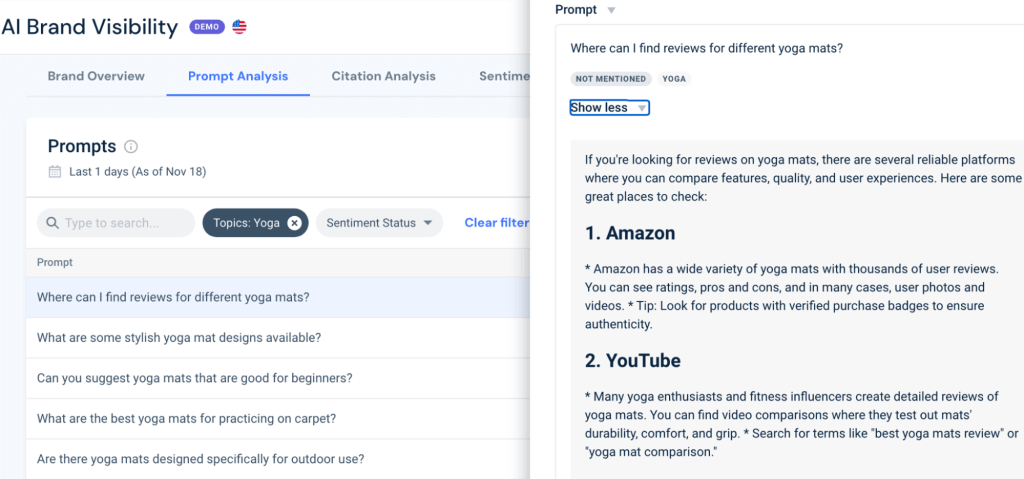
This helps avoid guesswork and ties technical GEO work back to real user questions.
Final thoughts
Technical GEO does not introduce a new set of rules. It raises the bar on the ones that already existed.
As AI systems become stricter about what they can access, parse, and trust, technical foundations stop being a background concern and start becoming a visibility requirement. Sites that are clean, fast, predictable, and easy to extract from are simply easier for AI systems to use.
If you already invest in technical SEO, you are closer than you think. The difference now is consistency, clarity, and the ability to observe whether technical improvements actually change how your brand shows up in AI-driven search experiences. If you want to explore this in practice, you can start with a free trial of Similarweb’s Web Intelligence platform.
FAQ
Is technical GEO something only large brands need to care about?
No. Smaller sites can benefit just as much, sometimes more. AI systems often prefer clear, well-structured sources over large but messy ones. Good technical hygiene levels the playing field.
How long does it take for technical GEO changes to have an effect?
There is no fixed timeline. Some changes, like removing crawl blocks or improving rendering, can affect visibility quickly. Others depend on re-crawling cycles and how often AI systems refresh their source pools.
Can technical GEO improvements hurt traditional SEO?
In most cases, no. The practices that help AI systems consume your content also improve classic SEO fundamentals like crawlability, performance, and structure.
Do I need to optimize for every AI platform separately?
No. Most AI systems rely on similar underlying web signals. Focusing on clean HTML, strong performance, and consistent structure scales across platforms.
Is schema required to appear in AI-generated answers?
A schema is not always required, but it reduces ambiguity. It helps machines understand what your content represents and increases the likelihood of accurate extraction.
How do I know which pages are most important for technical GEO?
Start with pages that already attract demand or represent core topics for your brand. These pages are the most likely candidates for AI citations and summaries.
Is technical GEO a one-time project?
No. Sites change, templates evolve, and AI systems adapt. Technical GEO works best as an ongoing maintenance process rather than a single audit or fix cycle.

Related Posts

Why AI Engines Cite UGC Over Brand Content And How To Leverage It For AEO

AI Mentions vs. AI Citations: What’s the Difference and Why It Matters for GEO


How to Do A Competitive Analysis: Complete Guide & Free Templates


Wondering what Similarweb can do for your business?
Give it a try or talk to our insights team — don’t worry, it’s free!