






The Top 100 Most Visited Websites in the USA (August 2026)
by Shai Belinsky10 Min.
Sep 29, 2026
 Marketing Intelligence
If you’re spending a mountain of money to drive people to landing pages but not turning them into paying customers, what’s the point of advertising?
Well, in a nutshell, every successful pay-per-click (PPC) campaign is built around a solid keyword and landing page strategy. these two elements will help you maximize your PPC conversion rate and win new business.
Sit tight and we’ll discover what a good PPC conversion rate is and how to calculate yours. We’ll also reveal average conversion rates by industry, plus tips and tricks to help you improve yours.
Every successful pay-per-click (PPC) campaign is built around a solid keyword and landing page strategy. Tweet thisI wish I could tell you there’s one solid answer, but sadly, there’s not. When it comes to defining a good PPC conversion rate, answers differ, but the average (in AdWords and across all industries) is considered to be 3.75% for search.
While average PPC conversion rates fluctuate each year, there are ways to perk up the percentage of website visitors who convert on your landing pages.
Don’t be shy. Look at competing landing pages and offers, and use advanced analytics to uncover what’s working well (or not so well) for others in your industry. It’s also worth experimenting with new techniques and practices, like adding videos to your landing page to engage visitors from the moment they arrive.
As mentioned, PPC conversion rates wax, wane, and vary from industry to industry. But if you’re looking for benchmarks for each industry as of 2021, the table below can help.
The easiest way to calculate your PPC conversion rate is to use the following formula:
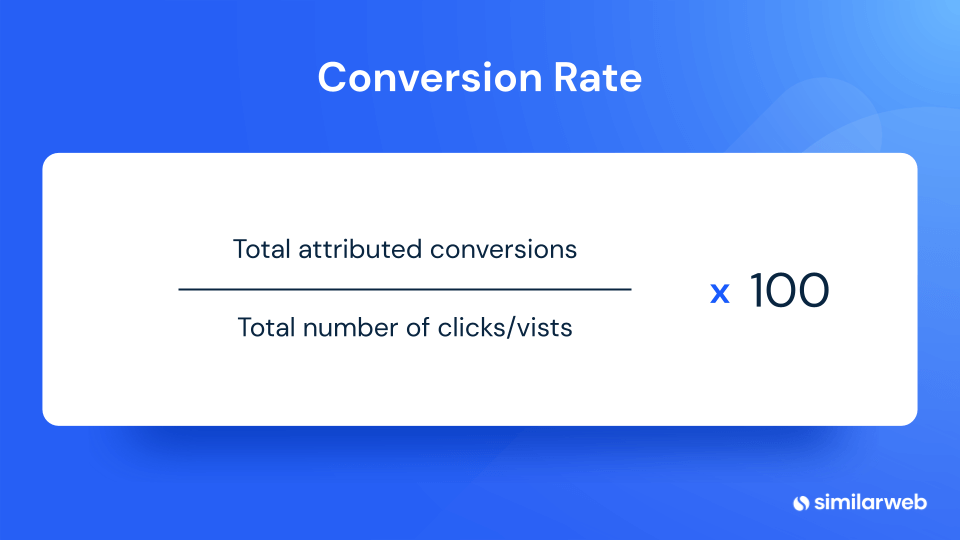
For example, if you generate 2000 clicks per month from PPC google ads and 200 of those visitors make a purchase, your PPC conversion rate is 10%. Make sense?
In industries where single deals can potentially bring in tens or hundreds of thousands of dollars, investing a little in PPC can go a long way. Especially if you target the right terms and focus on optimization.
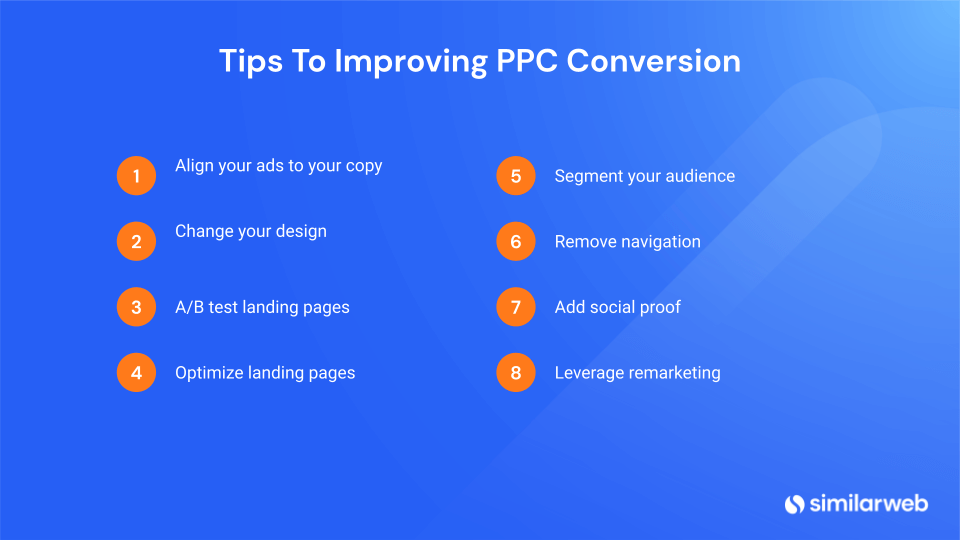
If you have a low PPC conversion rate, don’t worry – there’s plenty you can do to improve it with relevant conversion rate optimization. Below are just a few tips and tricks you can steal to enhance the performance of your landing pages.
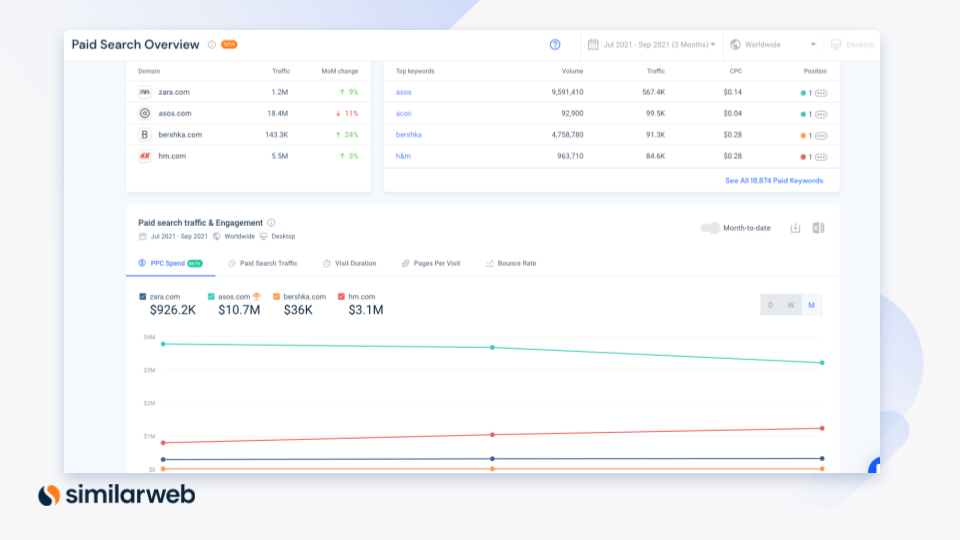
With Similarweb marketing strategy tool, you can discover your closest PPC competitors on search engines like Google within moments.
The Paid Search Overview page gives you visibility of your performance versus up to four competitors across total paid search traffic, top paid keywords with key corresponding metrics such as volume, traffic, CPC, and position.
But it’s the paid search engagement insights that really reveal the special sauce. These insights allow you to analyze your chosen competitors’ estimated PPC spend over time alongside the monthly trend in traffic volume, visit duration, pages per visit, and bounce rate.
Once you know exactly when and how much a competitor invested in PPC activities and what the potential ROI was for them over that time period, you’ll be able to better position yourself for differentiation opportunities and hook keywords they’ve let pass by.
Or you can double-down on existing keywords to defend or steal traffic share and supplement your landing pages with additional terms – whatever floats your boat.
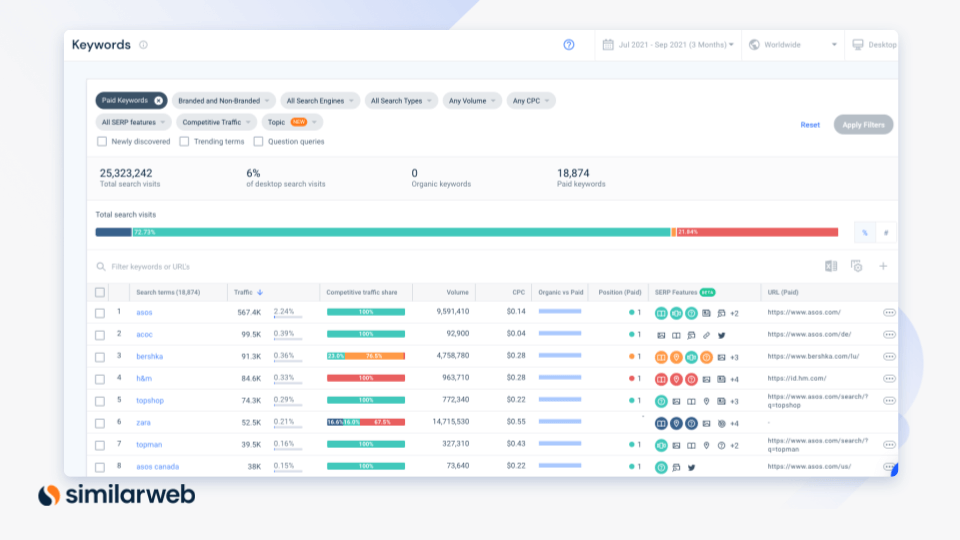
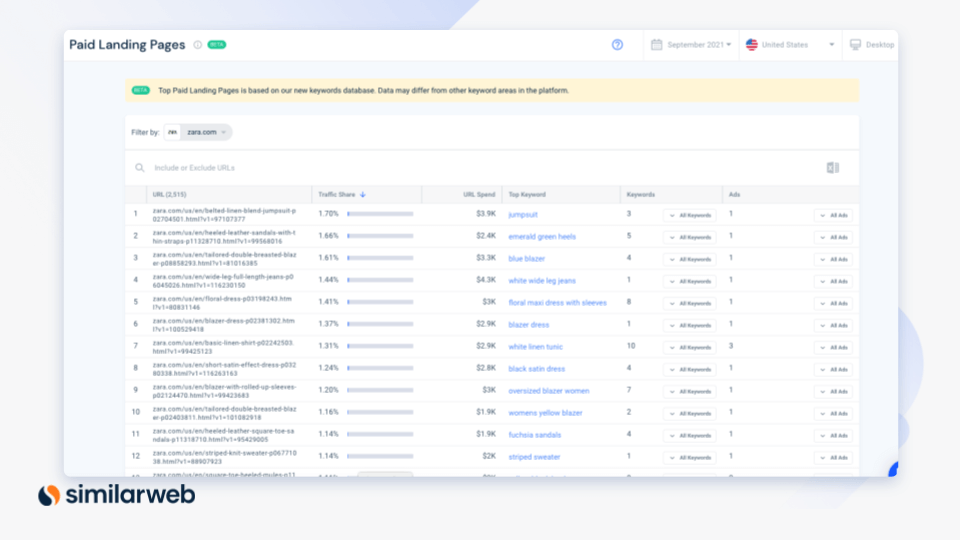
OK, time to dive even deeper. With the Paid Landing Pages capability in Paid Search, you have comprehensive breakdowns of traffic share, including:
This gives you a complete, end-to-end view of your competitors’ PPC landing page performance.
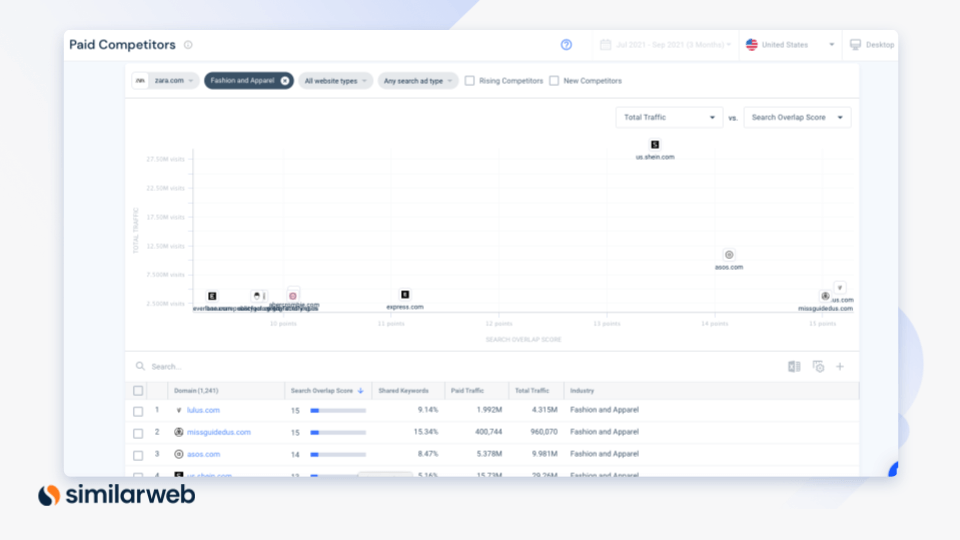
For an industry-wide overview, you can use Paid Competitors under Paid Search to see the total amount of traffic being driven to your competitors, along with the Search Overlap, or where you share keyword positions with your competitors.
This is just a glimpse into the capabilities offered by Similarweb Digital Marketing Intelligence. If you truly want to improve your PPC advertising strategy and drive more traffic to your campaign landing pages, following the tips in this guide is the first step. The second?
Consider pairing up with a robust and powerful marketing intelligence solution like Similarweb to uncover your competitors’ secrets.
If you want to see the platform in action, book a demo using the button below.

Sr. Marketing Intelligence Specialist
Sarah creates engaging content with over 5 years of experience. She enjoys traveling, family time, baking, and Netflix. Sarah holds a psychology degree from Clark University and lives in Israel.
The Top 100 Most Visited Websites in the USA (August 2026)
Similarweb Named in Forrester's Answer Engine Optimization Technologies Landscape, Q3 2026
Anthropic IPO: What Claude's Web and App Data Show
Give it a try or talk to our marketing team — don’t worry, it’s free!
