






The Top 100 Most Visited Websites in the USA (August 2026)
by Shai Belinsky10 Min.
Sep 29, 2026
 Marketing Intelligence
“Set it and forget it” may be a good philosophy for your rotisserie chicken, but it definitely doesn’t carry over to your Pay-Per-Click (PPC) campaigns. You may have worked hard to create a PPC strategy and your sales may have already increased due to your PPC campaigns, but if you want your digital marketing campaigns to be successful in the long run, you need to continually be thinking about PPC optimization.
You’ve heard of continuous improvement, right? Continuous improvement is the process of incrementally improving a product, service, or process over time, with the understanding that it can always be better. This is pretty much the same idea as PPC optimization.
PPC campaign optimization is all about continually improving your PPC ads to reach your campaign goals. You should constantly be analyzing your campaigns to see where you might be able to make changes that could bring more leads to your website or get you clicks at a lower cost. This could include:
Continuously doing these can make a huge difference in your brand’s content marketing and drastically increase sales.
It may sound overwhelming to continue adjusting your Google Ads campaigns after you’ve already worked so hard to create them, but if you follow these simple steps, you’ll see it isn’t as complicated as it sounds.
OK, if you’re looking for PPC optimization, you probably already did this. But before you skip to the next section, hear us out! You should be creating your campaigns with an optimization mindset.
Basically, create several campaigns so that you can A/B test to see what works best. For PPC marketing on Google, for example, group homogeneous keywords into one campaign and then create different campaigns for different types of keywords.
It sounds more complicated than it is, I promise.

Let’s say you’re a fashion website. Put all your keywords related to kids’ clothing in one campaign, and then all your keywords related to high fashion in another. This will make it easier for you to see what people are responding to, clicking on, and which aspects are not getting you the amount of impressions or clicks you expected.
With all of your campaigns, select maximize conversions when you set your bid strategy. This will ensure that your campaigns get enough clicks so that you have data to analyze.
This is also the time to define your specific goals and KPIs regarding campaign performance. What are you trying to gain with your PPC ads? Do you want to improve brand awareness among your target audience? Increase your sales?
Whatever your goals are, make sure they’re clear and trackable.
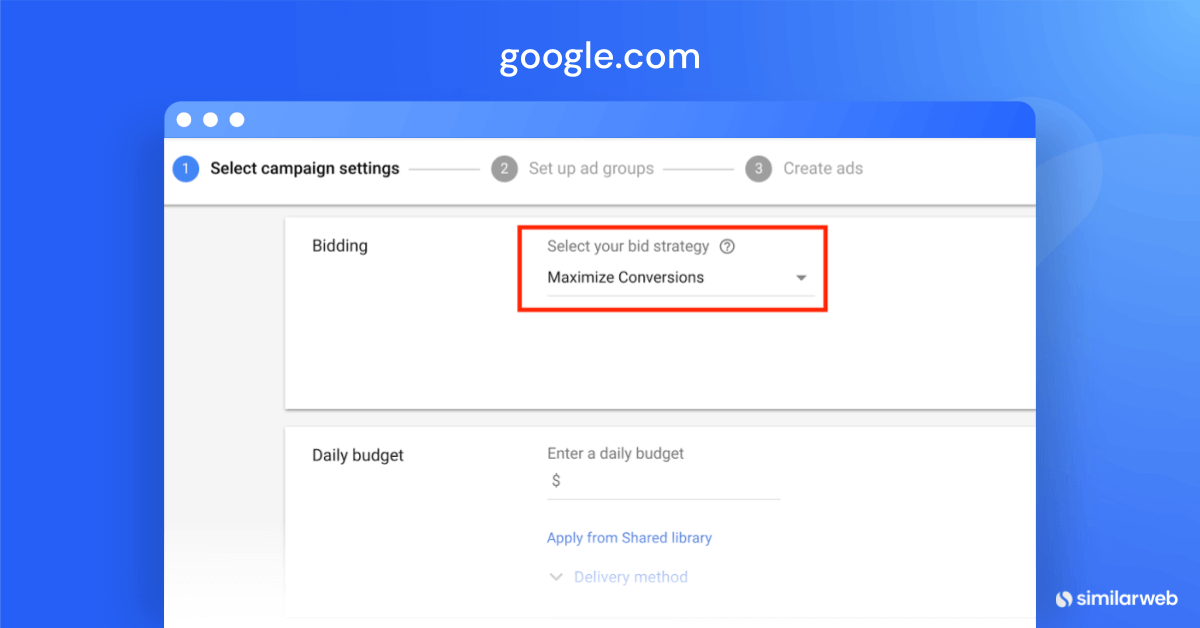
After you create your campaigns, run them for about a week to provide yourself with enough data to analyze. Then use that information to create your starting benchmarks and map out how you can improve your strategy. You’ll want to look at a few things:

Now that you have all the quantitative data about your campaigns, look at the qualitative data. When you use an automated bidding strategy, the Google algorithm does a lot of this work for you, but even Google makes mistakes sometimes.
Review which keywords led to clicks and purchases, your ad impression demographics, and how that compares to the audience that clicked. It’s important to see if something sticks out to you as strange or incorrect.
What if you won a high number of clicks from women ages 20-25, but you thought your demographic was 35-40? This insight would be critical to guiding how you tweak your ad copy to be more relevant to women in your target age group.
It’s also important to look at the keywords Google used to serve your ad.
Prime example: There may be a keyword that led to a ton of clicks, but no sales. In this case, Google would think it’s a great keyword since people are clicking on your ad. You would probably disagree since this keyword is draining your budget. Add this keyword to your negative keyword list for your campaign so that Google doesn’t continue showing your ad to people who are likely to click, but not drive sales.
You’ve analyzed a lot of data and can now start making assumptions about what’s working and what’s not. It’s time to make changes to your ads and create new ads based on your findings.
Let’s continue with our earlier example and say you win the majority of your clicks from outside your predefined target audience. How should you optimize your campaign?
There are a few possibilities. You might create new ads specifically aimed at your newly discovered demographic with custom ad copy, and more relevant call-to-action (CTA). Or, you may opt to create new ads with your best-performing keywords. You may also opt to do both.
If you have any ads that had particularly poor performance, consider pausing them and creating new ones that you believe will be more successful. Once you make these changes, you can let your campaigns run until it’s time to rinse and repeat.
Remember, it’s all about continuous improvement!
And there you have it – PPC campaign optimization in four steps – but let’s make it even easier.
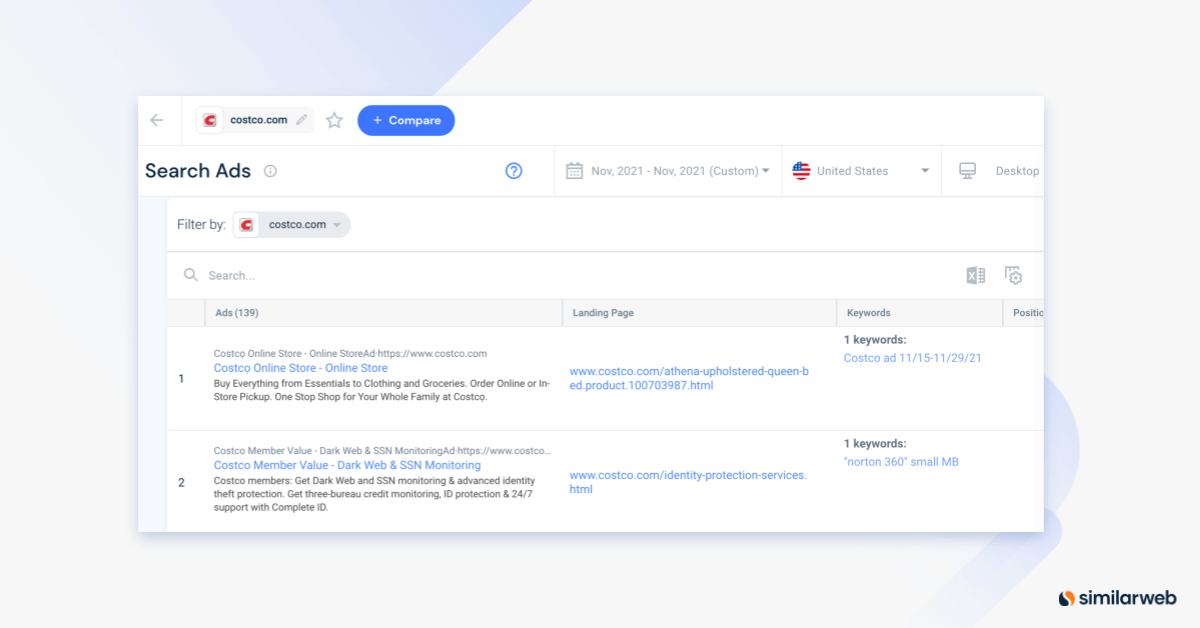
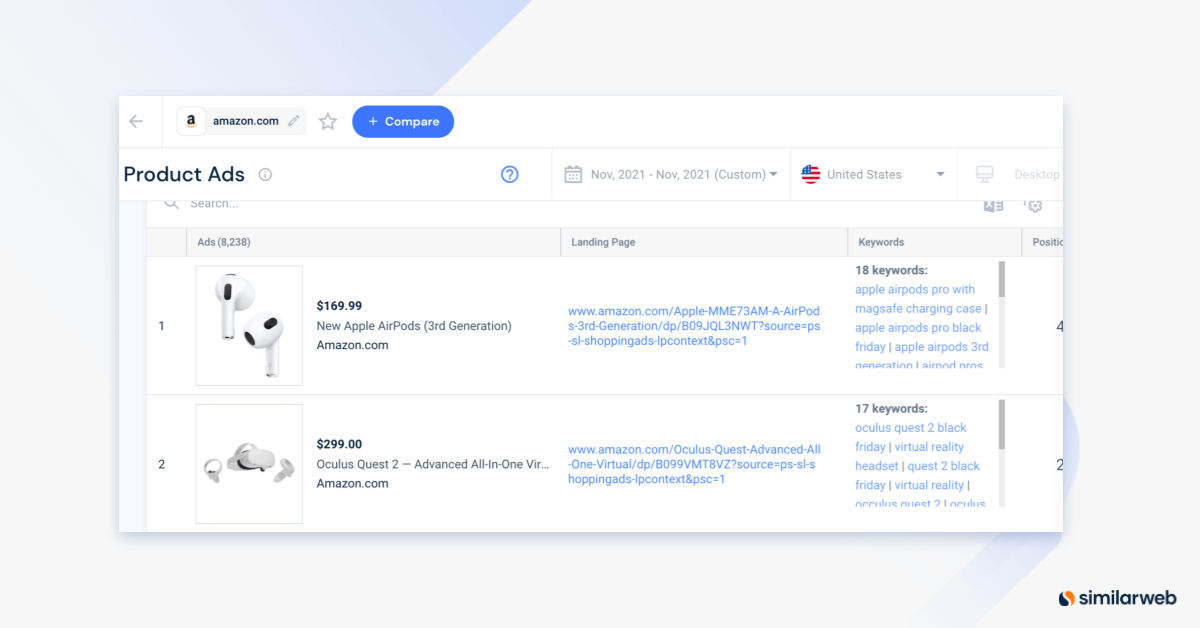
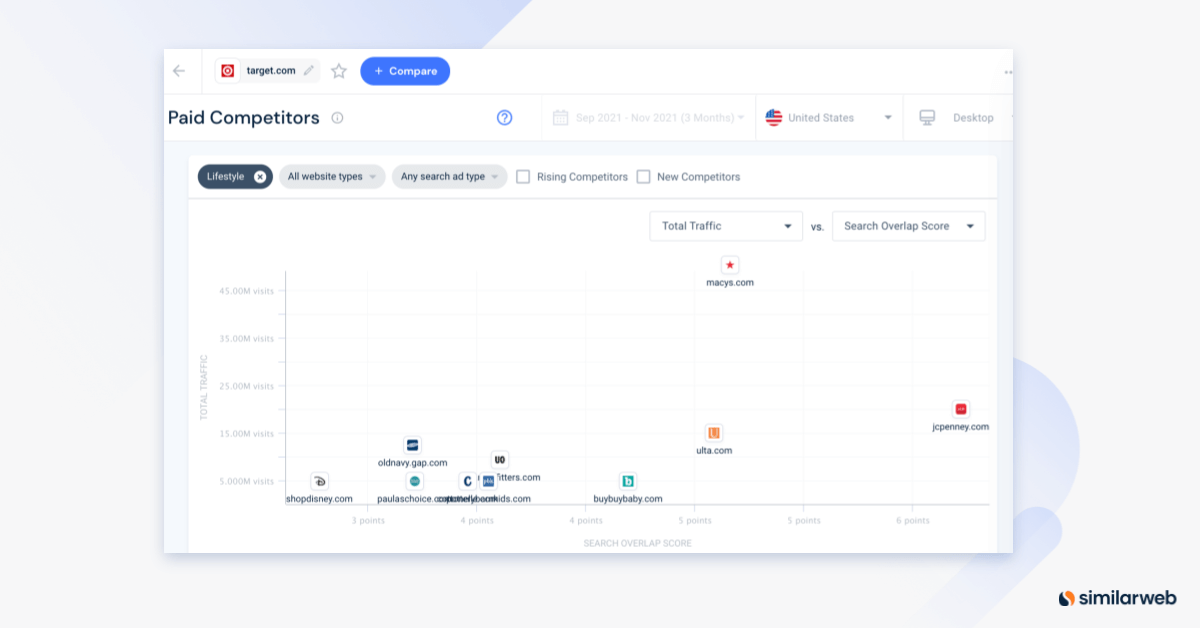
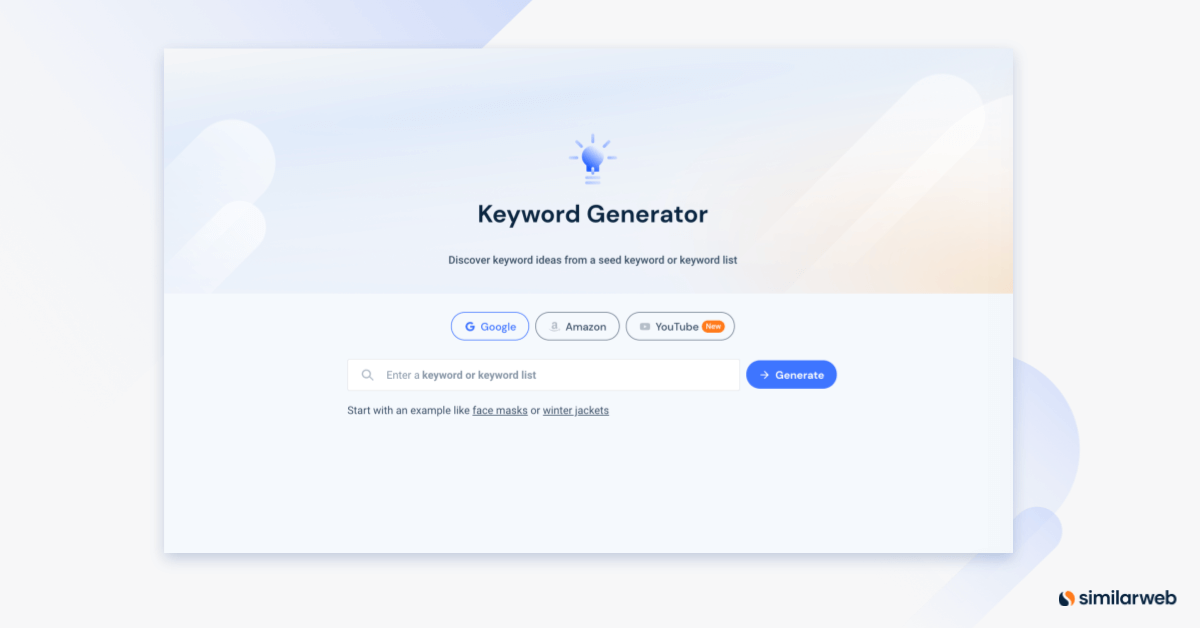
Similarweb has several tools to help you optimize your PPC campaigns by analyzing your competitors’ PPC campaigns and choosing the right keywords. We recommend using these:
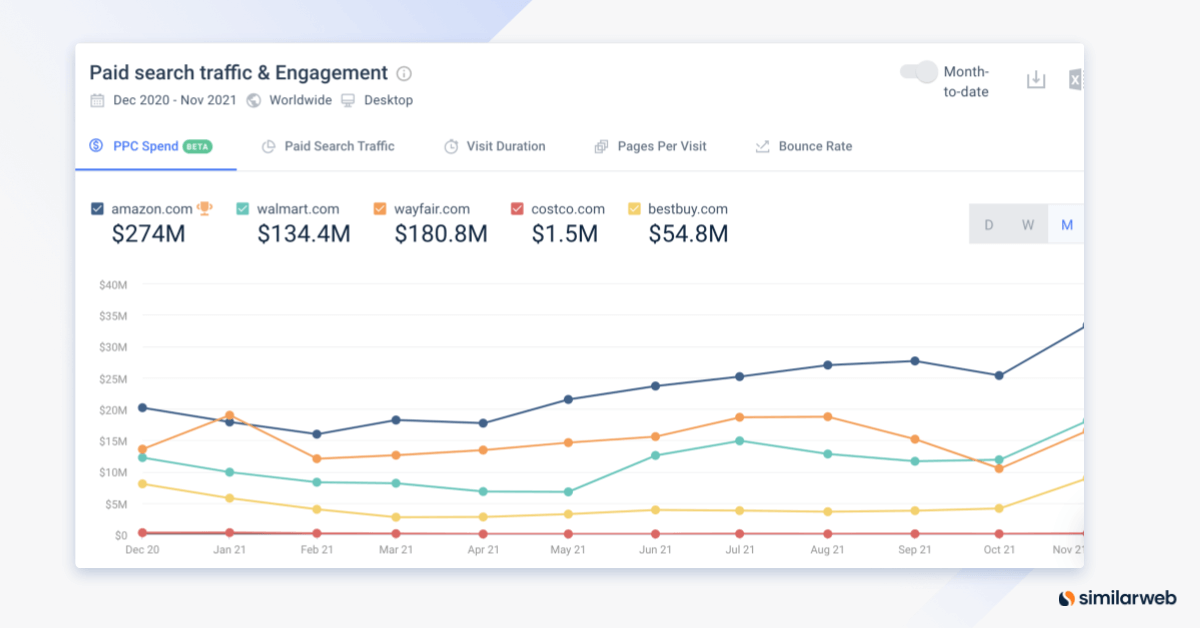
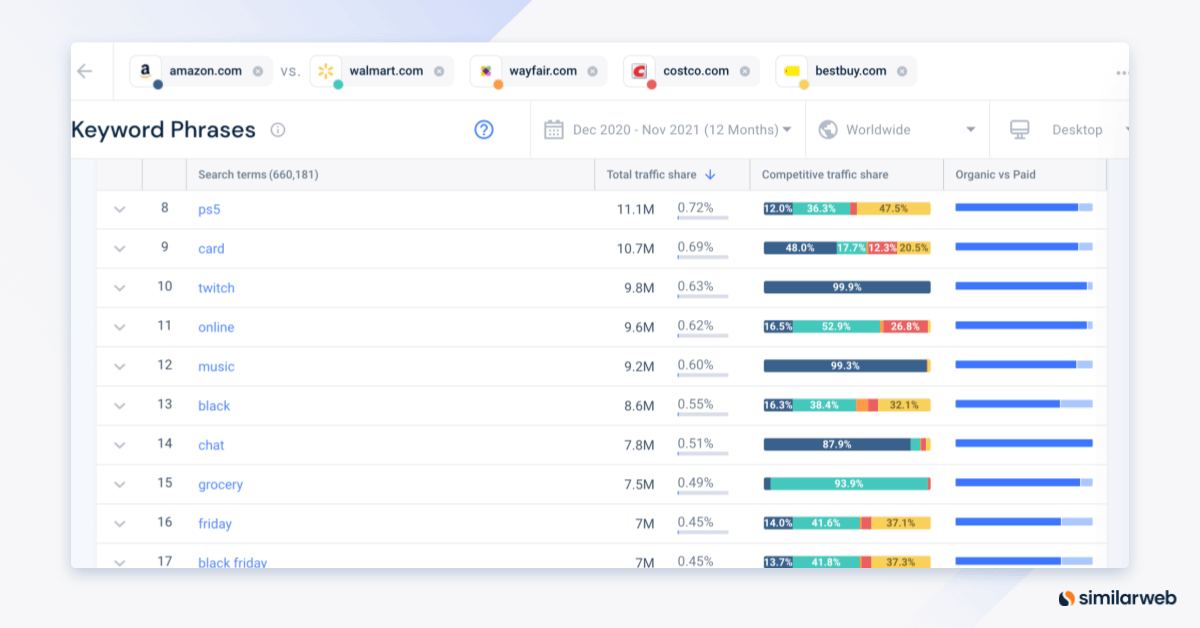
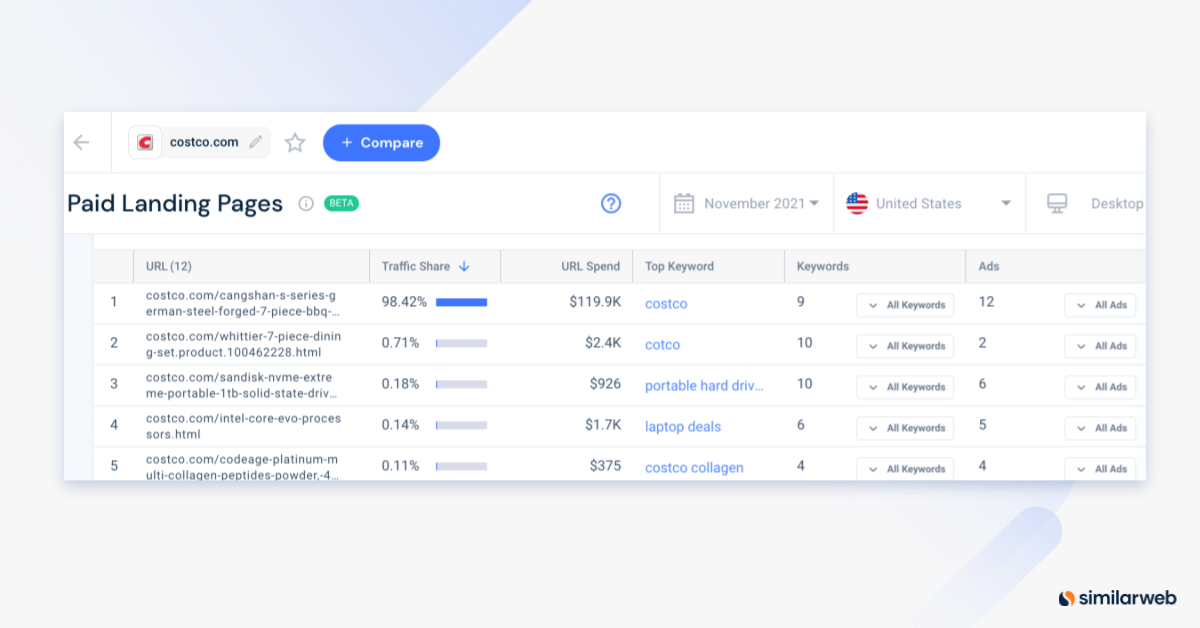
Pro tip: Use Top Paid Landing Pages to see an estimated spend on the campaign’s paid activities, highlighting what has worked well for your competitors’ paid campaigns that you might be able to emulate yourself.
PPC optimization is a never-ending process, but if done right, is filled with rewards. If you schedule an hour or two a week to dedicate to it, you’ll see a clear improvement in your PPC campaigns.
As soon as you start analyzing your data, you’ll gain valuable insights into what does and doesn’t work for you. As you get the hang of it and continue optimizing your campaigns, you’ll start to see your CTR improve, your CPA decrease and your profits grow. And if that’s not proof that persistence pays off, we don’t know what is.
What is PPC optimization?
PPC optimization refers to the process of improving PPC ads on a regular basis in order to achieve campaign goals.
How do I optimize my PPC?
There are several ways to optimize your PPC ads, including changing your ad copy, updating landing pages, conducting PPC keyword research and replacing non-performing terms with new ones.
Why do I need to optimize my PPC campaigns?
Optimizing your PPC campaigns will improve your brand’s content marketing, potentially bringing more traffic to your website and increasing your sales.

Sr. Marketing Intelligence Specialist
Sarah creates engaging content with over 5 years of experience. She enjoys traveling, family time, baking, and Netflix. Sarah holds a psychology degree from Clark University and lives in Israel.
The Top 100 Most Visited Websites in the USA (August 2026)
Similarweb Named in Forrester's Answer Engine Optimization Technologies Landscape, Q3 2026
Anthropic IPO: What Claude's Web and App Data Show
Give it a try or talk to our marketing team — don’t worry, it’s free!
