






The Top 100 Most Visited Websites in the USA (August 2026)
by Shai Belinsky10 Min.
Sep 29, 2026
What’s cooler than being cool? Having fresh keywords
At Similarweb, we’ve been saying it all along – we’ve got the data to prove it, and have more and more SEO teams like yours using our data to get fresh keyword data for their winning strategies.
If you’re not there yet, or want to know exactly why your boss is so obsessed with getting the freshest keyword data on the market, this is the guide for you.
Let’s start with the basics.
The term ‘fresh keywords’ can mean a few things in SEO, but have the same impact on your SEO efforts – but only if you nab them in time.
Given the (fun) fact that 1 in 6 searches on Google are brand new, there’s a lot of new search terms every single minute of the day. And given the amount of new searches per minute, there’s a strong chance some of those keywords could be relevant to your business or target audience.
That, my friends, is called opportunity. Opportunity you want – or at least should want – to win.
These new opportunities are the fresh keywords we keep banging on about. They make their way into Google search data for a number of reasons, including:
With the world being such an unpredictable place, the search landscape is unpredictable too. You never know what’s going to happen or come up next, and neither does Google.
Fresh keywords mean you catch the trends and the behavioral changes of searchers (including your target audience) as they happen.
Having fresh keyword data means that you can spot the up-and-coming and booming keywords at the best time possible: when they are actually relevant – not a month later like *some* data platforms.
Because, here’s the thing: trends move fast, and so do your consumers.
You never know how long a keyword may be around for, which is exactly why most of us SEOs tend to focus on evergreen terms and look at yearly averages. But what about those fresh trends? The keywords that are zeros to sudden-heros in terms of search volume? Those are the ones we need to react fast to, and adapt or add to our search strategy as a result.
Why? Because making the most of fresh keyword data has a bunch of benefits, including:
As mentioned, trends move fast which means fresh keywords aren’t always here to stay.
However, that shouldn’t take away from their benefits though.
By making the most of fresh keywords – whether they are short-term or long-term favorites with your target audience – you’ll find more opportunities to win more visibility, traffic, brand awareness, and ideally, conversions as a result.
Okay, so how do you find fresh keywords for your SEO strategy and capitalize on them?
With so many new searches per day, how do we keep up and make sure we’re identifying them at the right time?
Introducing Trending Keywords on our Keyword Generator tool.
With the ‘Last 28 Days’ view, you can get your hands on the search terms that have seen a big increase in search volume in that time. Take a look at the keywords related to ‘Oppenheimer’ for example:
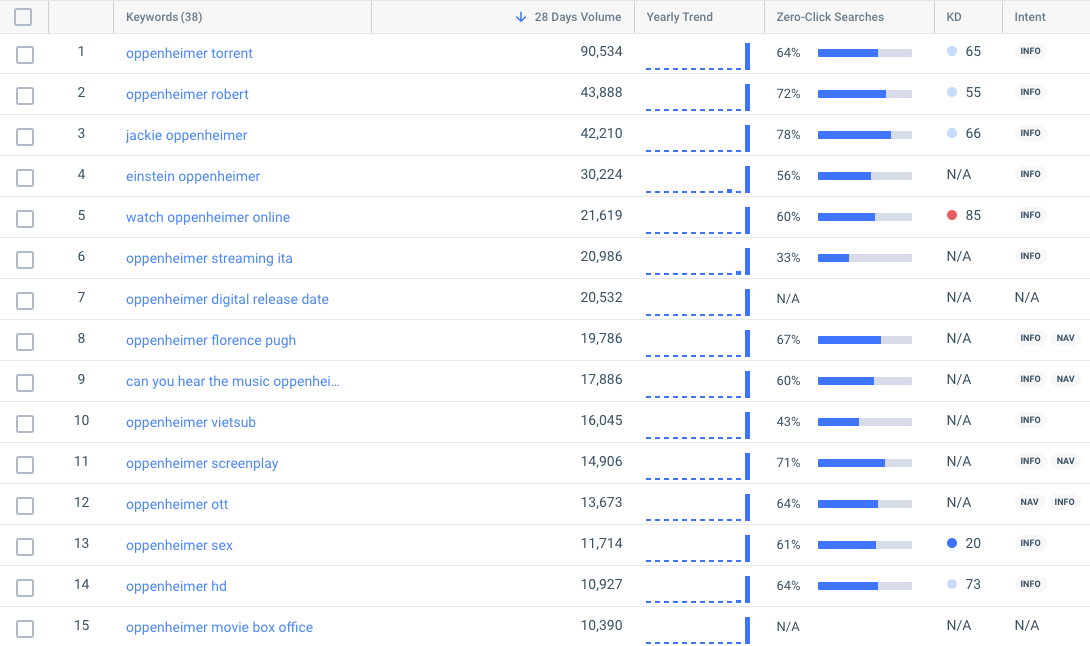
Along with the exact search terms and search volumes, you can see the yearly trend – which goes from no monthly search volume at all, as a new movie – as well as the percentage of zero-click searches. The high percentages here suggest Google gives searchers the answers they’re looking for, whether in the meta descriptions or in the People also ask SERP feature.
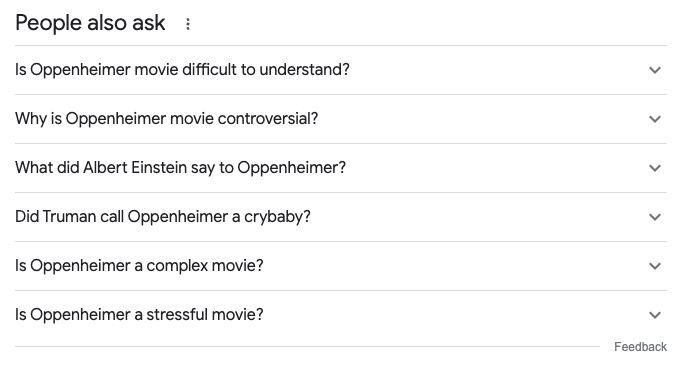
In just one click, you can take your keyword research further and begin to analyze the traffic behind this search term to see if it’s something your SEO strategy could – or should – get involved with.
We’ll take the most searched Oppenheimer-related search term as an example: ‘oppenheimer torrent’.
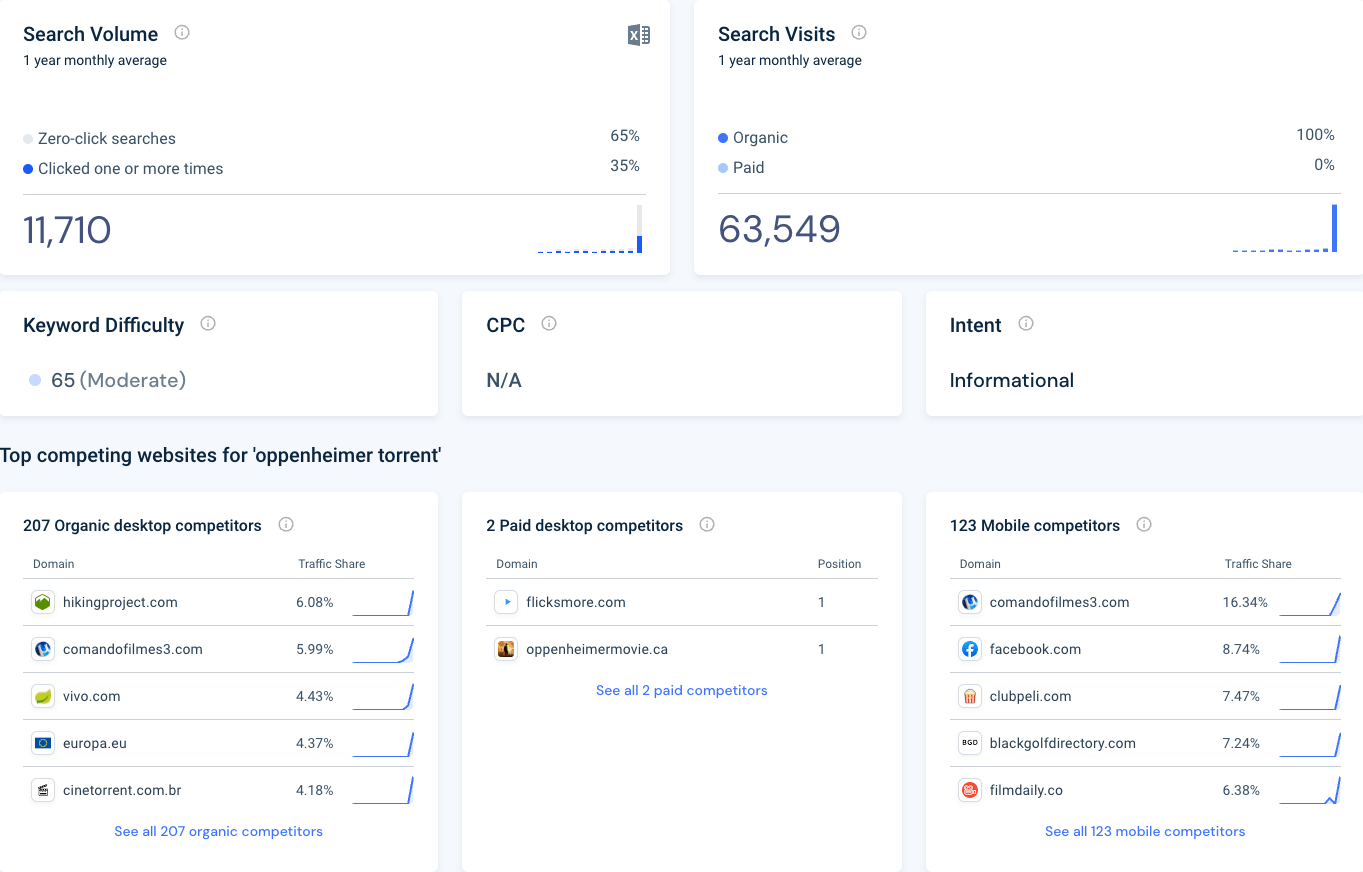
By clicking on the keyword that takes your interest in the list, you come through to the Keyword Analysis page where you get a full overview of that specific keyword. You can dive deep into all the juicy details to work out why it’s trending, and what pages are benefiting from this trend, including:
Now that you’ve glanced over the keyword overview in all its glory, you may have decided whether it’s a term you want to target in your SEO strategy with content.
The search term ‘oppenheimer torrent’ is classed as informational because people want to know where they can download it or if it’s available to download… to eventually download it for themselves. So, say you’re a movie-blogger and you decide that this is, indeed, a keyword you want to target.
Our suggestion? A listicle or a step-by-step blog that includes how to – or where you can – download the Oppenheimer film. Whether you have a list of illegal streaming websites (not recommended) or you have another way round it to target that keyword, shoot your SEO shot.
To make sure you’re covering as many bases as possible, we’ve got a selection of tools for you to use:
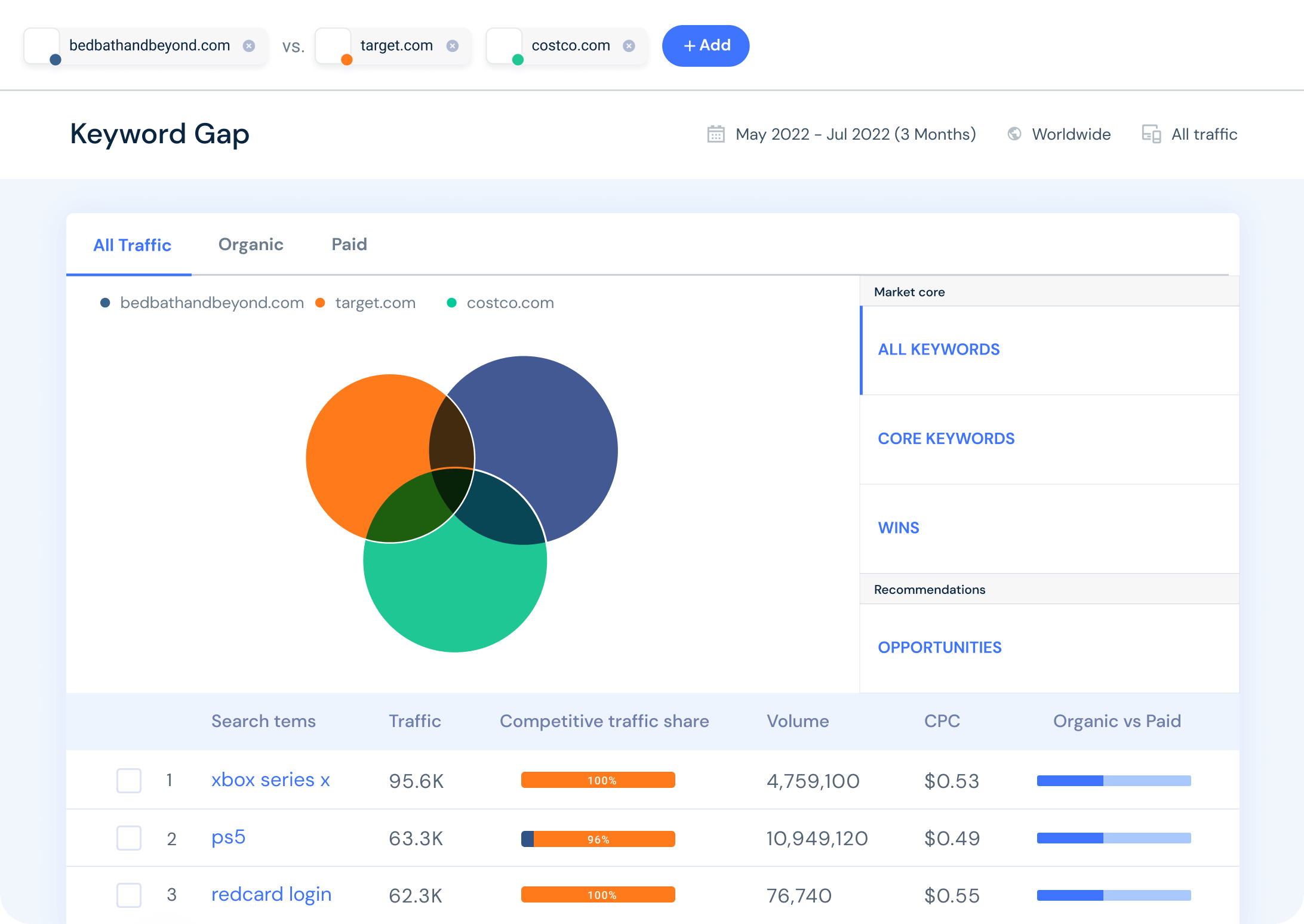
Oh, and our final tip for creating fresh content for these fresh keywords? Act fast – otherwise you’ll miss your chance to ride the rising search volume wave.
Tracking and monitoring is – or should be – a huge part of any strategy. It’s important to look at performance to see where improvements or changes can be made, and to see what’s working well for your business (and your target audience).
When it comes to the quick-changing world of trends and trending keywords, you need to assess this part of your strategy more frequently to make sure your efforts are being rewarded.
In SEO, two of the last things you want is to:
1) Miss an opportunity to win on search
2) Waste your time and efforts on an out-of-date opportunity that no longer exists
Trends can get bigger, meaning related search terms become more specific and more long-tail keywords develop. But trends can also disappear in an instant, so that heavily keyword-targeted campaign you had planned will have to change fast.
To monitor and track the impact of fresh keywords you need to look at:
And yes, you can do all this (and more) with Similarweb which brings us onto our next point…
So, we’re not sure if you realized but, when it comes to taking advantage of fresh, trending keywords, Similarweb is pretty (/very) handy.
Our all-in-one platform provides a full toolkit for SEO marketers to identify trending keywords and create content around those keywords, both quickly and effectively.
And the best bit? You can try all this for yourself at no cost, with our free trial. Get involved.
Why are fresh and trending keywords important for SEO?
Fresh or trending keywords represent the current interests and searches of internet users. By optimizing your content with these keywords, you can tap into recent search trends, ensuring your content remains relevant and has a better chance of ranking higher in search engine results. This can lead to increased visibility, traffic, and potentially more conversions.
How does Similarweb offer the freshest keyword data on the market?
Similarweb gathers a vast amount of data from multiple sources, including directly measured data, international panels, and public data sources. With its sophisticated algorithms and regular updates, Similarweb ensures that the keyword data it provides is recent and relevant, allowing marketers and SEO professionals to stay ahead of the curve.
Do I need to continually update my content with fresh keywords?
While it’s essential to be aware of and occasionally incorporate trending keywords, it’s equally important to produce evergreen content that remains relevant over time. It’s a balancing act: ensure your content is timely and meets current search demands, but also has longevity. Periodic content audits can help identify areas where updates with fresh keywords might be beneficial.
Does fresh data mean trending data?
Yes, the majority of fresh data is trending data. But that doesn’t necessarily mean short-term. Fresh data can pick up new ways of searching, like new phrasing for example. It can also tell you when an evergreen topic is growing or coming to the fore, such as when an industry legislation is being searched more. It’s also a useful indicator to gauge the types of searches around a new topic. Say Apple releases a new phone – you can see if people are looking for independent reviews, educational content, or even alternatives.

Director of SEO & AI Search at Similarweb
Limor brings 20 years of expertise in SEO and AI Search. She thrives on solving complex problems, creating scalable strategies, and building amazing dashboards.
The Top 100 Most Visited Websites in the USA (August 2026)
Similarweb Named in Forrester's Answer Engine Optimization Technologies Landscape, Q3 2026

Anthropic IPO: What Claude's Web and App Data Show
Give it a try or talk to our marketing team - it’s free!
