





The Top 100 Most Visited Websites in the USA (August 2026)
by Shai Belinsky10 Min.
Sep 29, 2026
 Research Intelligence
One trait of successful businesses is their ability to spot market changes before their competitors.
This is where market forecasting comes in. It offers insights on where to invest, when to pivot, and how to outpace the competition. And the page you’re reading right now offers a straightforward approach to mastering it.
You’ll discover how to use real data to predict trends, plan effectively, and make decisions that keep or put you on the front foot.
It will cover:
Successful businesses thrive by anticipating shifts in customer demand and adapting to industry changes. But first, we need to understand what it is.
Market forecasting comes in many forms. However, it uses historical data, current trends, and analysis to predict future market conditions.
Forecasts can be short-term (a few months), medium-term (a few years), or long-term (a decade or more), depending on your business’s needs.
It is essential to make decisions based on what’s coming tomorrow. This could range from resource allocation to supply chain management and strategic direction. While in its latest form, market forecasting has evolved to incorporate machine learning and AI to provide real-time on-the-moment insights.
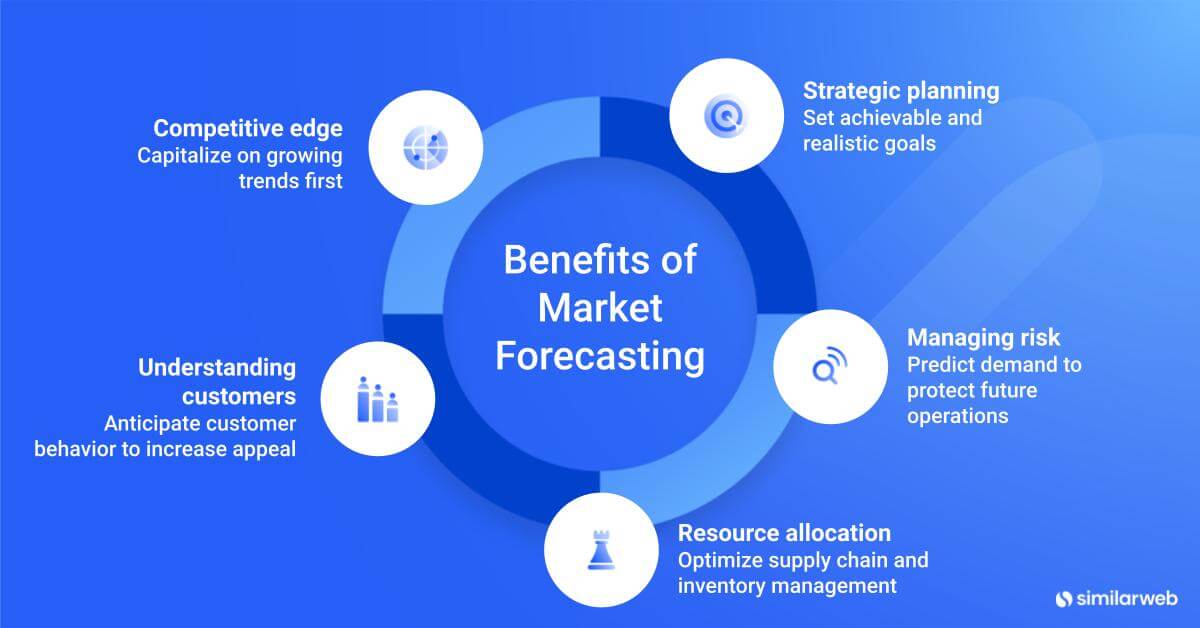
Forecasting market trends involves analyzing data, identifying patterns, and making informed decisions quickly. In other words, connecting the dots, spotting patterns, and acting fast.
Sounds simple, right?
Here, we examine what it entails and different ways to do it:
Past trends are our main indicator of the market’s direction. Historical data—from sales to customer behavior—find patterns that indicate future shifts.
However, it’s essential to remain aware of biases. A good example is recency bias (an overemphasis on recent events).
“The idea that the future is unpredictable is undermined every day by the ease with which the past is explained.” Prof. Daniel Kahneman
It’s important to continuously update forecasts based on new information rather than assuming trends will remain static. Use relevant data and focus on the right timeframes. Here are some examples:
AI and machine learning have further improved forecasting accuracy by their ability to analyze large datasets in real-time. Here are some of the ways this takes place:
“[Demand Prediction] is used by retailers today in order to plan better inventory levels as well as marketing campaigns.” Andrew Ng, Deeplearning.ai founder
Today, tools like Azure Machine Learning and Google Cloud AI make market forecasting accessible to any business. However, none of this happens without the right data. In the next section, we’ll look at ways to get it.
Relying on one data source can introduce confirmation or availability biases. Instead, combining macroeconomic indicators, third-party reports, and competitor data gives you a more balanced view.
Incidentally, pulling in market data is something Similarweb excels at – see our demonstration below.
Next, we’ll look more closely at different forecasting data types.
Here are a few data types that can be combined to create a well-rounded market forecast.
Combining insights from different sources can give a more accurate view of potential outcomes.
Retailers can combine social media trends, economic data, and competitor activity to plan holiday sales campaigns. These decisions include everything from supply chain logistics to price to PPC budgets.
For investors, earnings season is a critical time. Strong earnings can boost a company’s stock price, while weaker-than-expected results may cause a decline, making this period essential for market movements.”
Diverse data helps you avoid blind spots and costly mistakes.
“The problem with the future is that it is different. If you are unable to think differently, the future will always arrive as a surprise.” – Gary Hamel, founder of Strategos
Staying ahead in a competitive market means turning forecasts into actionable plans. Here are some effective planning strategies to help convert forecasts into decisions:
Scenario planning prepares businesses for different market outcomes. By forecasting best-case and worst-case scenarios, companies can cover their bases.
Multiple Scenarios
For example, an ecommerce company might prepare for high demand by scaling staffing and inventory. Or focusing on cost-cutting during low demand.
Regularly revisiting these scenarios helps businesses stay adaptive.
Resource allocation based on forecasts
Allocating resources based on forecasts keeps companies agile. For example, a manufacturer might cut spending on low-performing products and invest in expanding production for a high-demand item.
Here are some more examples of how forecasting can help with resource allocation:
Planning requires input from marketing, sales, finance, and operations. Aligning teams with market forecasts ensures cohesive strategies and quicker responses to changes.
For instance, a product launch informed by marketing trends and operational feasibility is more likely to succeed.
Cross-functional collaboration also ensures everyone is prepared to execute when changes arise and helps the organization adapt through continuous learning and updates.
The book Superforecasting: The Art and Science of Prediction by Peter Tetler, who had worked with the US intelligence services and crowdsourcing forecasting projects. It’s based on the premise that anyone could learn the ability to predict.
In the 90s, HP struggled with traditional sales forecasting methods, which often failed to predict sales.
Purpose: To improve sales forecasting accuracy, addressing challenges with traditional forecasting methods.
Method: Implemented internal prediction markets where employees could “bet” on future sales figures and outcomes. It aimed to aggregate diverse opinions across the company, leveraging collective wisdom.
Outcome: The predictions consistently produced more accurate forecasts than traditional methods. It improved HP’s decision-making around inventory and resource allocation.
Let’s put this into context. Imagine you’re at a pet supplies brand and are planning to launch probiotics for dogs.
But don’t go straight into the manufacturing and marketing. First, you need to understand the following:
Similarweb is a powerful market forecasting tool that can help you predict demand and gain a strategic foothold in any competitive industry.
Below, we’ll walk through how to use Similarweb’s Market Analysis and Demand Analysis features. To do this, we’ll pull in real data from the pet supplies market.
The first step in your market forecasting journey is to understand the market size and competitive landscape for pet supplies. Using Similarweb’s Market Analysis tool, you can get a detailed overview of the industry.
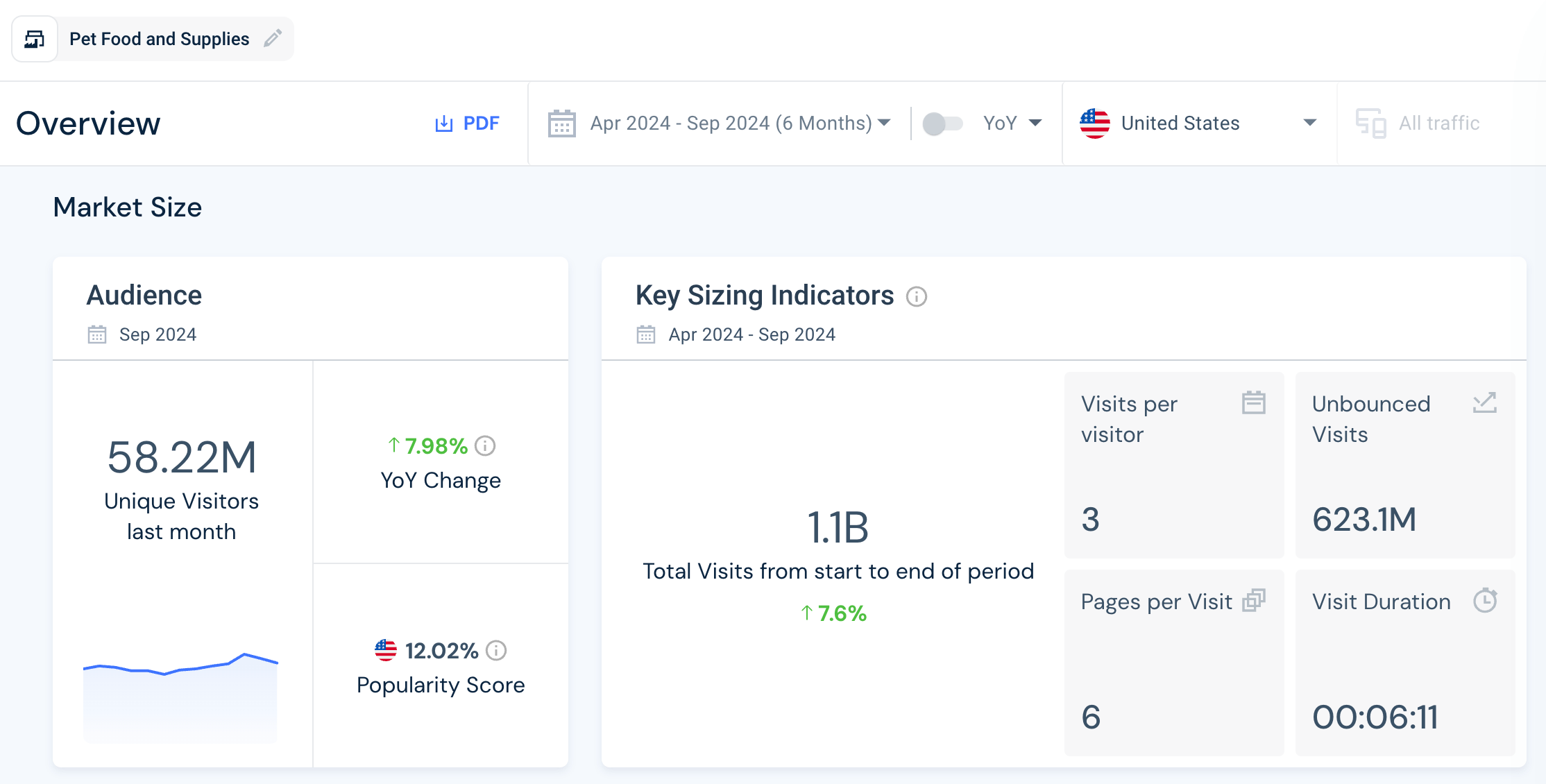
In the screenshot above, we can see the Market Size Overview for the Pet Food and Supplies category in the United States between April and September 2024:
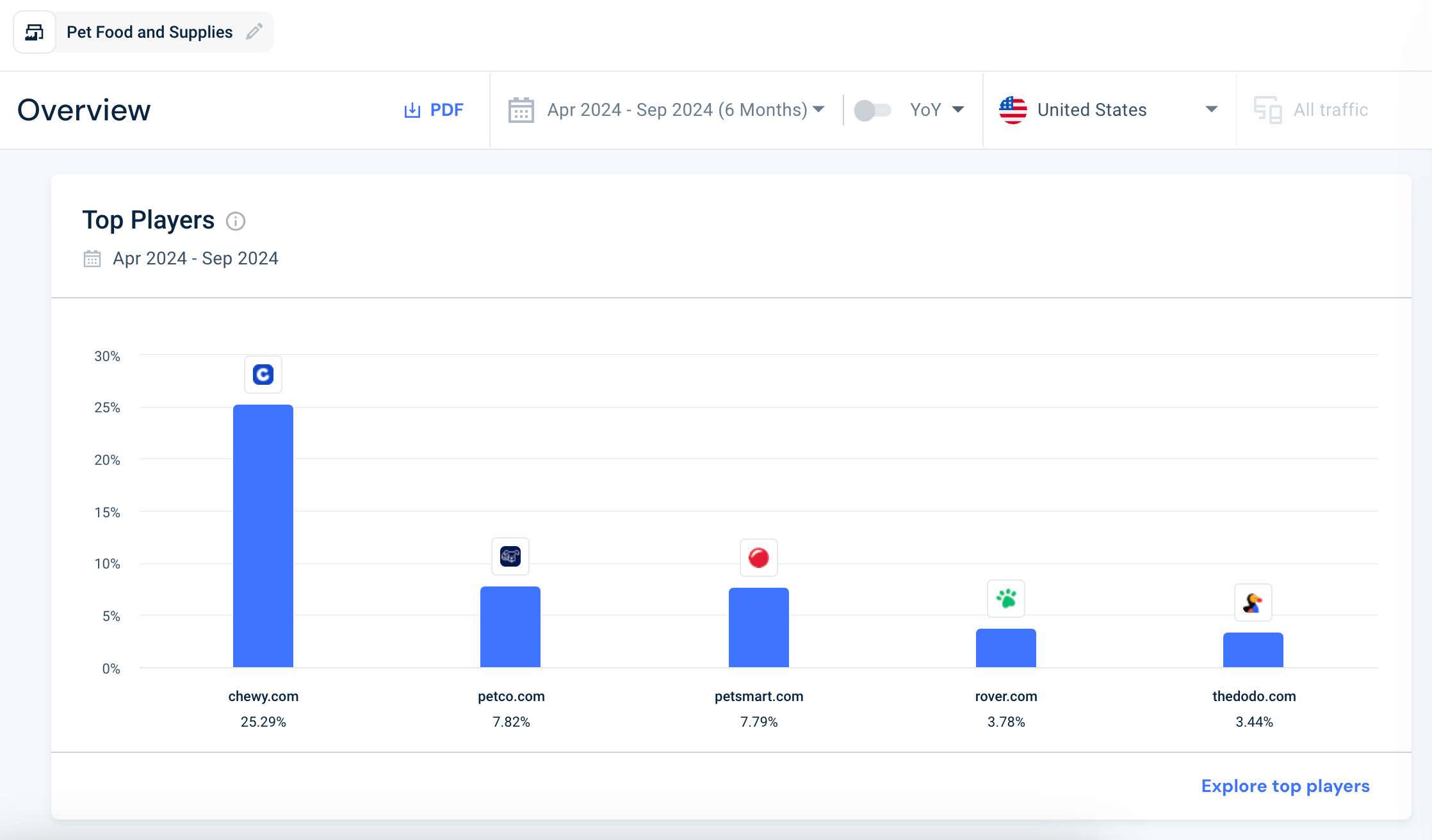
The next step is to assess the top players in this industry. Using Similarweb’s competitor benchmarking data, we get the following breakdown of market share for the top companies:
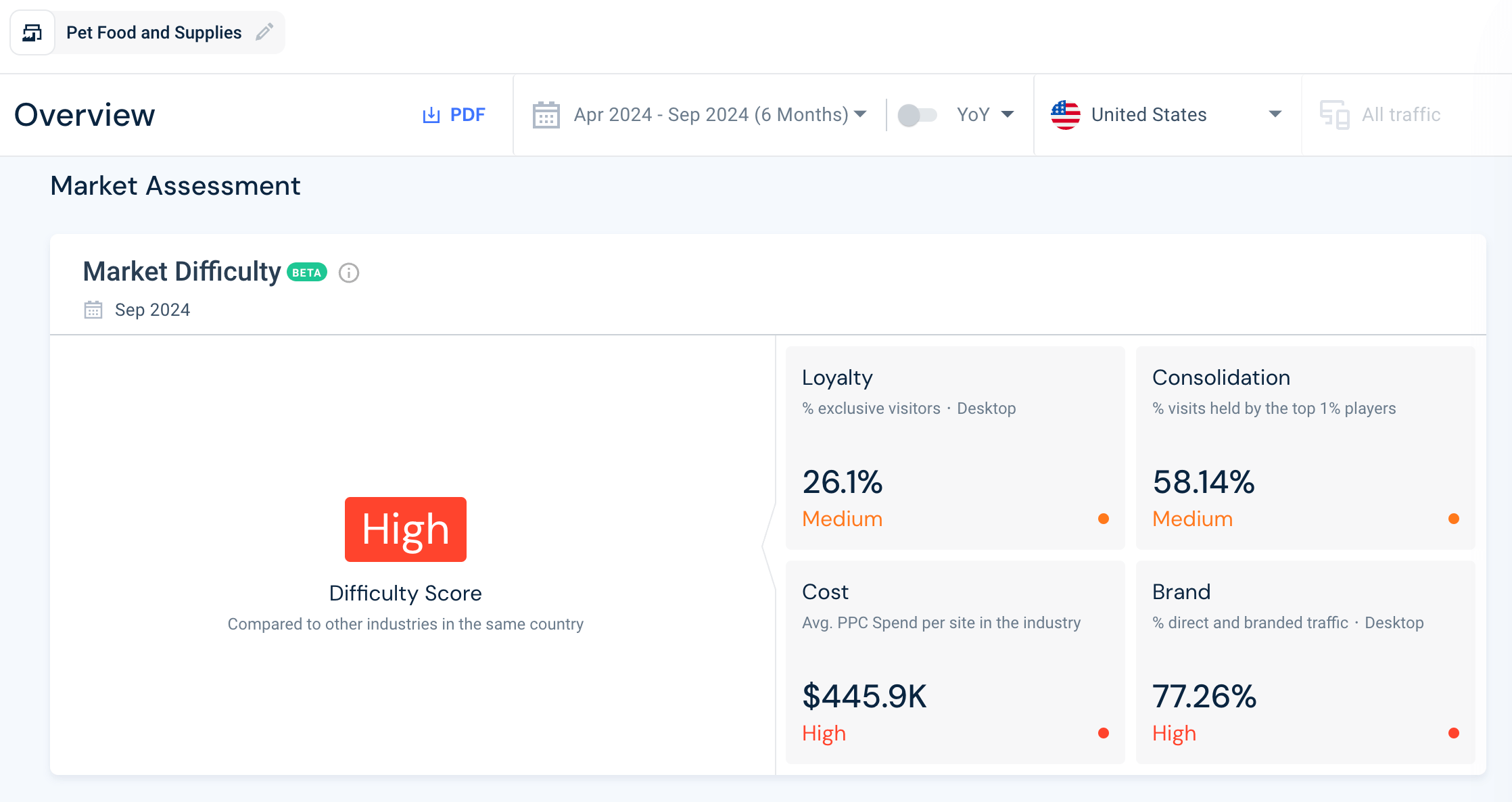
Understanding how easy it is to enter this market is crucial, especially for forecasting long-term success. Using Similarweb’s Market Assessment tool, you can gauge the market difficulty:
Pet owners might be willing to try a new supplier, especially for niche products like pet antibiotics. However, in our scenario planning, we’ll need a solid differentiation strategy to break into this market.
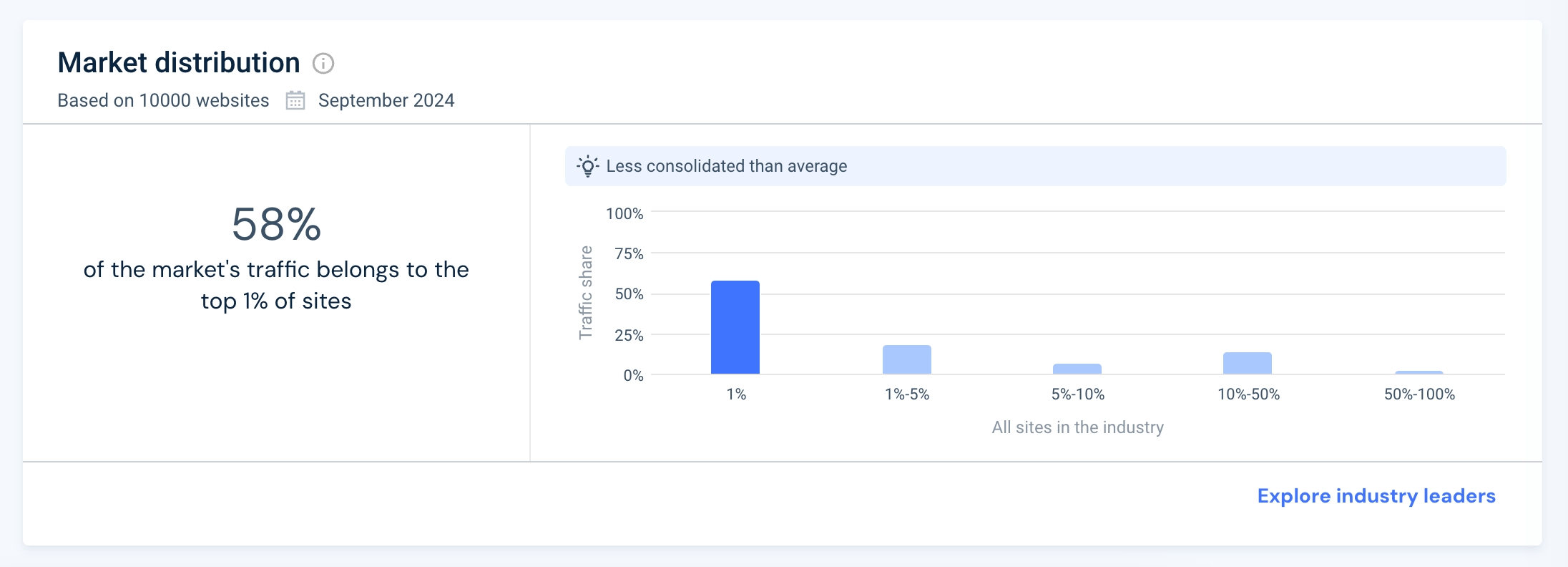
Finally, the Market Distribution insights show that 58% of the market’s traffic goes to the top 1% of websites:
🤔 What does this mean for you?
The high market consolidation suggests that new players will have to work hard to capture attention. Given that the top players dominate traffic, an innovative marketing strategy or a highly unique product offering (such as specialized antibiotics for dogs) could help carve out a space in the market.
Once you’ve assessed the market landscape, the next step is forecasting demand for dog probiotics.
Similarweb’s Demand Analysis feature provides insights into search volume and consumer behavior, helping you predict the level of interest in your product.
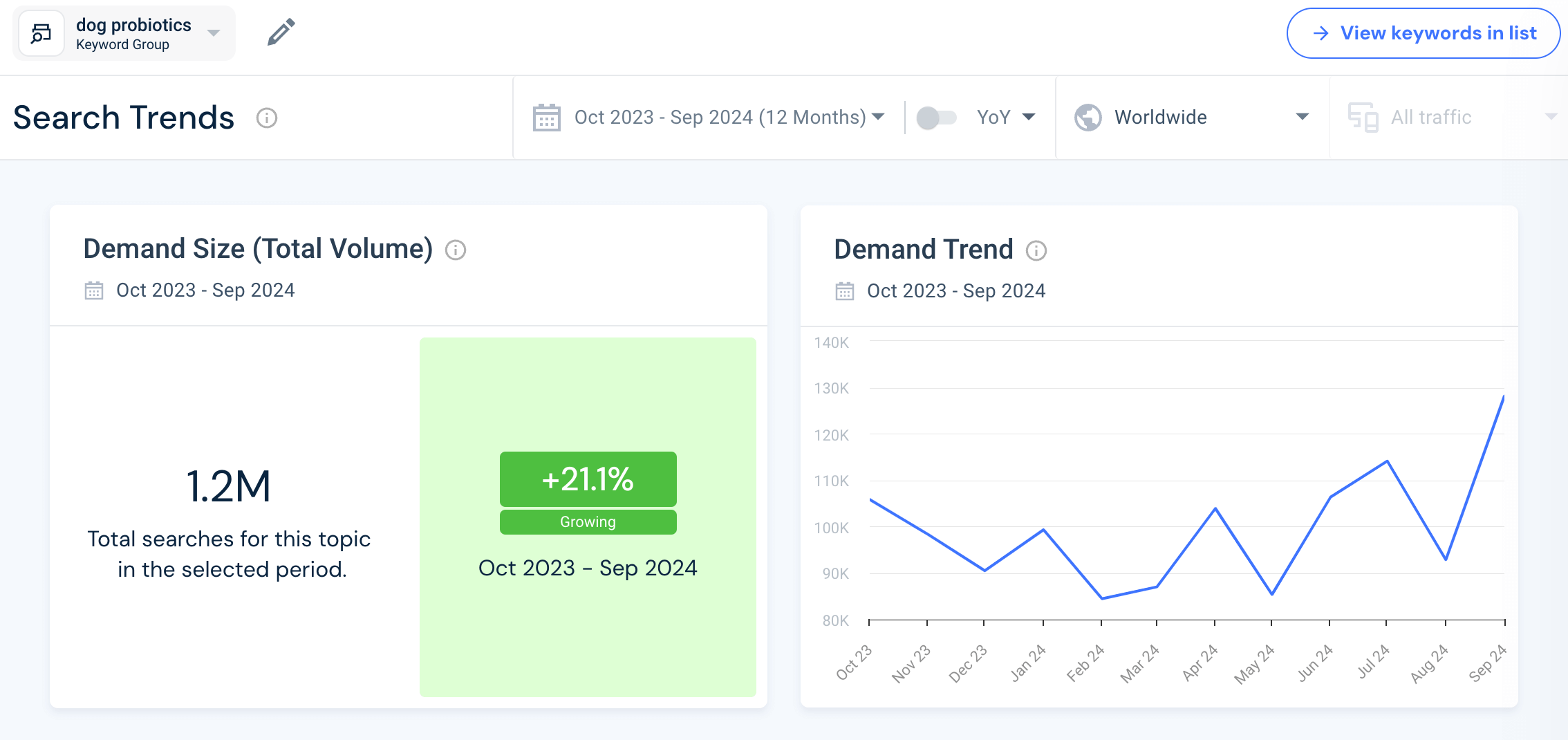
The first thing to check is the total search volume and trends for dog probiotics. This gives you a sense of how popular the product is and whether interest is growing or declining:
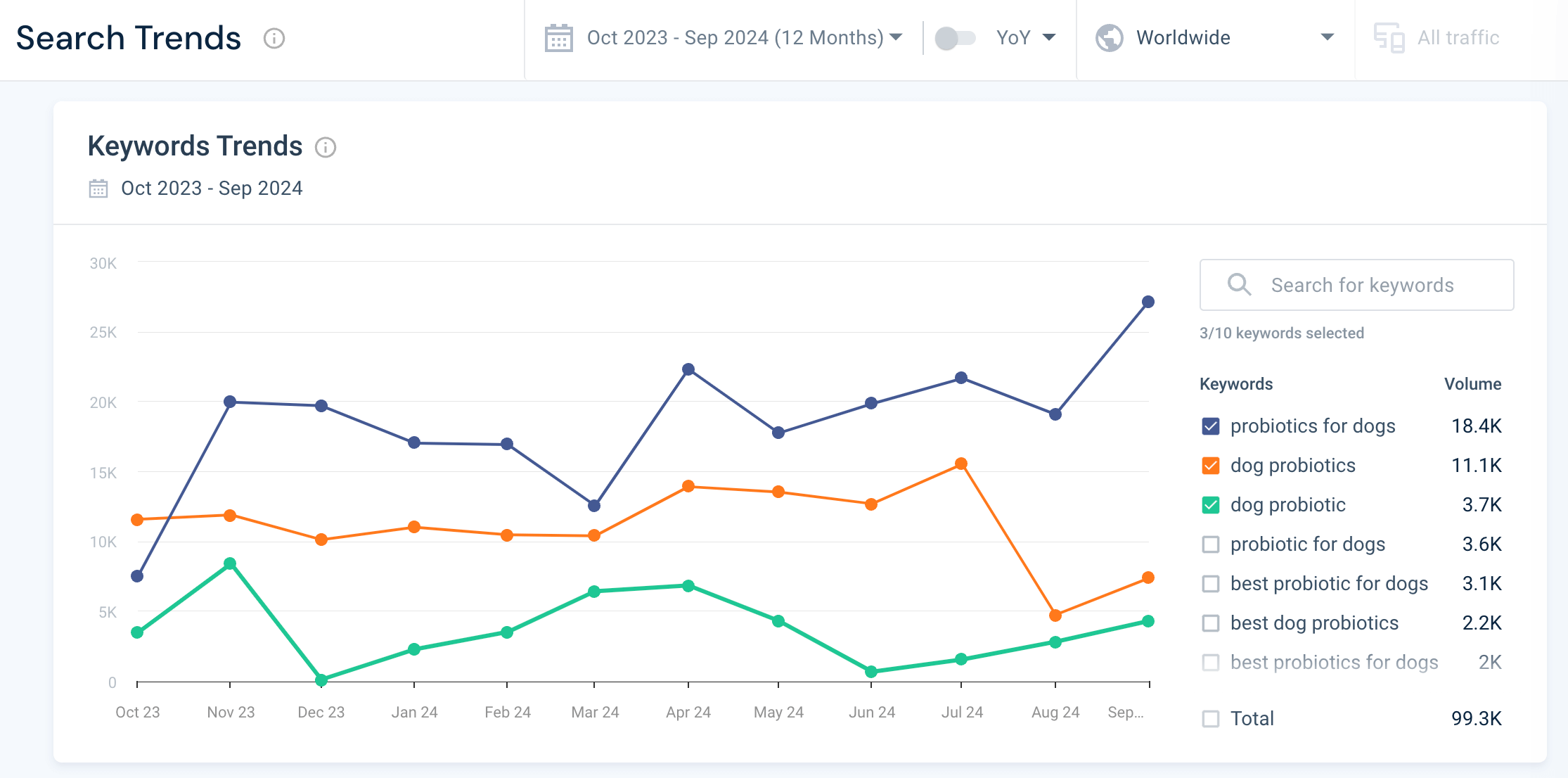
Next, Similarweb allows you to analyze specific keyword trends to understand the search behavior of consumers interested in probiotics:
Lastly, Similarweb provides insights into where the traffic for these keywords is going.
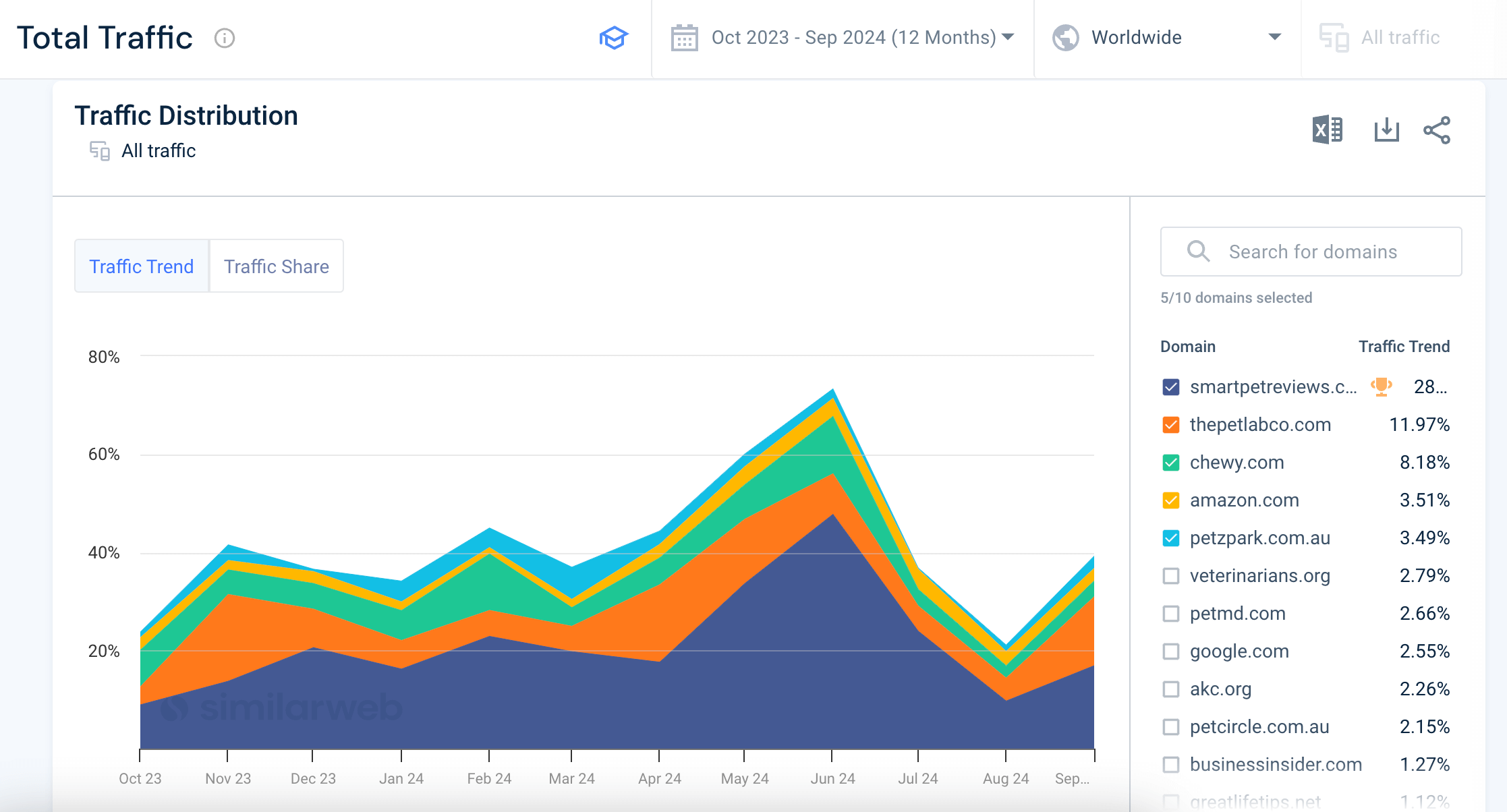
Here’s a breakdown of the Traffic Distribution:
Market forecasting is key to anticipating changes, mitigating risks, and seizing untapped opportunities. By predicting future trends, businesses can stay competitive, optimize resources, and ensure long-term growth.
How can Similarweb help?
Our platform enhances this process with real-time data and insights into market trends, competitor behavior, and consumer demand. Tools like Market Analysis and Demand Analysis empower you to make data-driven decisions based on precise, current information.
What is market forecasting?
Market forecasting involves predicting future market conditions by analyzing historical data, current trends, and external factors like consumer behavior and economic indicators. This allows businesses to make informed decisions about strategy and resource allocation.
How often should I perform market forecasting?
Market forecasting should be ongoing, with regular updates based on new data and market changes. Most businesses update forecasts quarterly, but high-growth or volatile industries may require more frequent updates.
What are the most common market forecasting methods?
Popular methods include trend analysis, regression analysis, scenario planning, the Delphi method, and exponential smoothing. Each offers unique ways to predict future trends using historical data and expert insights.
How can I forecast market demand with Similarweb?
With Similarweb, you can analyze search trends, keyword data, and traffic patterns to understand consumer interests and growing demand. The platform’s demand analysis tools offer insights into search query volume and trajectory for specific products or services, helping you anticipate market demand.

Content Marketing Manager
Monique is a Content Specialist at Similarweb with over 10 years’ experience. Her mission is bring insights from Similarweb’s App Intelligence and Shopper Intelligence to life.
The Top 100 Most Visited Websites in the USA (August 2026)
Similarweb Named in Forrester's Answer Engine Optimization Technologies Landscape, Q3 2026

Anthropic IPO: What Claude's Web and App Data Show
Contact us to set up a call with a market research specialist
