





Top Ecommerce Companies in the USA: The 100 Brands Winning the Traffic Race in 2026
by Inbar Eytan6 Min.
Aug 30, 2026

Every market has cracks, spaces where customer needs go unmet or existing solutions fall short. These market gaps represent some of the most powerful opportunities for innovation, disruption, and growth. Businesses that learn how to recognize and act on these gaps gain a strategic edge, often entering the market where demand exists but supply lags behind.
Market gaps are unaddressed opportunities or unmet needs within a given market. These gaps arise when existing products or services fail to adequately solve a problem or serve a particular customer segment. Gaps can also reflect geographical regions or demographics that are not yet reached by current offerings, as well as new or evolving requirements that established businesses have not identified.
A market gap marks the divide between what is available and what potential consumers truly want or require. Recognizing a market gap highlights actionable potential as well as revealing opportunities for new offerings.
Businesses and entrepreneurs that successfully spot and analyze these gaps can leverage them to enter existing markets differently or create entirely new market sectors. Identifying and addressing these gaps often leads to the development of innovative solutions or business models, generating significant growth for proactive companies.
Market gaps arise from a variety of factors, including inefficiencies, limitations of current solutions, and evolving consumer demands:
There are several ways that market gaps can provide opportunities for companies.
Seeking out market gaps pushes organizations to innovate. By identifying unmet needs, organizations are compelled to develop new products or improve existing ones in ways competitors may overlook. Innovation can involve process improvements, novel service models, or unique pricing structures.
Identifying and addressing market gaps provides a clear edge over competitors. When an organization is first to serve an unaddressed need, it can establish brand awareness and customer loyalty before others enter the space. This advantage often includes the ability to set industry standards, build barriers to entry, and secure a strong market position as consumer preferences solidify around their offering.
Market gaps sometimes point to entire demographic or geographic segments left untapped by mainstream offerings. By targeting these gaps, companies can activate new revenue streams beyond their current portfolio. This is particularly important in mature or highly competitive markets where growth from existing products may be slowing.
Meeting overlooked or poorly addressed needs within a market naturally improves customer satisfaction. Customers notice when a business understands and responds to their unique problems, leading to stronger brand loyalty and higher retention rates. Active market gap analysis shows a commitment to evolving with the customer.
Here are a few ways your organization can discover and exploit useful market gaps.
Systematic market research is the foundation for discovering market gaps. This process involves both quantitative and qualitative methods, such as surveys, focus groups, and data analysis, to uncover what customers want versus what is available. By mapping customer journeys and comparing them with existing solutions, organizations can pinpoint points of friction, unmet needs, or unaddressed market opportunities.
Market research should go beyond surface-level trends, diving into data to identify patterns and anomalies. Effective research collects input from diverse sources, competitive intelligence, customer feedback, inputs from frontline staff and channel partners, and secondary data like competitor reviews. The deeper the research, the easier it becomes to identify actionable gaps that others may have missed.
Customer feedback is an invaluable tool for market gap identification. Direct communication channels such as support tickets, social media comments, or user interviews reveal pain points and wishes in real time. Customers often articulate frustrations or desired features that point directly to market gaps.
Structured feedback programs, such as Net Promoter Score (NPS) surveys or post-purchase questionnaires, systematically gather information that can be sliced by segment to uncover underserved populations or unmet needs. Businesses that act on feedback not only improve their products but also demonstrate their responsiveness to customers and build trust.
Competitor monitoring helps reveal gaps left open by others. By systematically tracking competitors’ product launches, customer reviews, pricing strategies, and feature roadmaps, organizations can spot weaknesses or blind spots. For example, if a competitor repeatedly receives negative feedback about a missing feature, it may signal a market gap ready for exploitation.
Beyond direct competitors, monitoring adjacent industries or new entrants can provide insights into changing customer preferences and emerging demands. This broad awareness allows timely pivots into gap opportunities before the market becomes saturated. Analyzing competitor innovation cycles may also hint at gaps created during market transitions.
Emerging trends, such as evolving consumer behaviors, societal shifts, or advances in technology, consistently create market gaps. Companies that regularly scan industry publications, attend conferences, or participate in innovation networks can be early to spot shifts signaling new opportunities. Being ahead of trends provides a first-mover advantage in filling gaps that established companies may ignore or fail to notice.
Early adoption of new technologies can uncover gaps that will only become apparent to competitors much later. For example, the rise of cloud computing or AI has continuously opened new product and service niches. Keeping an eye on such advances ensures organizations don’t miss opportunities to address unmet needs stemming from technological change.
Market gaps often exist simply because certain demographics or global regions have been overlooked. Entering these areas requires researching cultural differences, purchasing behavior, or regional regulations that may be ignored or poorly understood by mainstream providers. Companies willing to adapt their products or services for new audiences can capitalize on needs that incumbents have missed.
Expanding internationally or targeting niche demographic groups, such as aging populations, youth segments, or professionals in emerging economies, requires localized solutions. The process often reveals products or pricing models with broader global appeal, standing out as distinct solutions in competitive landscapes.
Legislation and regulation play a major role in generating market gaps. Regulatory changes can render certain solutions obsolete or introduce new compliance requirements that incumbent providers are slow to meet. Companies tracking these market shifts can quickly develop compliant offerings, sometimes capturing business from disrupted competitors.
For example, new privacy laws have created demand for strong data protection tools, while environmental regulations spawn markets for eco-friendly or waste-reducing products. By closely following policy developments and industry standards, you can avoid missing these opportunities.
Here are a few recent examples of companies that identified market gaps and cleverly exploited them to generate significant growth.
Here is how you can use Similarweb to find room for growth and improvement in the market.
One of the most effective ways to uncover a market gap is by analyzing what consumers are actively searching for but not finding. This is where Similarweb’s Demand Analysis tool comes in. By tapping into granular search data, you can spot unmet demand early, measure market size, and forecast future trends with confidence.
With Demand Analysis, you can:
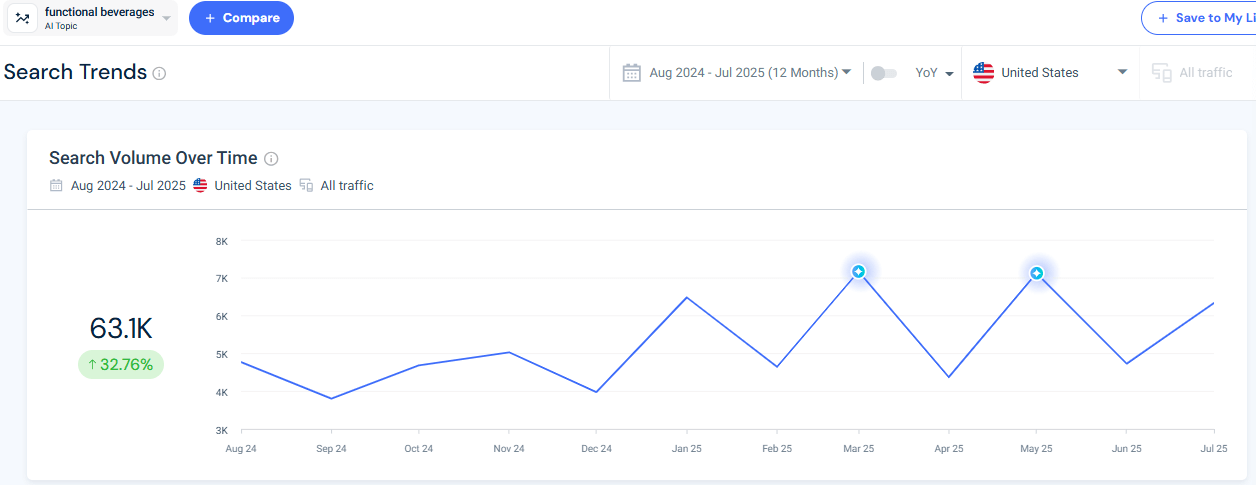
I’ve analyzed the topic of “Functional Beverages” in Demand Analysis, we can see that U.S. searches reached 63.1K over the past 12 months. The trend line also reveals two major peaks in early spring and May 2025.
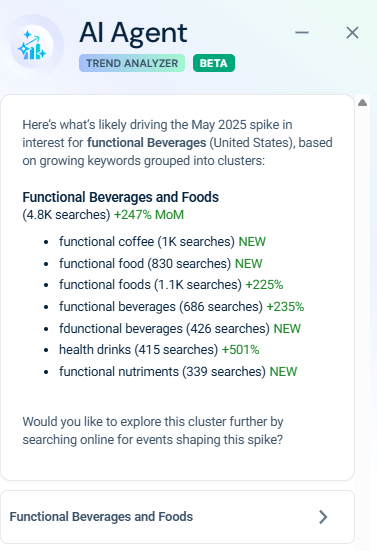
To understand what’s driving the May 2025 spike, we turn to the AI Trend Analyzer Agent, which automatically groups rising keywords into clusters. The analysis shows searches for “functional coffee” (+NEW), “health drinks” (+501%), and “functional foods” (+225%) driving the surge.
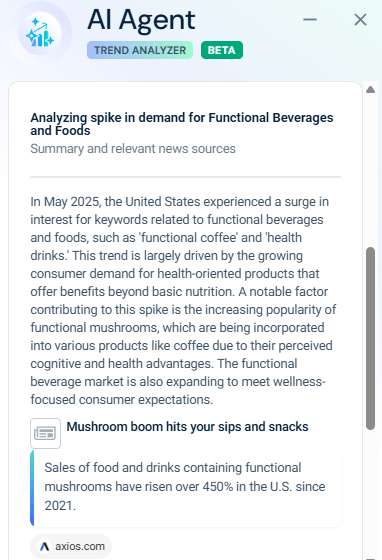
Digging deeper, the AI Agent links this spike to the rising popularity of functional mushrooms, which are increasingly being incorporated into drinks and snacks for their perceived health benefits. In fact, sales of mushroom-based beverages and foods have risen more than 450% in the U.S. since 2021.
The market gap insight: Demand Analysis reveals that while interest in functional beverages, especially mushroom-infused coffee and health drinks, is skyrocketing, the supply side is fragmented, with few dominant players. For brands, this presents a clear untapped opportunity: develop new functional drink variations to capture the demand consumers are already signaling in search.
Once you’ve validated consumer demand for a trend, the next step is to evaluate whether the market is fragmented enough to enter or already dominated by a handful of players. Similarweb’s market research tools make this possible by letting you create custom industries, where you can group the most relevant websites in your space and benchmark their performance.
To explore this niche, we created a custom Industry of mushroom and functional coffee brands, including sites such as Everyday Dose, Ryze, MUD\WTR, Four Sigmatic, and Clevr Blends. An overview reveals a category that is both growing and relatively fragmented:
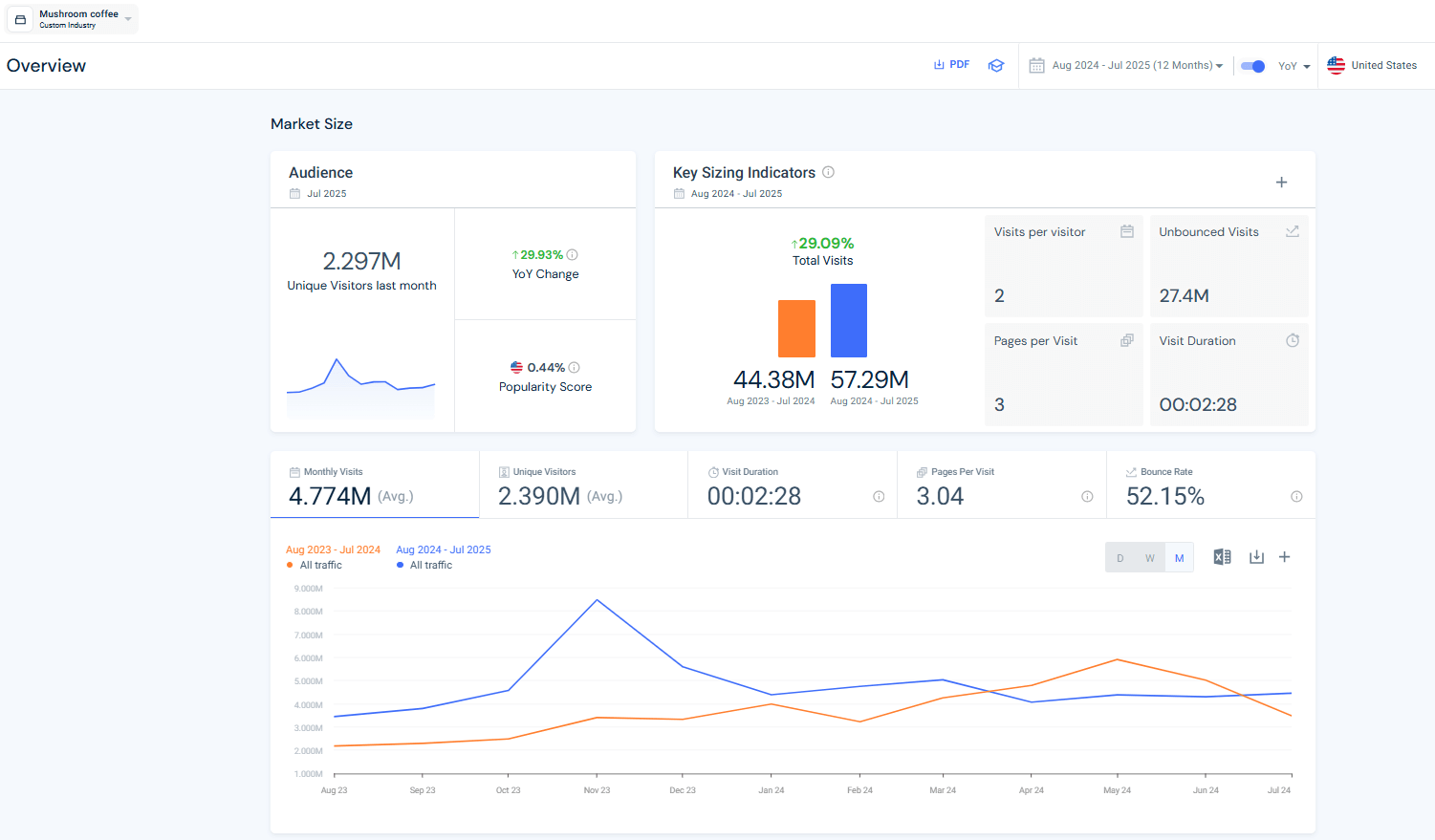
The Market Players view highlights how share is distributed among leading brands:
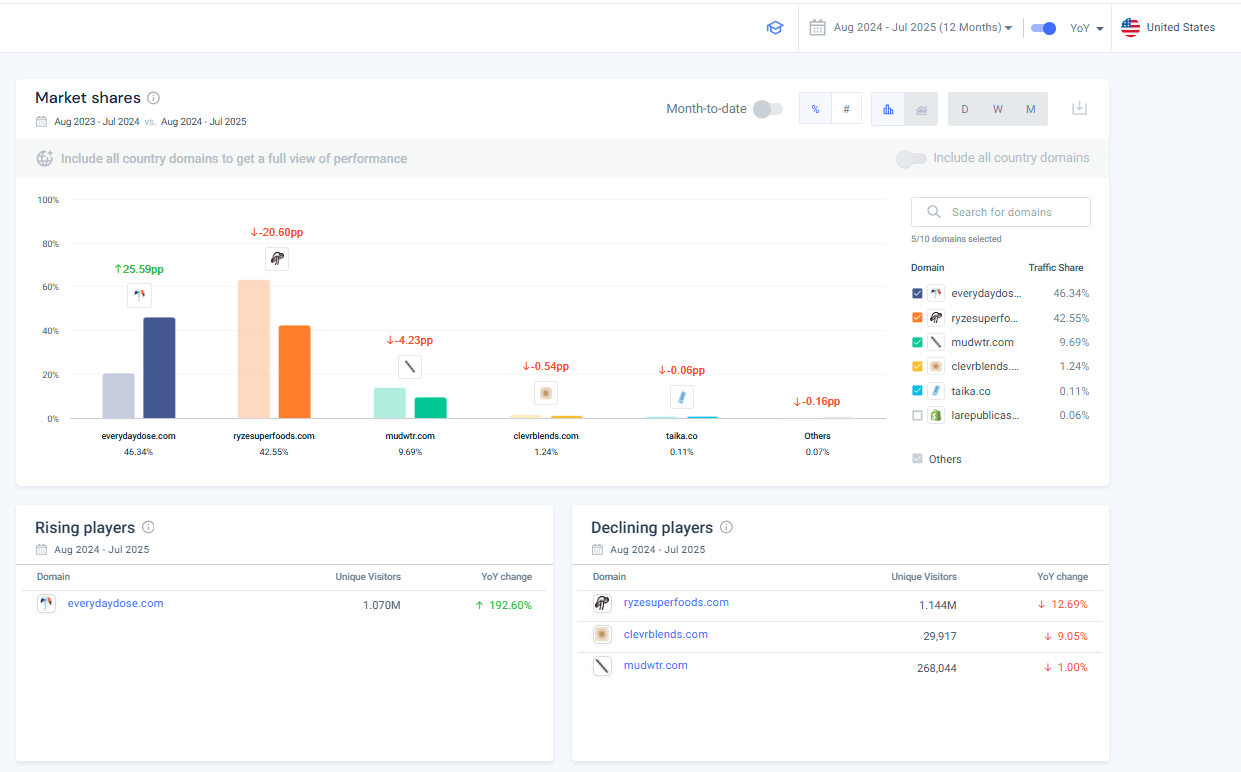
This distribution shows a two-player race with room for challengers: while the leaders account for most of the traffic, the rapid shift in shares suggests loyalty is still fluid. The decline of Ryze combined with the rise of Everyday Dose indicates that consumers are open to switching, a classic sign of low saturation and opportunity for differentiation.
The Market Quadrant Analysis section further emphasizes the opportunity:
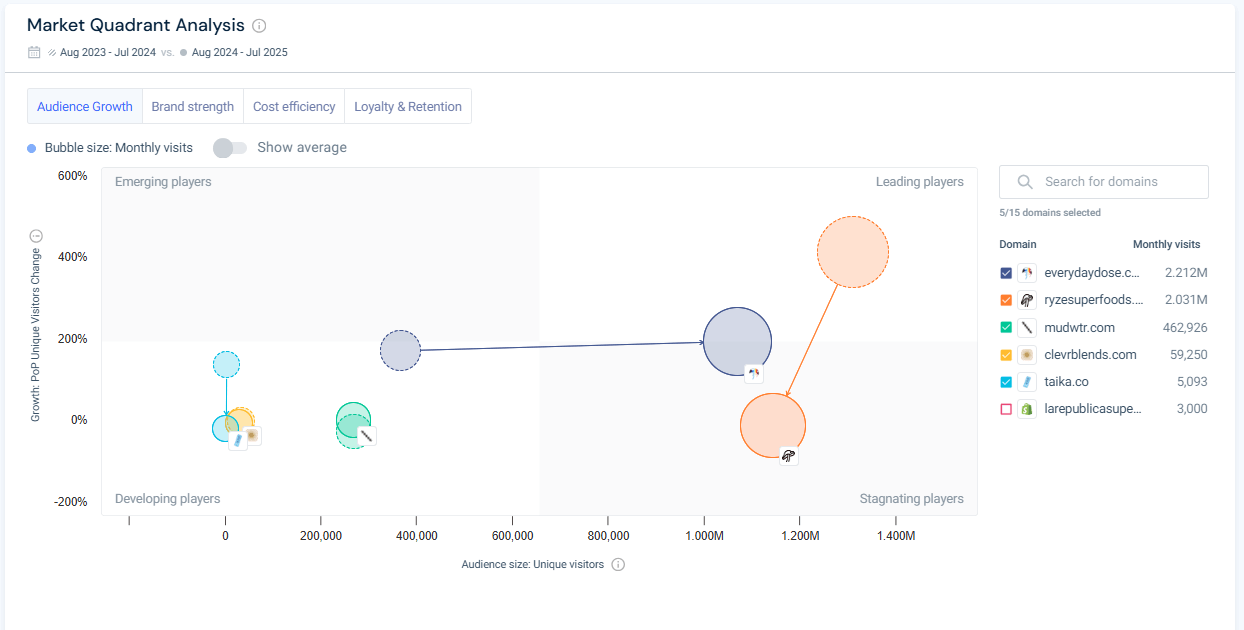
The mushroom coffee space is expanding quickly, fragmented, and marked by shifting loyalties. While Everyday Dose is gaining momentum, the sharp decline of Ryze shows that even established brands are vulnerable. For businesses considering this segment, the data points to a low-saturation environment where differentiation on flavor profiles, functional benefits (e.g., focus, calm, gut health), or brand positioning could secure market share before the category consolidates further.
Spotting market gaps involves understanding consumer demand as well as recognizing where competitors are slipping. Similarweb’s Website Analysis makes this possible by showing exactly where rival brands are losing traffic, engagement, or visibility across channels. These insights reveal opportunities to step in and capture market share.
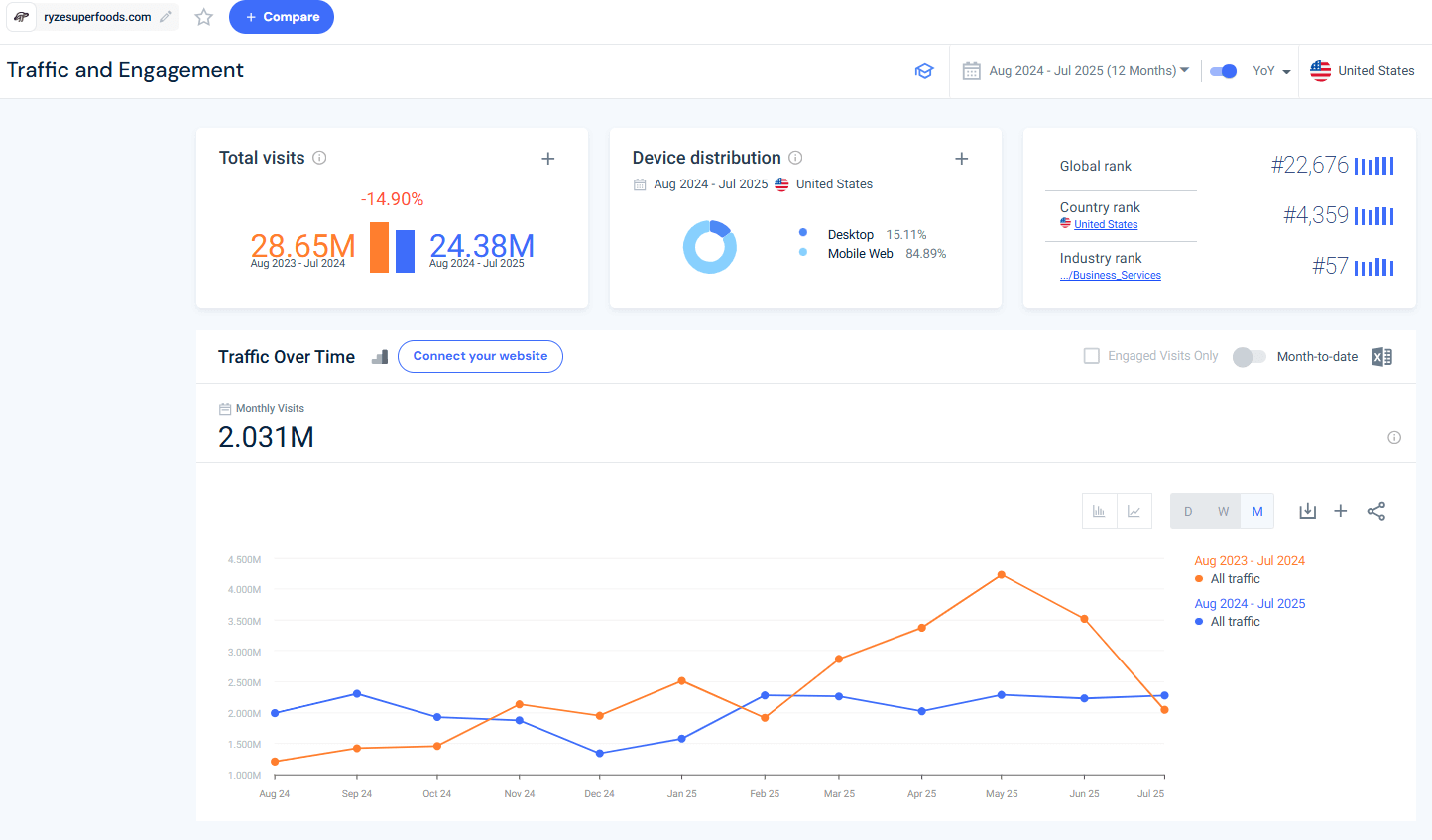
Ryze is a category leader in mushroom coffee, but their digital performance shows clear signs of underperformance:
Traffic decline: Over the past year, Ryze’s traffic fell -14.9% YoY, dropping from 28.6M visits to 24.4M. The monthly trendline highlights a steep falloff in early 2025 that competitors have capitalized on.
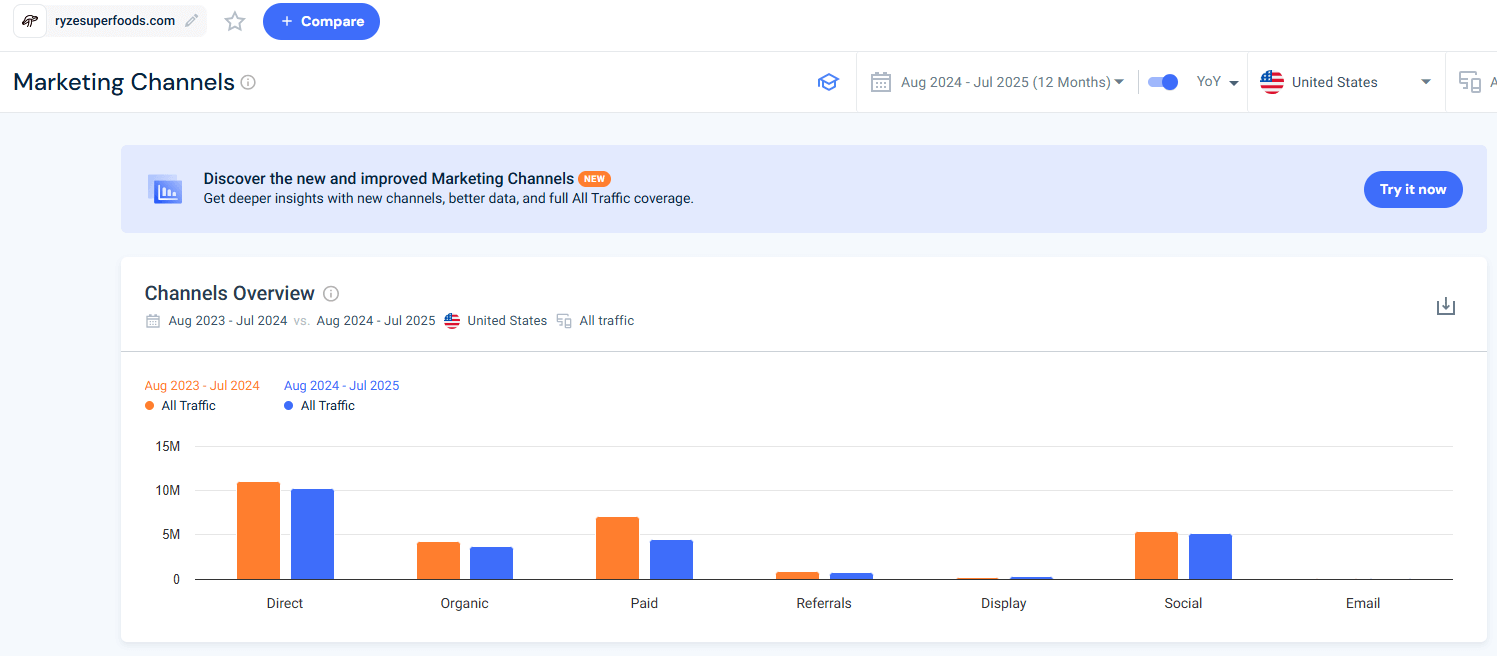
Channel weakness: Ryze relies heavily on Direct and Paid Search, but both channels shrank year-over-year. Organic Search remains modest compared to peers, while referrals and social are almost negligible, showing that Ryze is missing out on influencer-driven and content-led growth.
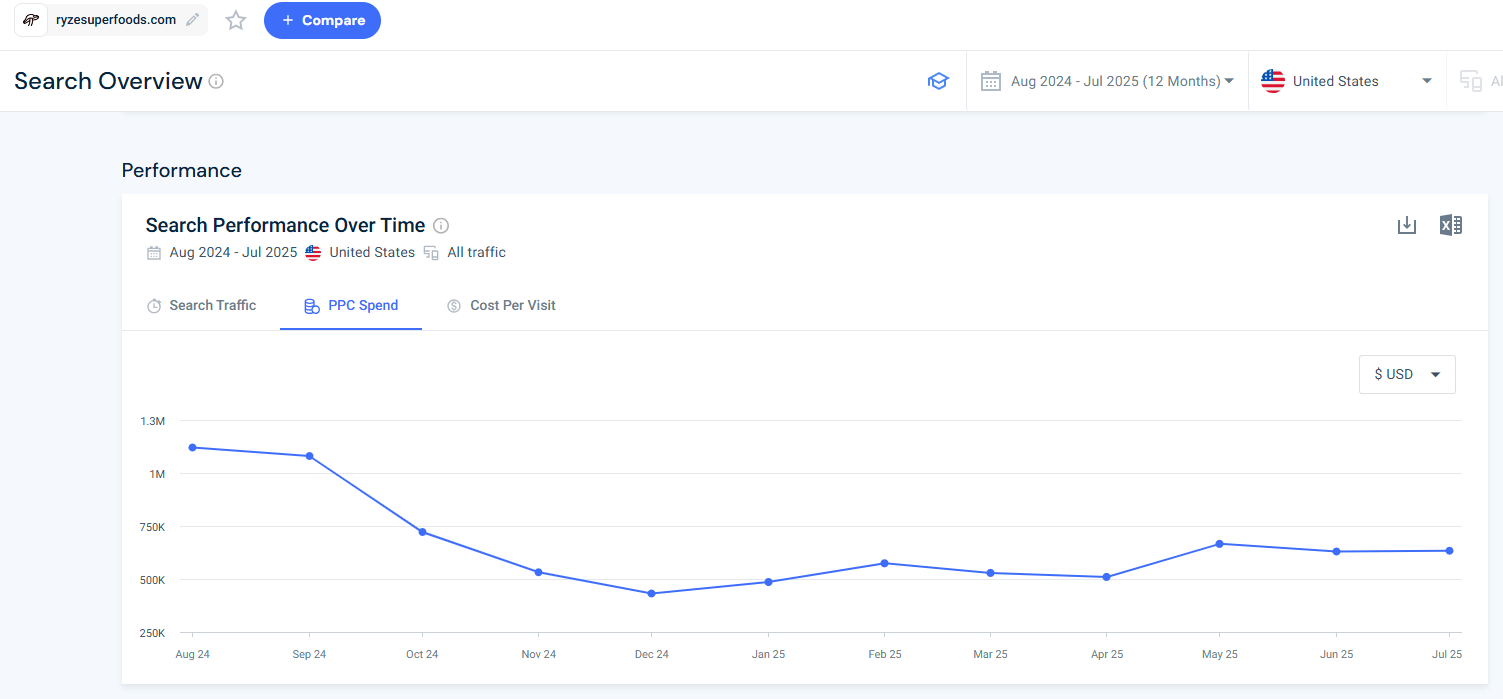
Reduced PPC investment: Search performance data shows that Ryze cut back PPC spend throughout late 2024, dropping from over 1.1M to ~600K by mid-2025. This suggests either reduced ad budgets or weaker campaign efficiency, both leaving white space for competitors to dominate search ads.
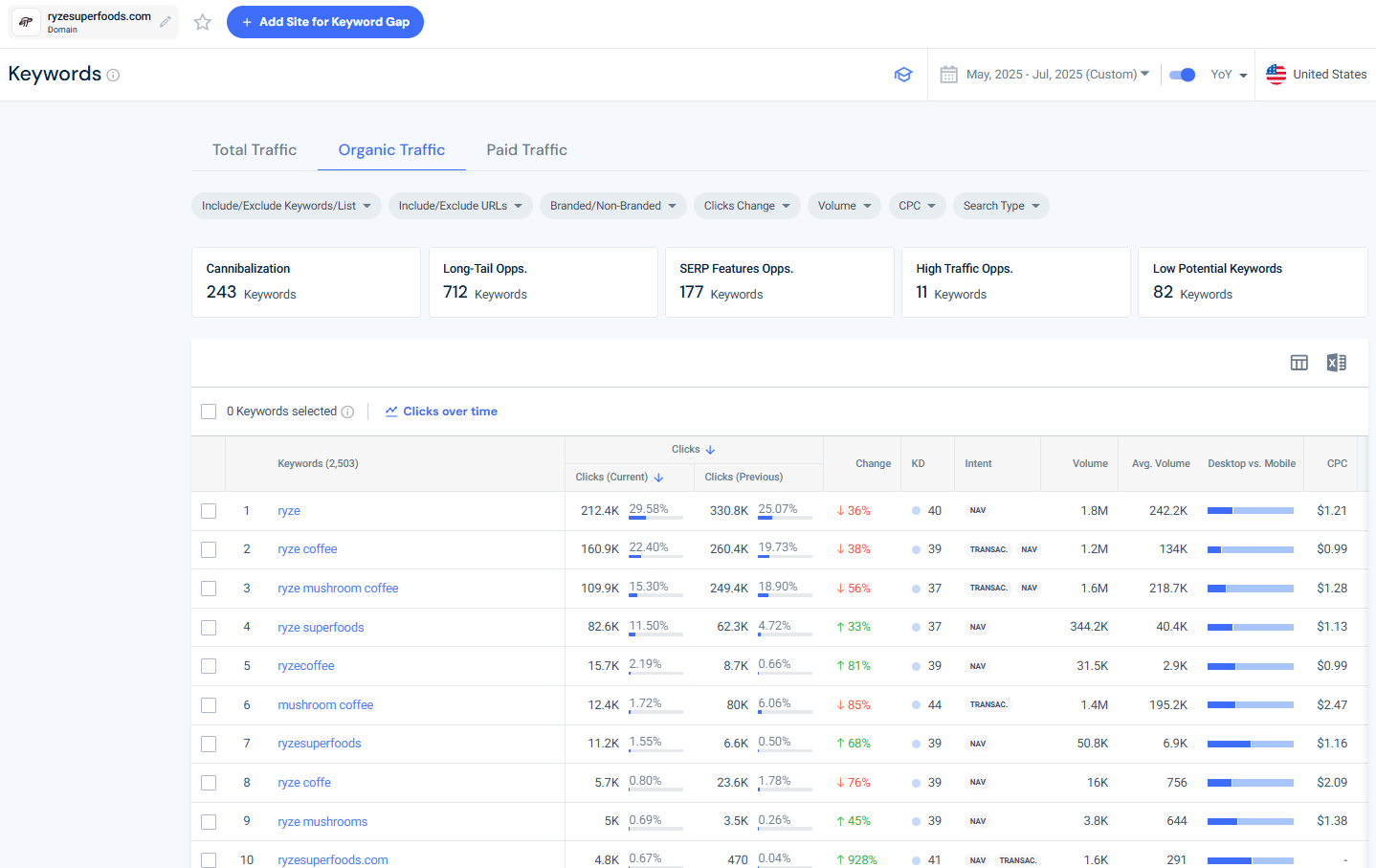
SEO dependency on branded terms: Keyword analysis reveals that Ryze’s top organic terms are almost entirely branded searches (“ryze,” “ryze coffee,” “ryze mushroom coffee”), many of which declined by -36% to -56% YoY. Non-branded terms like “mushroom coffee” and “functional coffee” drive far less traffic, leaving them vulnerable if brand awareness slips.
Ryze’s decline highlights a clear opportunity for challengers:
For any competitor, this kind of underperformance analysis is invaluable: it shows not only where the market is growing, but also where incumbents are failing to keep up.
Here are some of the ways you can take advantage of newly discovered market gaps.
To effectively fill market gaps, organizations must focus on developing innovative products or services that directly address the unfulfilled needs of target customers. This involves creating solutions that either improve existing products or introduce entirely new offerings tailored to market demands.
Innovation may involve using or developing new technologies, improving product functionality, or offering unique features that distinguish the product from competitors. Companies should focus on delivering value that surpasses current offerings, whether through increased efficiency, better user experience, or meeting unaddressed pain points.
Forming strategic partnerships with other organizations can be an effective way to fill market gaps by pooling resources, expertise, and capabilities. Collaborations between organizations in adjacent or complementary industries allow companies to offer comprehensive solutions that neither could achieve alone. These partnerships can provide access to new customer segments, improve product offerings, or enable quicker market entry.
For example, technology companies might partner with manufacturing firms to integrate new software solutions into existing hardware products. Alternatively, partnerships can help expand into new geographical regions by tapping into local networks and knowledge.
Identifying and addressing market gaps requires a strategic approach that leverages advanced data and AI tools. For example, Similarweb’s AI agents serve as a powerful complement to this strategy by providing deep, data-driven insights that can help organizations pinpoint opportunities that are otherwise difficult to detect.

These AI agents can analyze large datasets across a wide array of industries, uncovering hidden patterns, consumer demands, and market shifts. By integrating Similarweb’s AI capabilities, organizations can gain a nuanced understanding of emerging trends, track competitor performance, and identify areas of low saturation.
Focusing on underserved niche markets is one of the most effective strategies for filling market gaps. While larger markets may be saturated, niche markets are often overlooked by mainstream providers, leaving significant opportunities for smaller, specialized businesses.
These niches may include underserved demographics, regions, or unique customer needs that have not been adequately addressed. By offering tailored solutions that cater to the demands of these groups, companies can differentiate themselves from larger competitors and build strong, loyal customer bases.
A flexible business model is essential for responding to market gaps. This can involve adopting a scalable model that allows organizations to quickly adjust to new customer demands or entering markets with innovative pricing structures or delivery methods. A flexible model helps organizations pivot quickly, scale new products or services effectively, and respond to changing market conditions without major disruptions.
For example, subscription-based models, pay-per-use structures, or modular offerings that can be customized based on customer needs provide opportunities to capture market share in segments with diverse requirements.
Successful marketers continuously monitor relevant markets and can be the first to discover new market gaps. Here are a few tips for ongoing market gap analysis.
To effectively identify market gaps, organizations must maintain an ongoing and systematic approach to understanding customer needs. It’s not enough to only gather feedback during product launches or service rollouts; organizations should be continuously engaging with customers to track evolving demands.
This can be achieved through various touchpoints, such as regular surveys, post-purchase feedback, and customer satisfaction interviews. Businesses should also take advantage of customer support channels, as these often reveal recurring issues or frustrations that might indicate an unmet need in the market.
Staying alert to market signals is a proactive approach to detecting early-stage opportunities or potential threats that could indicate market gaps. Market signals are often subtle, appearing as slight shifts in customer behavior, emerging technologies, or macroeconomic changes, and organizations must learn how to recognize these signs before they fully emerge.
For example, a sudden surge in discussions about a new technology could indicate a pending shift in customer needs, creating a gap for innovative solutions. Similarly, changes in consumer attitudes toward sustainability, privacy concerns, or personalization can open the door for new products or services that respond to those concerns.
Collecting and analyzing data over time allows organizations to identify patterns that are not immediately apparent through qualitative data analysis methods alone. By using predictive analytics, organizations can anticipate where the market is heading, allowing them to develop new offerings or refine existing products that will meet future demands.
Data analytics can also highlight discrepancies between what customers say they want and what they actually purchase or use. For instance, a company might gather feedback that consumers want a more customizable experience, but a deep dive into purchasing patterns could show that personalization isn’t as crucial as convenience.
In dynamic markets, products and services that once addressed a gap might become outdated as consumer preferences shift or new technologies emerge. Organizations must continually validate and refine their offerings. This process involves testing new ideas, gathering user feedback, and iterating on solutions.
Regularly launching beta programs or limited releases of new features allows companies to gauge customer reactions and make adjustments before committing to full-scale production. A key part of this validation is ensuring that customer feedback loops are tightly integrated into the product development process.
Agile organizations foster a culture where adaptability, collaboration, and rapid decision-making are prioritized over rigid planning and long approval processes. To create an agile culture, organizations must encourage experimentation and risk-taking at all levels of the organization.
This means empowering employees to make decisions based on real-time data, rather than relying on hierarchical approval processes. Companies that embrace flexibility and encourage teams to learn from failures while iterating on solutions can rapidly adjust to fill gaps as market conditions shift.
Identifying and filling market gaps is about creating real value where others haven’t, as well as spotting what’s missing. When companies listen to customers, study competitors, and respond quickly to change, they often uncover profitable niches and unmet needs hiding in plain sight.
Continual market gap analysis with Similarweb’s Web Intelligence helps businesses stay ahead of shifting demands, open new revenue streams, and future-proof their offerings. In dynamic markets, being proactive and responsive isn’t optional; it’s what separates leaders from followers.
Whether through product innovation, strategic partnerships, or data-driven insights, companies that prioritize closing market gaps are better positioned to thrive in a competitive landscape.
What is a market gap?
A market gap is an unmet need or unaddressed opportunity within a market where current offerings don’t fully satisfy customer demands. These gaps often point to areas where new products or services could succeed.
Why do market gaps occur?
Market gaps arise due to changing consumer behaviors, technological advances, regulatory changes, or businesses overlooking niche segments. Companies often focus on known, profitable areas and miss evolving or underserved needs.
How can identifying market gaps help my business?
Finding and addressing market gaps can fuel innovation, create competitive advantages, open new revenue streams, and improve customer satisfaction by directly solving overlooked problems.
How do I find market gaps using tools like Similarweb?
You can use Similarweb to analyze consumer search trends, evaluate underperforming competitors, explore low-saturation segments, and track keyword or traffic gaps. These insights help reveal where unmet demand exists.

Team Manager, Content Marketing
James is an former journalist & content strategist in B2B tech, who has previously created content for companies like EDF and X (Twitter). He also has a journalism post-grad from LCC.
Top Ecommerce Companies in the USA: The 100 Brands Winning the Traffic Race in 2026

3 of the Sharpest Minds Weigh in on the State of Gen AI in 2026

Contact us to set up a call with a market research specialist
