





The Top 100 Most Visited Websites in the USA (August 2026)
by Shai Belinsky10 Min.
Sep 29, 2026

In June this year, 500 business leaders shared their favorite types of market research with me via a direct external survey.
Astonishingly, 83% of people said the same thing: favoring qualitative research (specifically market research surveys) over anything else.
Having a favorite is all good and well, but as we know, variety is the spice of life. By avoiding dependency on any single type of market research, you get a relevant, unbiased view of your market and opportunities at all times.
Spoiler alert The types of market research I outline in this post will speed up your time to insight significantly. Instead of a process that spans days and weeks, certain tasks can be done and dusted in a few hours at most.

To help you stay on top of your game, I’m outlining the different types of market research, their benefits, and how to use them. As a bonus, I’m sharing six modern ways to do market research using web intelligence tools (like Similarweb).
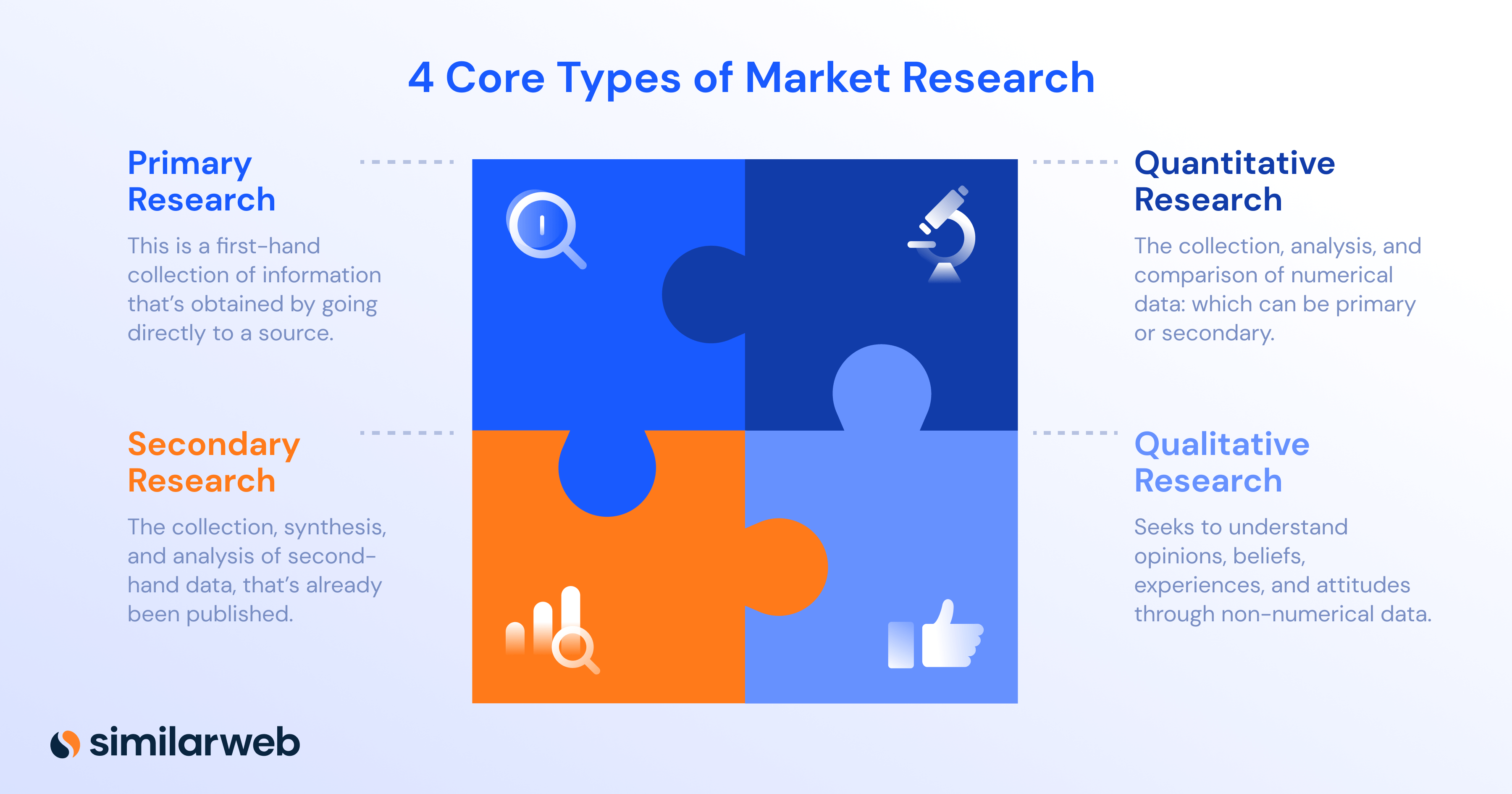
Primary research is the first-hand collection of data. You go directly to a source instead of relying on existing information. It’s also known as field research.
Who is it for?
Doing primary research involves collecting information relevant to a specific research context. For instance, if data is required about the shifting needs of a target market, primary research methods are a great way to explore this.
How to collect the data?
Usually, an individual will go into the marketplace (field) to find the information they need.
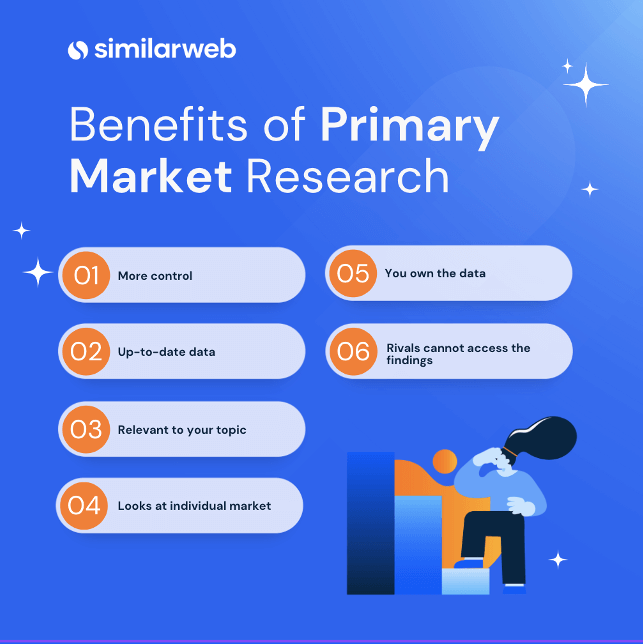
The right research method depends on the goal of the research and the resources available. Here are five of the best ways to do primary research.
Secondary research collates existing information or research for analysis. Essentially, it’s a type of market research that uses second-hand data.
Who is it for?
Secondary research is ideal for start-ups and small businesses, needing a type of market research that’s low-cost and quick to undertake.
How to collect the data?
Secondary data is collected from various places but always comes from existing third-party information.
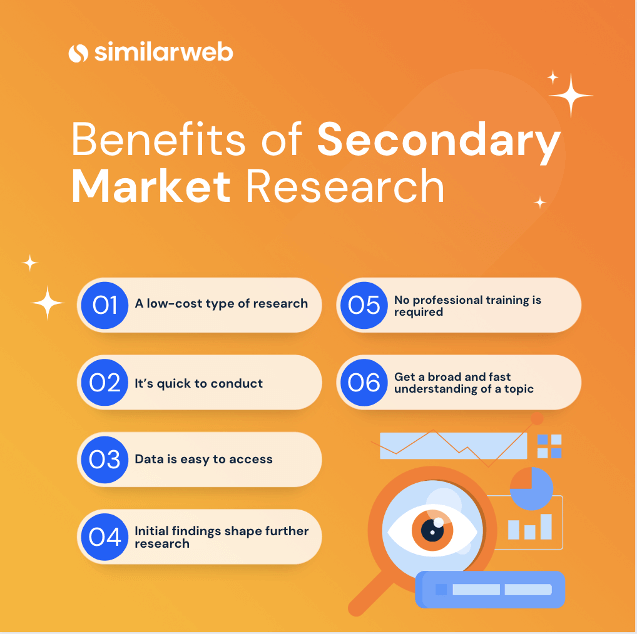
Most secondary market research methods can be done for free. It’s also called desk research. Here are some of the most popular places to obtain that data.
Qualitative research aims to understand opinions, beliefs, experiences, attitudes, and interactions by collecting and analyzing non-numerical data. It helps researchers understand why things are so, through observation or unstructured questioning.
Compared to quantitative methods, this is more of a touchy-feely type of market research. It’s more about emotions and opinions than crunching numbers.
Who is it for?
Any business or start-up can use (and benefit from) qualitative research. To understand the sentiment of a target audience or market in detail, this type of research uncovers key insights that help shape and develop products, services, and strategies.
How to collect the data?
You can conduct qualitative research remotely or in person. What’s key is that the data is collected first-hand, directly from an individual or group of people.
Read More: 83 Qualitative Research Questions & Examples
Quantitative research is focused on collecting, analyzing, and comparing numerical data. It’s predominantly used to make predictions, spot trends, find patterns, and establish averages. It deals with primary and secondary data, as long as it is represented in numerical form.
Who is it for?
Quantitative research provides data that can shed light on statistical information about a market or business. It’s useful for start-ups and established companies and can help with forecasting, market sizing, market validation, and more.
How to collect the data?
Using various methods, quantitative research is systematically collected and recorded to do analysis in a database through graphics, charts, and tables.
Due to the often complex nature of this type of market research, I’ve added a quick explainer.
Read More: 98 Quantitative Market Research Questions & Examples
Each of the four different types of market research have their strengths and weaknesses. When you combine methods, you get the best of both worlds: An approach known as mixed-method market research. When done correctly, it can boost outcomes’ accuracy and quality, adding depth and breadth to your research and results.
Outside the four core types of market research, there are modern ways to discover valuable information that can leverage better insights. If you’re looking for new types of research that’ll help you quickly find new opportunities to go after, read on.
In-depth competitor analysis allows you to quickly find growth opportunities, by taking a detailed look at what is and isn’t working for your rivals. What’s more, it can help you spot emerging trends and shifts, so you can take action when and where it matters most.
These are some of the things you can expect to uncover with competitive market research:
Consumer insights are fundamental to the success of any organization, regardless of size or sector. Through the analysis of consumer behavior, you can drive better engagement, discover new digital strategies, and develop a more detailed understanding of your prospects and customers.
Here are just a few examples of how doing audience-based research can help:
To help you get started, here are four audience analysis examples.
At the last count, there were roughly 1.93 billion websites online, and I’m not even going to get into how many social media accounts there are. But with so many digital channels, you must ensure your content and company can be easily found online. This is where (and why) content and keyword-based market research deliver immense value.
Get it right, and you’ll reap the benefits through more visitors, leads, conversions, and revenue. The golden nugget you uncover with keyword and content research is a greater understanding of an audience. Although most people would associate keyword research with SEO, it serves a dual purpose.
To get started, do a competitive content analysis within your market.
Knowing how effective a specific type of advertising channel, message, or format is for a target audience can quickly help you determine where’s best to spend your marketing dollars. By researching the effectiveness of ads in your space, you can more easily see the best places to invest your time and effort.
This type of market research helps you:
Mobile-first consumer habits have seen industries turned on their heads overnight. For most, it’s not a question of ‘if’ but ‘when’ mobile apps will infiltrate their market. In any industry, seeing the impact of apps in your space is vital. The need to see a complete view of the digital landscape is rising fast.
Some of the key things you can uncover through app intelligence-focused research include:
At Similarweb, our app intelligence coverage shows a complete view of the digital landscape, across web and apps, in over 60 countries and for both iOS and Android platforms. Here’s a quick look at some of the insights on offer.
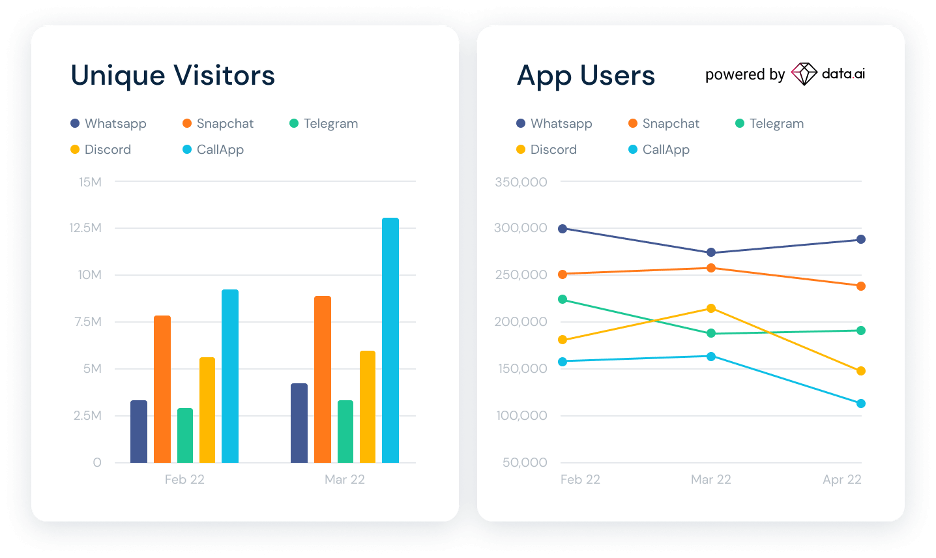
Using app intelligence, you can benchmark your organization across the digital landscape. With this, you can easily compare web and app performance across a range of key usage metrics. This data helps you identify trends, and keep a close eye on the market leaders and rising stars.
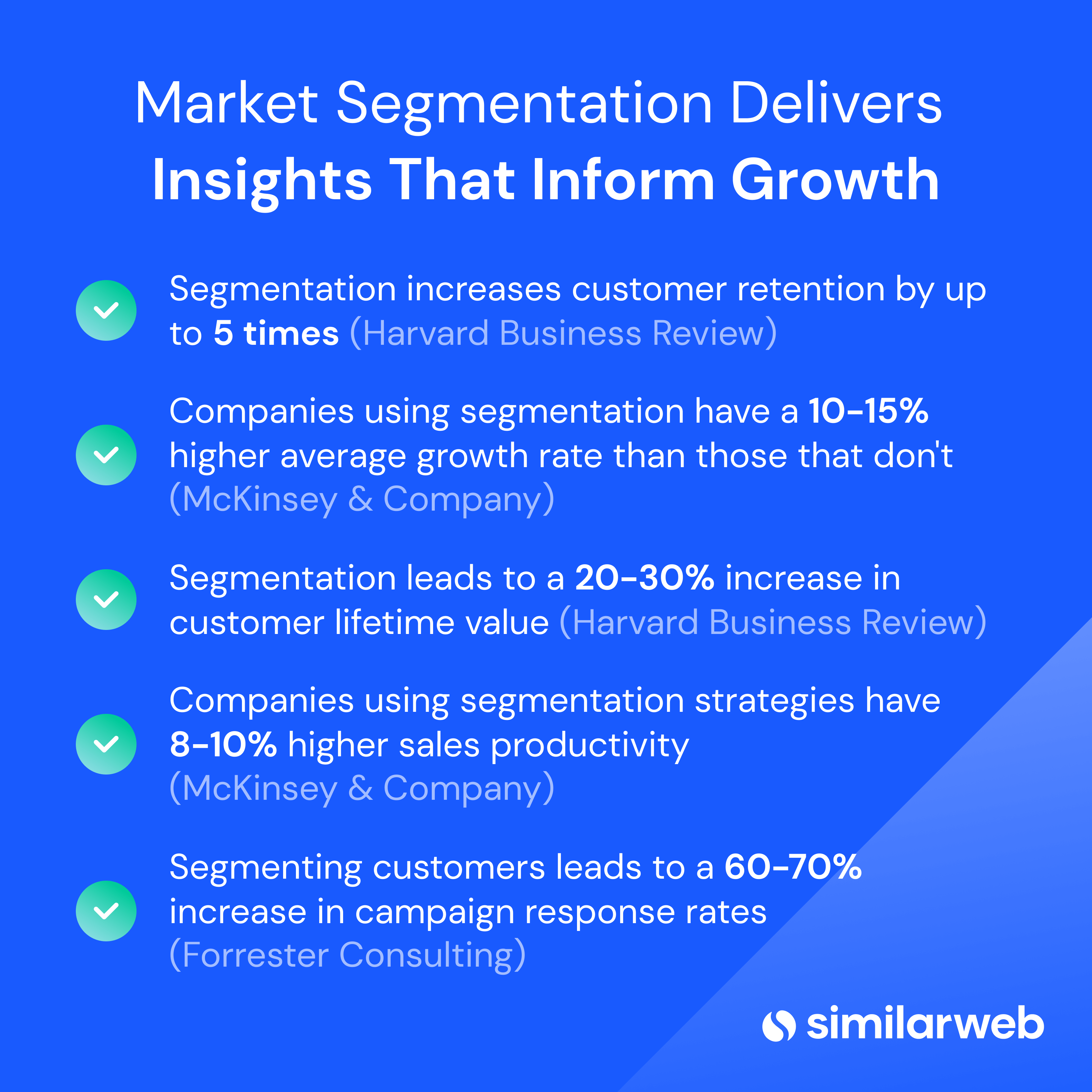
Understanding whole market trends are useful. But the real pearls of wisdom can be found when you slice and dice a market into manageable portions. Market segmentation is important for businesses to identify and target specific customer groups, tailor their products and services, and measure their performance.
This type of market research helps you:
Whatever your industry, role, or experience, the type of market research you choose will influence key decisions in your business. With rapid shifts in consumer behavior and emerging threats now virtually an everyday thing, you need a broad and relevant view of the landscape. No single type of market research alone gives a complete picture.
Organizations must keep a finger on the pulse to stay relevant, adapt, and compete. While using traditional types of market research is key, you can gain key insights much quicker, often for a much lower cost, using modern tools like Similarweb Web Intelligence.
Why not take it for a trial run today? For free.
What’s the difference between qualitative and quantitative research?
Quantitative research is based on numbers and seeks to explain theories or hypotheses. In contrast, qualitative research is more about understanding the ‘how’ and ‘why’ things happen.
Should I use more than one market research method at a time?
Yes, it’s important to take a balanced approach when choosing the best type of research. While it’s vital to clearly understand what is happening, you also need to consider the ‘why’ things happen.
What type of market research is best for start-ups?
Most start-ups use secondary research as it’s quick and affordable. However, there are many benefits to conducting first-hand primary research as well.
What types of market research can you do for free?
Most secondary research is free to conduct. If you have access to a list of subjects or prospects, you can also use market research surveys to conduct primary market research for free.
Is quantitative research primary or secondary?
It can be both. Secondary and primary data can be quantitative (number-based) or qualitative (verbal or opinion-based).

by Liz March
Digital Research Specialist
Liz March has 15 years of experience in content creation. She enjoys the outdoors, F1, and reading, and is pursuing a BSc in Environmental Science.
The Top 100 Most Visited Websites in the USA (August 2026)

Similarweb Named in Forrester's Answer Engine Optimization Technologies Landscape, Q3 2026

Anthropic IPO: What Claude's Web and App Data Show
Contact us to set up a call with a market research specialist
