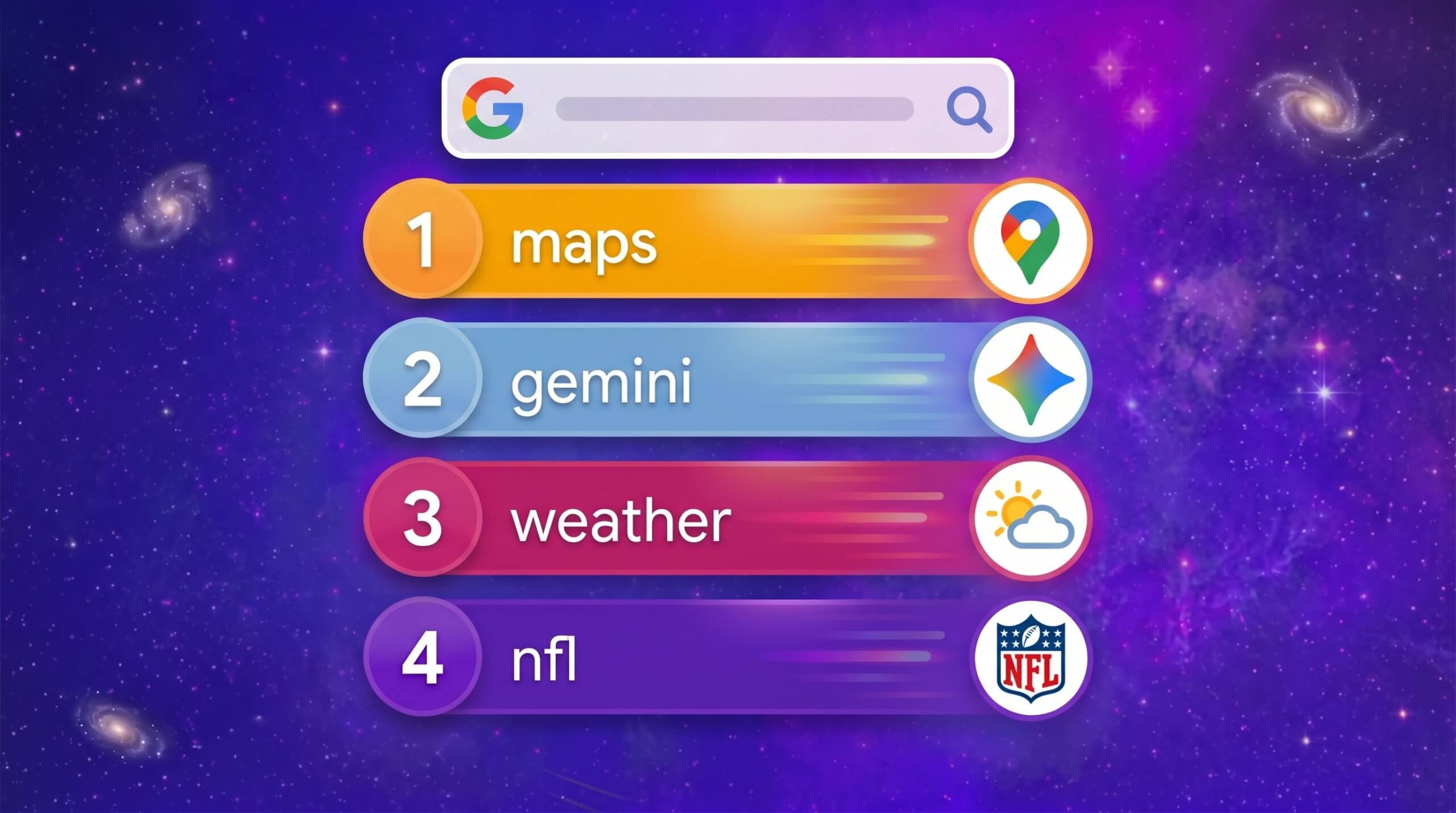

Most Searched Things on Google in 2026
by Maayan Zohar Basteker15 Min.
Oct 15, 2026
 Sales Intelligence
The gap between average and top-performing salespeople has never been wider. Research consistently shows that the best sellers in 2026 work smarter by adapting faster and thinking differently about buyer engagement. But what specific behaviors create this performance gap?
Most of what separates top performers from the rest is not talent or territory. This guide breaks down the seven fundamental skills that answer the question of how to be a good salesperson in 2026. Not through luck or instinct, but through specific, measurable behaviors that show up consistently across industries, deal sizes, and product types. The seven sections below break each one down with the data and the specific moves behind it.
This is not about motivation or territory luck. The most consistent performers are not necessarily the most talented. They have engineered their days to eliminate the guesswork that drains average reps. Repeatable routines, clear pipeline rituals, and defined playbooks for common situations compound over time.
Each section below includes specific, implementable tactics backed by recent research and real sales data. Whether you are new to B2B sales or looking to improve your close rate, these fundamentals apply across industries and deal sizes.
Top-performing salespeople talk 43% or less of the time on calls, giving prospects enough space to surface the objections, priorities, and constraints that actually drive buying decisions. More listening means more intelligence. More intelligence closes more deals.
Most salespeople know they should listen more, but few understand the mechanics behind why talk time ratios move deals. Gong’s analysis of thousands of recorded sales calls revealed that the 43% threshold is not arbitrary: reps who gave prospects that space consistently surfaced the objections, priorities, and constraints that actually drive buying decisions. Those are the ones that never come up when a rep is pitching.
Why does this matter? When you talk more than half the time, you are not learning about your prospect’s actual situation. You are pitching before you understand the problem.
How to apply the 43% rule in practice:
Start every discovery call with open-ended questions about the prospect’s current state, not your product. Ask about their workflow, their team structure, and their biggest bottlenecks this quarter. Then stop talking and take notes.
When prospects raise objections, resist the urge to immediately counter. Ask clarifying questions instead: “Help me understand what’s driving that concern” or “What would need to change for this to become a priority?”
Top salespeople view objections as opportunities to understand prospect concerns more deeply, not barriers to overcome, according to our guidance on consultative objection handling.
Use structured frameworks like SPIN selling (Neil Rackham’s Situation, Problem, Implication, Need-payoff methodology) to guide conversations without dominating them. SPIN gives you a question roadmap that keeps prospects talking while you gather the intelligence needed to position your solution effectively.
Track your talk time. If you are not recording calls, set a timer for 10-minute intervals and note who is speaking. If you are consistently above 50%, you are leaving money on the table.
Consultative selling means approaching prospects from a place of subject expertise, not product pitching. You diagnose before you prescribe.
The shift from transactional to consultative selling has accelerated in 2026 as buyers become more informed and skeptical of generic pitches. Prospects research solutions independently before ever talking to sales. By the time they take your call, they have already formed opinions about their problem and potential solutions.
The consultative selling framework:
For a deeper dive into consultative selling techniques, see our guide on how to prep for a discovery call.
Prospects rarely articulate their actual pain points clearly in first conversations. They might say “we need better analytics” when the real problem is “our CEO does not trust our marketing team’s reporting.” For context on what prospects mean when they cite analytics gaps, see what effective web analytics actually measures.
To uncover hidden pain points, use structured questioning techniques that move from surface symptoms to underlying causes.
The pain point excavation process:
Start with situation questions to establish context: “Walk me through how you currently handle [process].” Let them describe their workflow without interruption.
Move to problem questions: “What breaks down in that process?” or “Where do you lose visibility?” Prospects will often mention symptoms here: slow reporting, missed deadlines, and budget overruns.
Then dig into implications: “What happens when reporting is delayed?” or “How does that impact your team’s ability to hit quarterly goals?” This is where you connect tactical problems to business outcomes.
Finally, ask need-payoff questions: “If you could eliminate that bottleneck, what would that enable your team to do?” This helps prospects articulate the value of solving the problem in their own words.
If prospects struggle to identify pain points, contact your existing customers in similar roles and ask about their biggest challenges through surveys or direct conversations. Common pain-point themes among your target audience help you guide conversations, even when prospects cannot articulate their needs clearly. For research-backed frameworks on uncovering customer needs, see RAIN Group’s prospecting research on how buyers respond to structured qualification questions.
Red flags that indicate you have not found the real pain point:
When you see these signals, schedule a separate conversation focused entirely on understanding their current state and constraints. Do not pitch. Just diagnose.
An effective rapport is built in the first 30 seconds by removing uncertainty from the conversation before it starts. A clear agenda, a genuine exit offer, and immediate use of the prospect’s name create the conditions for receptiveness before a single product claim is made.
Prospects form initial judgments about your credibility and trustworthiness within 30 seconds of meeting you.
According to our guide on sales techniques, effective rapport-building includes introducing yourself with a friendly gesture, being completely authentic, speaking simply and confidently, and being direct and getting to the point quickly.
These approaches help sales development representatives engage prospects in a timely, savvy manner that keeps buyers oriented, informed, and receptive throughout the sales process.
The 30-second rapport framework:
Body language mistakes that kill deals before you present:
Salespeople make several critical nonverbal errors that undermine credibility before they even open their pitch. Common mistakes include avoiding eye contact, fidgeting, crossing arms, and slouching.
Under stress, many accomplished reps unknowingly bring their hands in front of their bodies, a subtle signal that comes across as defensive or uncertain to buyers. Poor posture conveys negative emotions and a lack of professionalism, and failing to pay attention to the prospect’s body language compounds the problem.
On video calls, look at the camera when making key points, not at your own image. Sit up straight. Keep your hands visible but relaxed. Nod when prospects speak to show you are actively listening.
Persistent and useful follow-up is the same behavior. Every message that delivers something new: a relevant data point, a matched case study, a market development, stays welcome. Every message that repeats what was already sent gets ignored or, worse, actively damages the relationship.
Persistent and annoying follow-up differ by exactly one thing: whether each message delivers something new. The reps who get responses arrive with a relevant data point, a case study match, or a market development that reframes the conversation, not a reminder that the email from last week is still waiting.
The value-add follow-up sequence:
Email 1 (Day 0): Meeting recap with specific next steps and timeline. Include one resource relevant to a pain point they mentioned: “You mentioned struggling with attribution. Here’s a framework we built that maps touchpoints to revenue.”
Email 2 (Day 3): Share a relevant case study or data point: “I was reviewing our work with [similar company] and noticed they had the same challenge with [specific issue]. Here’s how they approached it.” Link to a case study or blog post.
Email 3 (Day 7): Industry insight or trend analysis: “Saw this report on [relevant trend] and thought of our conversation about [their challenge]. The data on page 8 directly relates to what you’re trying to solve.”
Email 4 (Day 14): Competitive intelligence or market movement: “Noticed [competitor] just launched [initiative]. Based on our conversation, this might impact your Q3 roadmap. Happy to share what we’re seeing across the market.”
Email 5 (Day 21): Direct ask with a clear out: “I’ve shared a few resources over the past few weeks. Is this still a priority for your team this quarter? If not, no problem. I’ll check back in Q4. If yes, let’s schedule 15 minutes to discuss next steps.”
Each follow-up must deliver something new. If you are simply repeating what you have already sent, it will be ignored or backfire.
What to say when prospects say “I need to think about it”:
When prospects say they need to think about it, they usually mean one of three things: they want to end the conversation politely, they are interested but face an obstacle like budget or needing a partner’s approval, or they genuinely want the solution but need to reprioritize before committing.
Your job is to identify which scenario you are in before responding. Each one calls for a different approach. See the FAQ below for the specific language to use in each case.
Buyer intent data identifies which prospects are actively researching solutions in your category before they contact you. Prioritizing outreach around these signals, rather than arbitrary cadences, consistently produces higher connection rates and shorter sales cycles.
According to Salesforce’s 2026 State of Sales announcement, the transition to AI agents and intent-based selling is accelerating at an exponential pace, fundamentally reshaping how sales professionals prioritize their time.
Buyer intent data reveals which prospects are actively researching solutions in your category, even before they contact you. This allows you to focus your energy on accounts with high-intent signals rather than on cold outreach to uninterested prospects.
How to use buyer intent data in your daily workflow:
The intent-based prioritization framework:
| Intent level | Signals | Recommended action | Time allocation |
|---|---|---|---|
| High | Multiple site visits, pricing page views, competitor research, content downloads | Immediate personalized outreach, schedule demo within 48 hours | 60% of selling time |
| Medium | Single site visit, blog engagement, email opens | Nurture sequence with educational content, check in weekly | 30% of selling time |
| Low | No engagement, cold list | Automated awareness campaigns, check quarterly | 10% of selling time |
Recommended framework based on Similarweb Sales Intelligence best practices.
According to the Salesforce State of Sales 2026 report, high-performing salespeople distinguish themselves through structured daily habits rather than talent or motivation alone. The key differentiators include time-blocked calendars, repeatable plays for common sales situations, and clear processes.
The daily habit stack for top performers:
Morning (7:00-9:00 AM): Review the pipeline and prioritize accounts based on intent signals. Identify the three highest-value activities for the day (not the easiest or most urgent). Block calendar time for these activities before checking email.
Mid-morning (9:00-12:00 PM): Execute high-value activities. This is prime time for prospect calls, demos, and proposal creation. Batch similar activities together (all discovery calls in one block, all follow-up emails in another).
Afternoon (1:00-3:00 PM): Administrative tasks, CRM updates, internal meetings. Use this lower-energy window for work that does not require peak cognitive performance.
Late afternoon (3:00-5:00 PM): Prospecting and research. Build tomorrow’s pipeline by identifying new high-intent accounts, researching prospects, and crafting personalized outreach.
End of day (5:00-5:30 PM): Review what worked and what did not. Update CRM with call notes and next steps. Plan tomorrow’s three highest-value activities.
Weekly habits that separate top performers:
The role of AI agents in daily workflows:
The 2026 State of Sales report from Salesforce found that 36% of sales teams with AI agents use them for coaching, with AI facilitating roleplays and real-time feedback as an always-on practice partner.
Top performers in 2026 use AI agents to automate low-value tasks (data entry, meeting prep, basic research) so they can focus on high-value activities (strategic conversations, relationship building, deal strategy). Use Similarweb’s lead-generation platform to identify and prioritize the highest-intent accounts before you start your day.
For more on AI integration in sales workflows, see our guide on AI agents for sales.
Time-blocking template for B2B sales reps:
| Time block | Activity | Goal |
|---|---|---|
| 7:00-7:30 AM | Pipeline review and daily planning | Identify top 3 priorities |
| 9:00-11:00 AM | High-value prospect calls | 4-6 discovery/demo calls |
| 11:00 AM-12:00 PM | Follow-up emails and proposals | Clear next steps for active deals |
| 1:00-2:00 PM | CRM updates and admin | Accurate pipeline data |
| 2:00-3:00 PM | Internal collaboration | Align with marketing/CS on accounts |
| 3:00-5:00 PM | Prospecting and research | Build tomorrow’s pipeline |
| 5:00-5:30 PM | Daily review and tomorrow’s plan | Continuous improvement |
Every technique in this guide reduces to one underlying principle: the more you know about a buyer before and during a conversation, the less selling you have to do. Listening reveals what pitching buries.
Consultative prep replaces generic questions with specific observations. Intent data surfaces the right accounts at the right moment. Daily habits protect the time needed to execute it all.
None of these are personality traits. They are processes.
A rep who builds a structured discovery framework, commits to a follow-up system, and reviews their pipeline by intent signal every morning will consistently outperform a more naturally talented rep who operates on instinct alone.
The data on this is consistent across all credible sales research bodies referenced in this guide: Gong, Salesforce, and RAIN Group all point to the same behavioral patterns.
The practical starting point is simpler than it looks. Pick one section. Build one repeatable habit around it. Run it for 30 days before adding the next. Trying to implement all seven simultaneously is how good intentions turn into abandoned frameworks.
Several fundamentals in this guide depend on knowing what buyers are doing before they pick up the phone. Similarweb Sales Intelligence gives sales teams visibility into account-level digital behavior: which companies are researching your category, engaging with competitors, or revisiting your pricing page. That context is what makes consultative outreach specific rather than generic, and pipeline prioritization precise rather than arbitrary.
How do top salespeople handle objections without sounding defensive or pushy?
Top salespeople handle objections by listening actively without interrupting, arguing, or jumping to solutions. Rather than trying to overcome objections like barriers to break through, skilled sellers focus on understanding and reframing them. The key difference is that pushy sellers treat objections as walls to be demolished, while effective salespeople view them as opportunities to better understand prospects’ concerns. This approach involves asking questions about the prospect’s current situation and identifying specific pain points where your solution adds value, rather than immediately defending your product or pressuring for a close.
How can I identify a customer’s real pain points when they’re not being direct about their needs?
To identify customer pain points when they are not being direct, use structured sales techniques like SPIN selling to guide conversations and uncover underlying problems. Customers may not even realize they have a problem yet, so asking the right questions is crucial rather than rushing to explain product features. If you have existing customers, contact your most engaged clients and ask about their biggest challenges through surveys or direct conversations. This approach helps you understand common pain-point themes among your target audience, positioning you to offer relevant solutions even when prospects struggle to articulate their needs clearly.
How do I follow up with leads persistently without coming across as annoying or desperate?
The answer is in the data. According to RAIN Group’s Top Performance in Sales Prospecting research, 52% of sellers need 5 to 10 contacts just to connect with a new prospect. Top performers commit to that volume because they build a system around it, not because they have more grit. The practical test before sending any follow-up: what does this message give the prospect that they did not have before? If the answer is nothing, wait until it is not.
What are the most effective techniques for building rapport with potential customers in the first 30 seconds?
The fastest path to rapport is removing uncertainty from the conversation before it starts. Share a clear agenda, state how long you need, and give the prospect a genuine exit: “If this is not relevant, just say so, and we will wrap up early.” Prospects who feel in control are more receptive than prospects who feel trapped. Combine that with using their name immediately and matching their communication pace, and you can establish real credibility in the first 30 seconds, before you have said a word about your product.
What should I say when a prospect tells me they need to “think about it”?
Start by making the objection specific: “What exactly do you need to think through?” Most prospects who say this have not fully articulated their concern, even to themselves, and the question forces them to clarify it. Follow up with “Is this a priority for your team right now?” to separate genuine interest from polite deflection. If the answer is no, offer to reconnect next quarter. If yes, address whatever surfaces directly: budget, stakeholder approval, or competing timelines, rather than defending your product.
What daily habits separate high-performing salespeople from average ones?
Three disciplines separate top performers from everyone else: morning pipeline rituals that protect prospecting time before email takes over, repeatable playbooks that eliminate in-the-moment decision fatigue in common call scenarios, and end-of-day reviews that convert wins and losses into next-day process refinements. A rep who runs a consistent daily system at 90% compliance outperforms one relying on motivation over any sustained quarter. Structure is the variable most teams can actually control.
What body language mistakes do salespeople make that kill deals before they even present?
The deepest problem is that most reps do not know what they look like under pressure. Record yourself on a practice call and watch it back before reviewing the content. You will immediately spot patterns you cannot feel in the moment: the forward lean when you are nervous, the hands that move to the chest when an objection lands, the eye contact that drops during pricing discussion. Self-review catches these faster than any coaching session. The goal is not perfect posture. It is about building enough self-awareness that stress no longer triggers signals that undermine the message you are trying to deliver.
How many follow-up touchpoints does it typically take to close a B2B deal?
Most B2B deals require five or more meaningful touchpoints before closing, though deal size and complexity push that number higher for enterprise cycles. The more actionable benchmark: most reps abandon follow-up after three or four attempts, well before most prospects are ready to decide. The gap between when reps stop and when buyers are actually ready to commit is where the majority of winnable pipeline quietly disappears.
How should salespeople measure their own performance beyond quota attainment?
Beyond quota, track pipeline coverage ratio (3-4 times your quota target as a health benchmark), win rate by segment, average sales cycle length, and talk-to-listen ratio on calls. According to Gong’s research on sales performance indicators, deal velocity and next-step commitment rates are the most predictive leading indicators of close outcomes, surfacing pipeline risk 6 to 8 weeks before quarter end.
How do top salespeople use AI tools without losing the human element in sales?
The reps who use AI well treat it as a context engine, not a content engine. They use it to walk into every conversation knowing the account’s recent activity, competitive moves, and hiring signals. That preparation is what makes the human part of the call sharper. The trap is using AI to generate outreach at scale without review, which produces personalization theater: messages that reference the right company but say nothing a human would say. The dividing line between AI adoption that helps and AI adoption that hurts is whether the rep reads what goes out under their name.

by Inbar Eytan
Product Marketing Manager
Inbar Eytan is the Product Marketing Manager for Sales Intelligence at Similarweb. With 8 years of experience in marketing, she believes in the power of turning data into actionable insights that make a real impact.
Give it a try or talk to our insights team — don’t worry, it’s free!