






The Top 100 Most Visited Websites in the USA (August 2026)
by Shai Belinsky10 Min.
Sep 29, 2026
The way businesses work is changing. Teams that used to open multiple dashboards and reports now open a single AI tool. They ask it to run the analysis instead of building it themselves, then turn that analysis into the next campaign, the next pitch, the next decision. The output is fast and polished. But every answer AI gives is only as good as the data behind it.
Today, we are bringing Similarweb data into Perplexity. Launching alongside Perplexity Computer, Similarweb’s market, audience, and competitive intelligence is now available directly inside Perplexity, through our official MCP connector and as a native integration in Computer. The questions your team already asks about the digital world can now be answered with data you can trust, without leaving the place you work.
Perplexity Computer is built to run real work, not just answer one-off questions. It orchestrates tools, files, and a team of sub-agents to move from a question to a finished output: research, marketing analysis, prospect lists, and strategic recommendations. The more of your work runs that way, the more the data underneath it matters.
Grounding those workflows in measured data is the difference between an insight you can act on and a guess you cannot see.
Start with a question in plain language. Perplexity Computer decides when to reach for Similarweb data and pulls it into whatever you are working on. A few of the things teams can ask once Similarweb is connected:
Then ask Perplexity Computer to turn any of it into a brief, a deck, a prospect list, or a weekly update. The research and the output happen in the same place, in one conversation.
This works the same whether you are a team of three or three thousand. A founder can run the research, marketing, and sales work that used to need a whole function, with the data already connected. An enterprise can standardize on one trusted source of digital intelligence across every team, and feed that same data into the agents and workflows they are building in-house. The data is the same. The leverage scales with how you work.
There are two ways to use Similarweb inside Perplexity, built for different users.
The native integration in Perplexity Computer brings Similarweb data into Computer’s workflows out of the box.
The official Similarweb MCP connector is the most direct path for existing Similarweb customers. Connect your API key once, and the data included in your plan becomes available in your Perplexity workflows.
Perplexity is the newest partner in a wider shift. Similarweb is becoming the trusted data layer that AI tools reach for, wherever marketing and sales teams work. Today, the most widely used AI platforms, including ChatGPT, Claude, Manus, Microsoft Copilot, and now Perplexity, have official Similarweb connectors or apps, and a growing portion of them bring our data in natively. Through our MCP server, hundreds more tools can connect the moment a team needs them.
“Similarweb is a market leader in providing data intelligence that helps enterprises scale. For enterprises incorporating AI into their daily work, access to accurate, trusted data is paramount,” said Dmitry Shevelenko, Chief Business Officer at Perplexity. “By integrating Similarweb data directly into Perplexity Computer, users can access reliable market, consumer, and competitive insights inside the workflows where they already work and make decisions.”
That is what “Similarweb. Everywhere you work.” means in practice. The same trusted data, available in the AI tool you already use, reaching every team that touches it, rather than only the ones who log into a dashboard.
The data behind market and competitor decisions is no longer locked inside dashboards and exports. It is where the questions are being asked. Now that includes Perplexity.
Do I need a Similarweb subscription to use this?
No, if you have an active Perplexity Computer subscription, you can access Similarweb data natively. In order to use our MCP in Perplexity, you will need to have an active Similarweb subscription with API access.
What’s the difference between the native integration and the MCP connector?
The native integration is built into Perplexity Computer and works inside its workflows. The MCP connector is for existing Similarweb customers who want to connect their own API key and use the metrics included in their subscription.
Do I need to know which Similarweb metric to ask for?
No. Ask a business question in plain language. Perplexity Computer decides which Similarweb signals to use.
Can Perplexity turn the findings into a report or deck?
Yes. Once the data is in, you can ask Perplexity Computer to format the output as a report, table, chart, or summary.
How do I get started with the MCP connector?
Connect the Similarweb connector in Perplexity and add your API key to start using the data right away.

Pavel leads Product Marketing for Similarweb's Data-as-a-Service, bringing over a decade of experience in Adtech and Marketing to the role. Outside of work, Pavel enjoys long walks and mountain biking.
The Top 100 Most Visited Websites in the USA (August 2026)
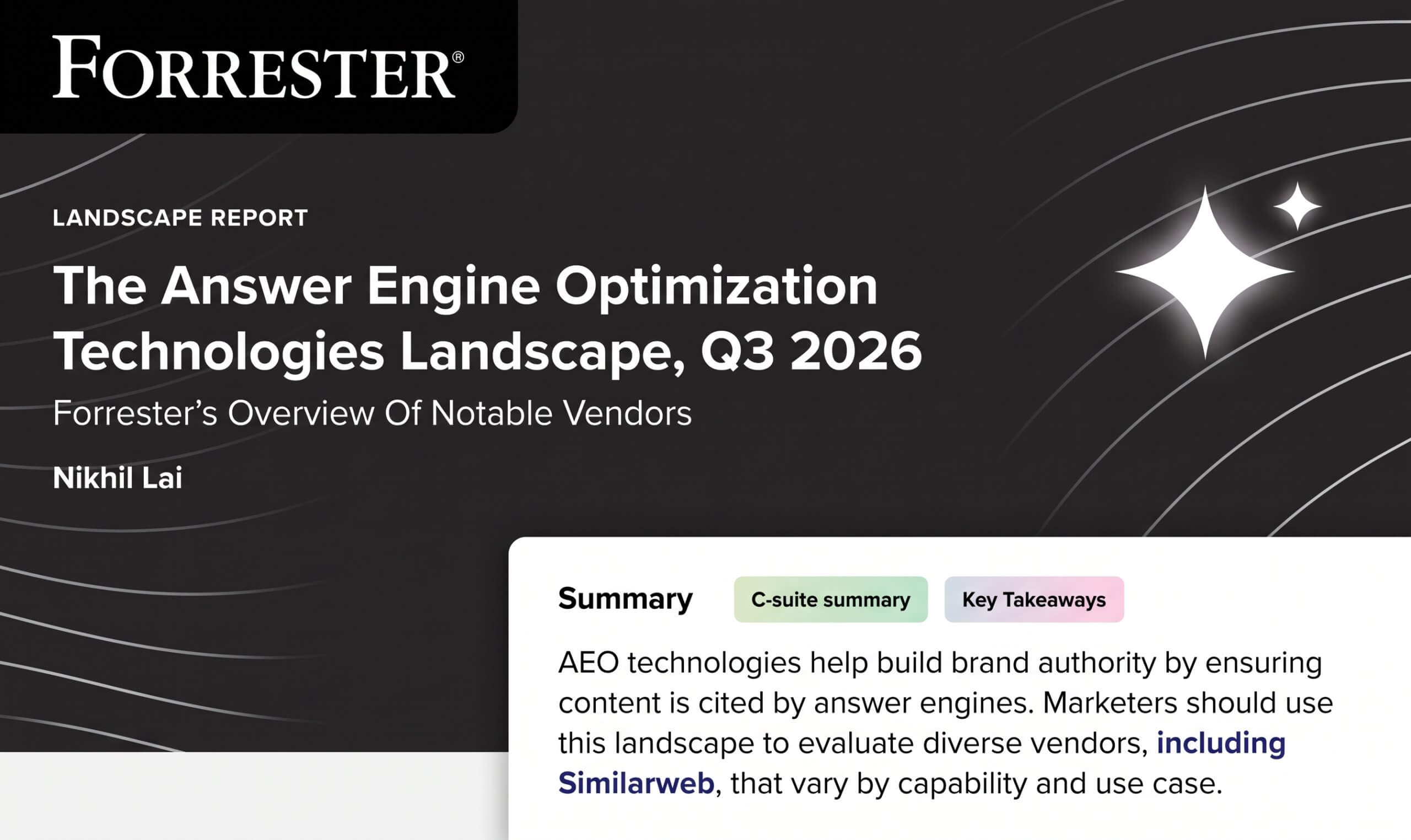
Similarweb Named in Forrester's Answer Engine Optimization Technologies Landscape, Q3 2026
Anthropic IPO: What Claude's Web and App Data Show
The ultimate solution to help you build the best digital strategy
