





The Top 100 Most Visited Websites in the USA (August 2026)
by Shai Belinsky10 Min.
Sep 29, 2026
 Research Intelligence
Mobile products that also have a website usually end up running two organic growth efforts at once: getting found in the app store, and getting found on the web. App store optimization and search engine optimization solve those two different discovery problems, and most growth teams with a mobile app and a marketing site need to run both at the same time.
This guide breaks down what separates ASO from SEO, where they overlap, and how to put one connected toolset behind both efforts instead of running two disconnected workflows.
ASO is the practice of improving how an app ranks and converts inside the Apple App Store and Google Play. SEO is the practice of improving how a website ranks and earns clicks in Google, Bing, and other search engines.
Both disciplines chase the same outcome: getting found by the right person at the moment they’re searching. The difference is the surface, the ranking signals, and what you’re allowed to optimize.
The ranking signals themselves come from different places. App stores look almost entirely at on-listing elements, the app title, the keywords field, the description, screenshots, and how people rate and review the app after downloading it. Search engines look at a much wider set of signals: the content on the page itself, technical factors like site speed and crawlability, and off-page signals like backlinks from other sites.
That difference shapes what “optimization” even means in each channel. In an app store, you’re refining a single page that every competing app also gets exactly one of, so the playing field is narrower and more about precision than volume. On the web, you can build as many pages as you want to cover a topic from every angle, which makes SEO a content and structure problem as much as a keyword problem.
What you’re allowed to optimize also differs in scope. ASO is largely confined to that one listing page, its title, subtitle, keyword field, screenshots, preview video, and the responses you give to reviews. There’s no equivalent to publishing a new page or earning a link, the app store doesn’t reward you for producing more content, only for making that single asset convert better.
SEO, by contrast, has no real ceiling: new pages, internal linking, technical fixes, and backlink building are all levers you can pull independently of each other, which is also why SEO programs tend to take longer to show results, there are simply more moving parts to get right.
Search behavior on the web tends to be more varied and exploratory than in an app store, where users are usually a short step away from downloading. A web searcher might be at any stage from “what is this problem called” to “where do I buy the fix,” and a single query can carry wildly different intent depending on the person typing it.
App store search is narrower by design: someone typing into the App Store or Google Play search bar has typically already decided they want an app and is choosing between a small set of close substitutes, which is why ASO keyword lists tend to be shorter and more transactional than SEO keyword lists.
That’s a meaningful difference worth keeping in mind, because it changes how you write copy, choose keywords, and measure success on each surface. Conversion rate and install volume matter more in ASO, since the entire job of the listing is to turn a search into a tap. Time-on-page, click-through rate, and ranking across a topic matter more in SEO, since the entire job of a web page is often to inform, build trust, or answer a question before any conversion happens at all. Judging both channels against the same KPI set is one of the most common mistakes teams make when they first try to run ASO and SEO side by side.
Despite the different environments, the two disciplines share a backbone:
Both start with understanding what people actually type, whether that’s into a search bar on the web or inside an app store’s search field. The terms rarely match exactly, but the research process, looking at volume, competition, and intent, is structurally the same.
ASO teams watch how competing apps rank for shared keywords. SEO teams watch how competing domains rank for shared queries. Either way, you need a system that tracks position over time, not a one-off snapshot.
An app’s screenshots and description have to convince someone to tap install. A landing page’s headline and copy have to convince someone to read on or click through. Both are persuasion exercises layered on top of keyword targeting.
Both disciplines reward adapting to local language and search behavior rather than running one global version everywhere. An app’s listing performs better when its title, description, and screenshots are translated and culturally adjusted for each market, not just machine-translated. A website performs better in international search results when pages are built for local keyword phrasing and search intent, not just a translated copy of the English page. Skipping this step caps growth in both channels the same way: you’re visible, but only to people searching in your default language.
This overlap is exactly why the smartest teams don’t staff ASO and SEO as two separate, disconnected functions reading from two separate sets of tools. The research questions are similar enough that one platform can answer both, and that’s where Similarweb’s Search product comes in.
Similarweb’s SEO tools cover the full SEO workflow, from finding keywords to tracking rankings to auditing the technical health of your site, so an SEO team isn’t stitching together four separate subscriptions to do one job.
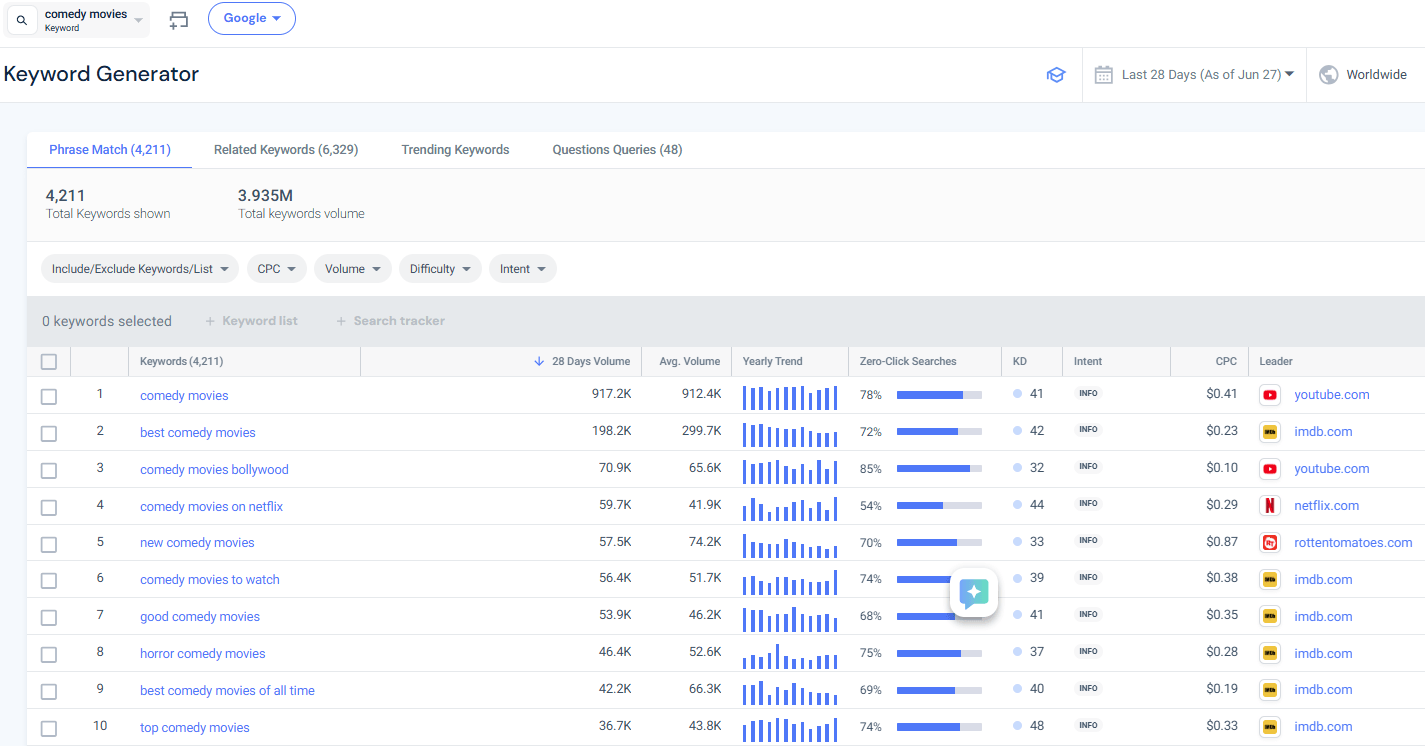
Start your keyword research with a category seed term, not your brand name, since that’s how people search before they know your brand exists. Pulling “comedy movies” into the Keyword Generator returns over 4,200 phrase-match keywords, but the volume column alone is a trap, “comedy movies” itself shows 917K monthly searches against an average of 912K, meaning it’s stable rather than seasonal, while a term like “best comedy movies of all time” carries real volume at a lower KD (40) than the head term (41). That’s the read you’re looking for: don’t chase the biggest number, chase the best volume-to-difficulty ratio, and check the Leader column before committing, if YouTube or IMDb owns the top spot for a term, you’re not realistically displacing them, you’re targeting a supporting angle instead.
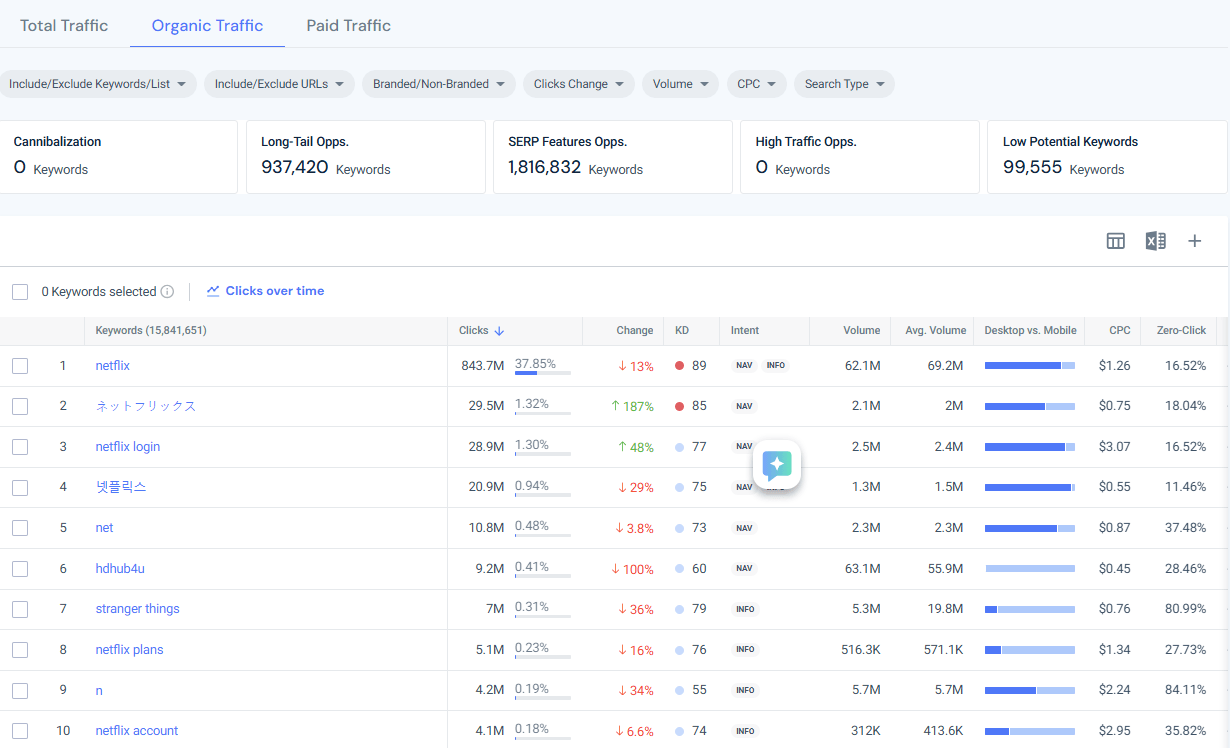
The same tool flips around when you point it at a domain instead of a keyword. Running it against a competitor’s organic traffic surfaces buckets like Long-Tail Opportunities and High Traffic Opportunities, in one pull for netflix.com that’s 937K and 1.8M keywords respectively. The number that actually matters here is zero, the Cannibalization count: if that’s at zero, none of your own pages are competing against each other for the same query, which means every gap you find in the competitor’s list is a clean opportunity, not a fix for an internal conflict you’d need to resolve first.
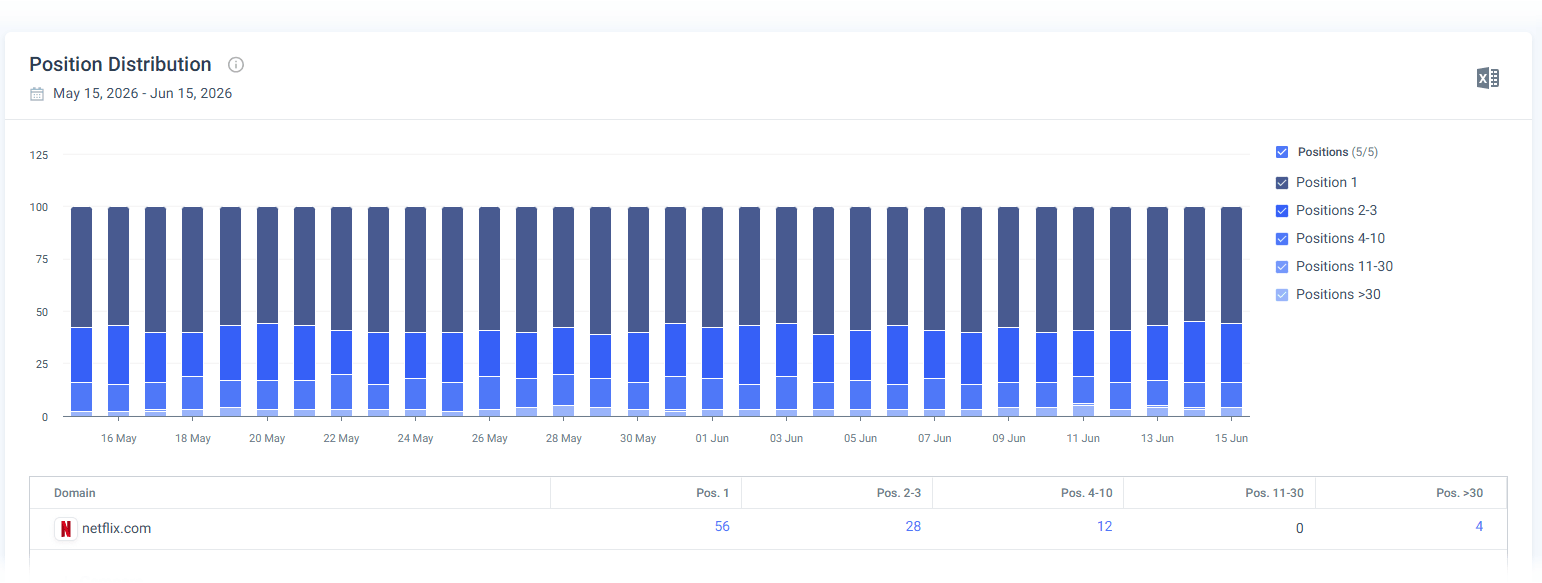
The Position Distribution chart within Similarweb’s Rank Tracker is your stability check before you go looking for problems elsewhere. A domain holding 56 keywords at position 1 and only 4 in positions 30+, out of roughly 100 tracked, is a healthy, mature footprint, and the read that matters isn’t the snapshot, it’s whether that ratio holds steady day over day across the chart. The moment the bars shift shape, that’s your cue to dig into the heatmap.
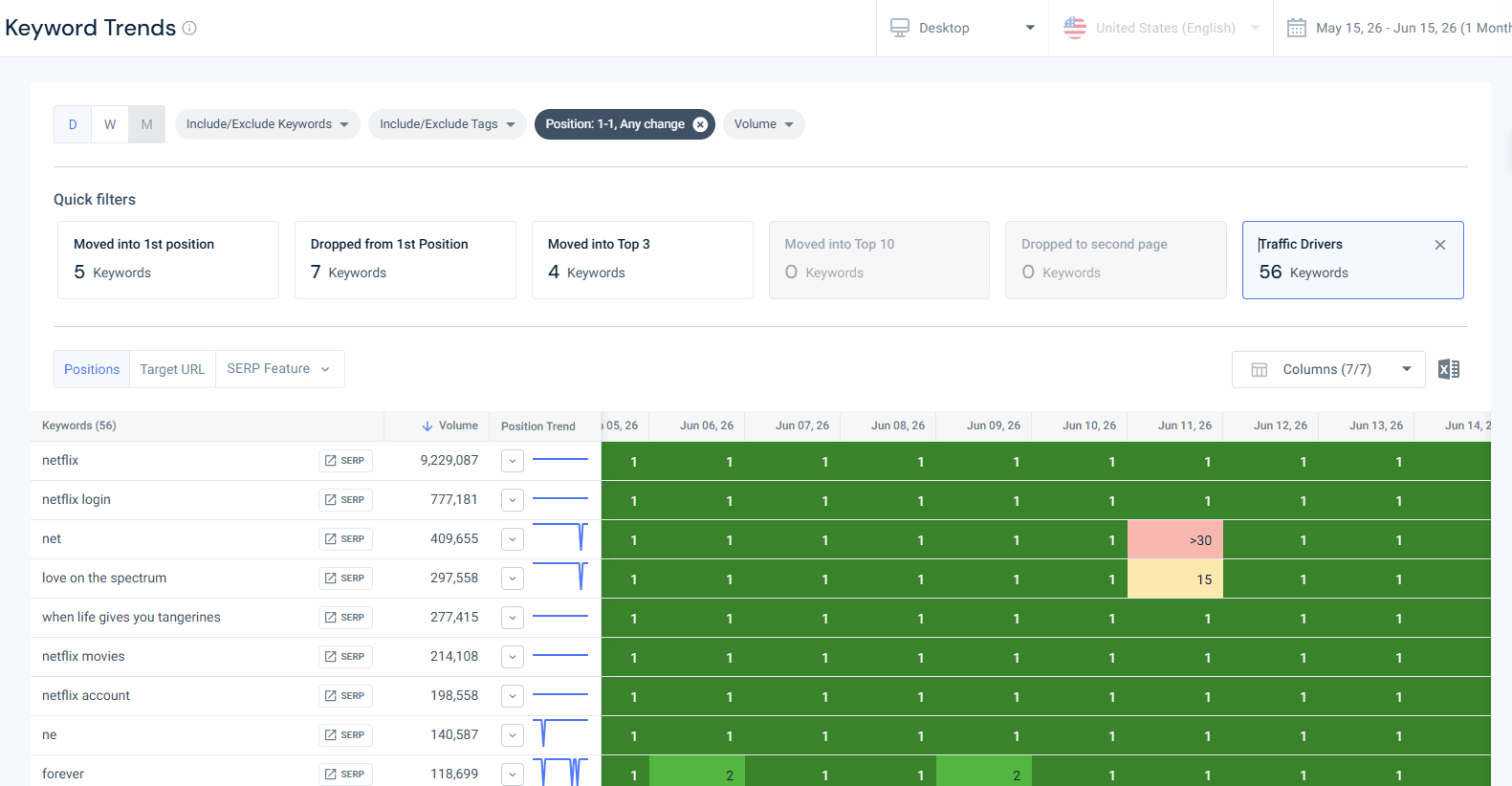
That’s exactly what the Keyword Trends heatmap is for, and why rank tracking needs to go beyond a weekly position check. A near-solid wall of green across every keyword and every day, with one row dropping from position 1 to “30+” for a single day before recovering, like “net” did on Jun 11, isn’t a ranking problem, it’s noise, a SERP fluctuation or a temporary index issue. What would actually be worth investigating is if multiple rows dropped on the same date, since that points to something systemic, an algorithm update or a technical issue, rather than something keyword-specific. Use the Quick Filters (Moved into 1st, Dropped from 1st, Moved into Top 3) as your weekly five-minute triage instead of scanning the full grid.
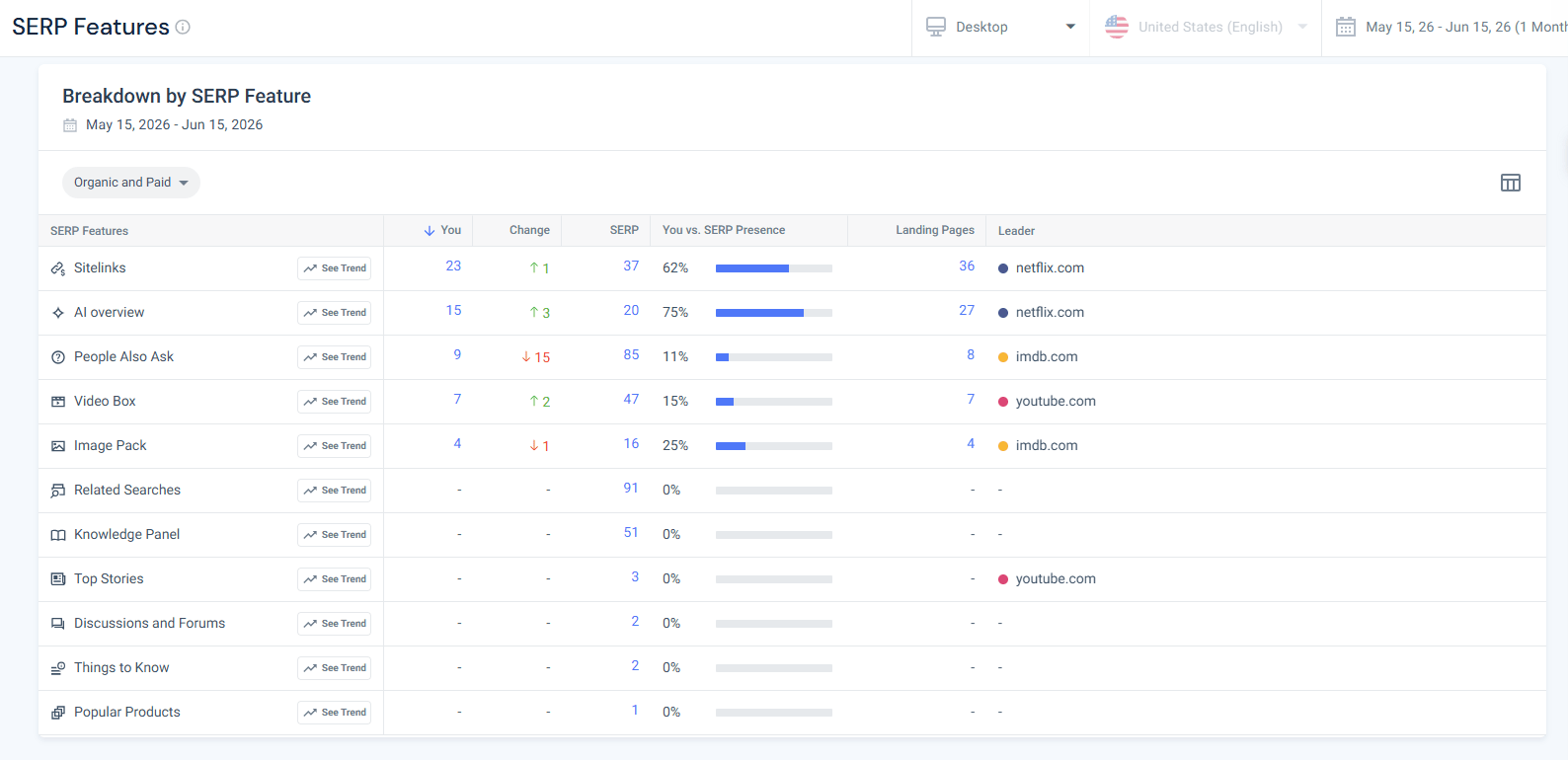
Then check whether that position data is actually buying you visibility. The SERP Features breakdown shows you why it might not be: in this data, People Also Ask is the single largest feature on the SERP at 85 instances, yet this domain only owns 9 of them, down 15 from the prior period, an 11% capture rate that’s actively shrinking. Compare that to AI Overview, where the same domain captures 75% of available instances and the number is climbing. That contrast is the actual insight: this domain has clearly invested in winning AI Overviews and it’s paying off, but People Also Ask is sitting almost entirely uncaptured and trending the wrong way, which makes it the higher-priority content gap, not because the feature is new, but because the gap is large and growing.
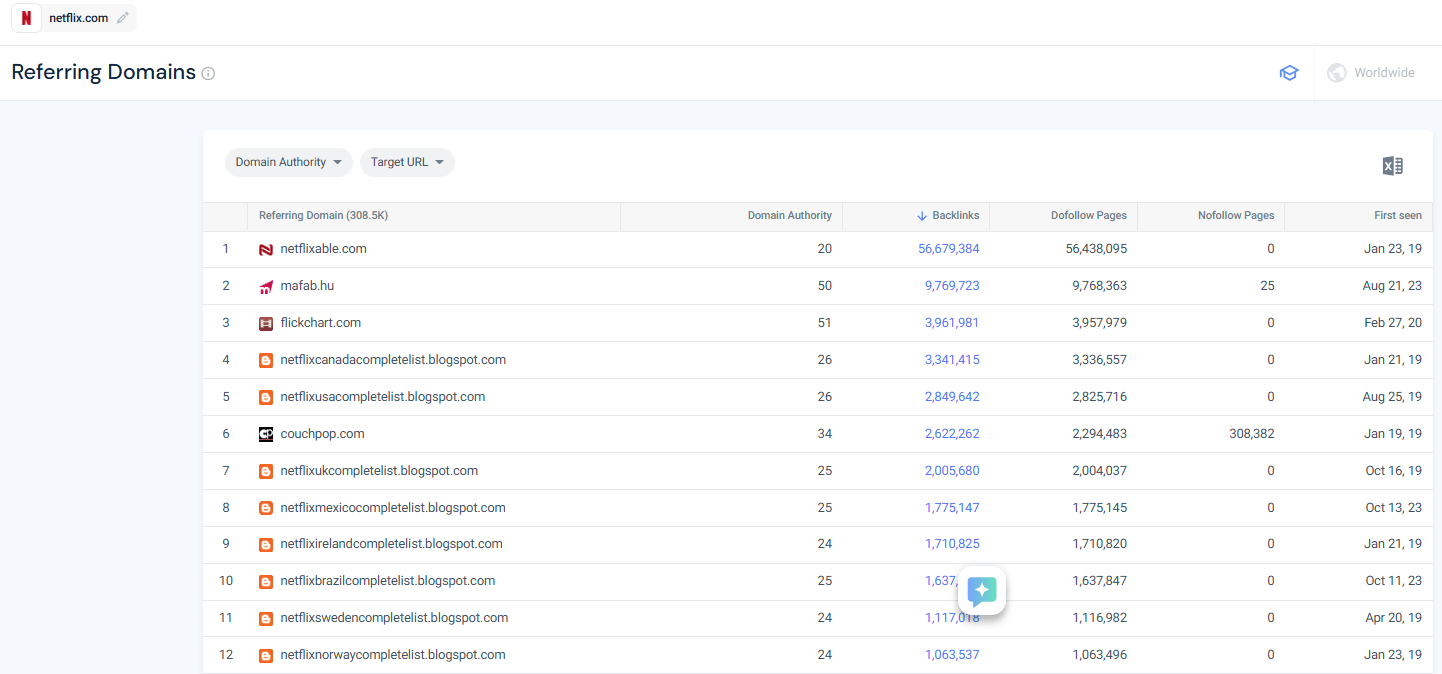
Referring Domains data only gets useful once you stop treating “more backlinks” as automatically good. Looking at the Backlink Analysis tool, the top referring domain has 56.7M backlinks but a Domain Authority of just 20, while a domain ranked sixth has only 2.6M backlinks but a DA of 34. Volume and authority aren’t the same signal, and a profile dominated by high-volume, low-authority referrers (the long list of “completelist.blogspot.com” variants here is a good example) tells you the link profile is wide but thin, which usually means a content cluster that’s been syndicated rather than genuinely earned.
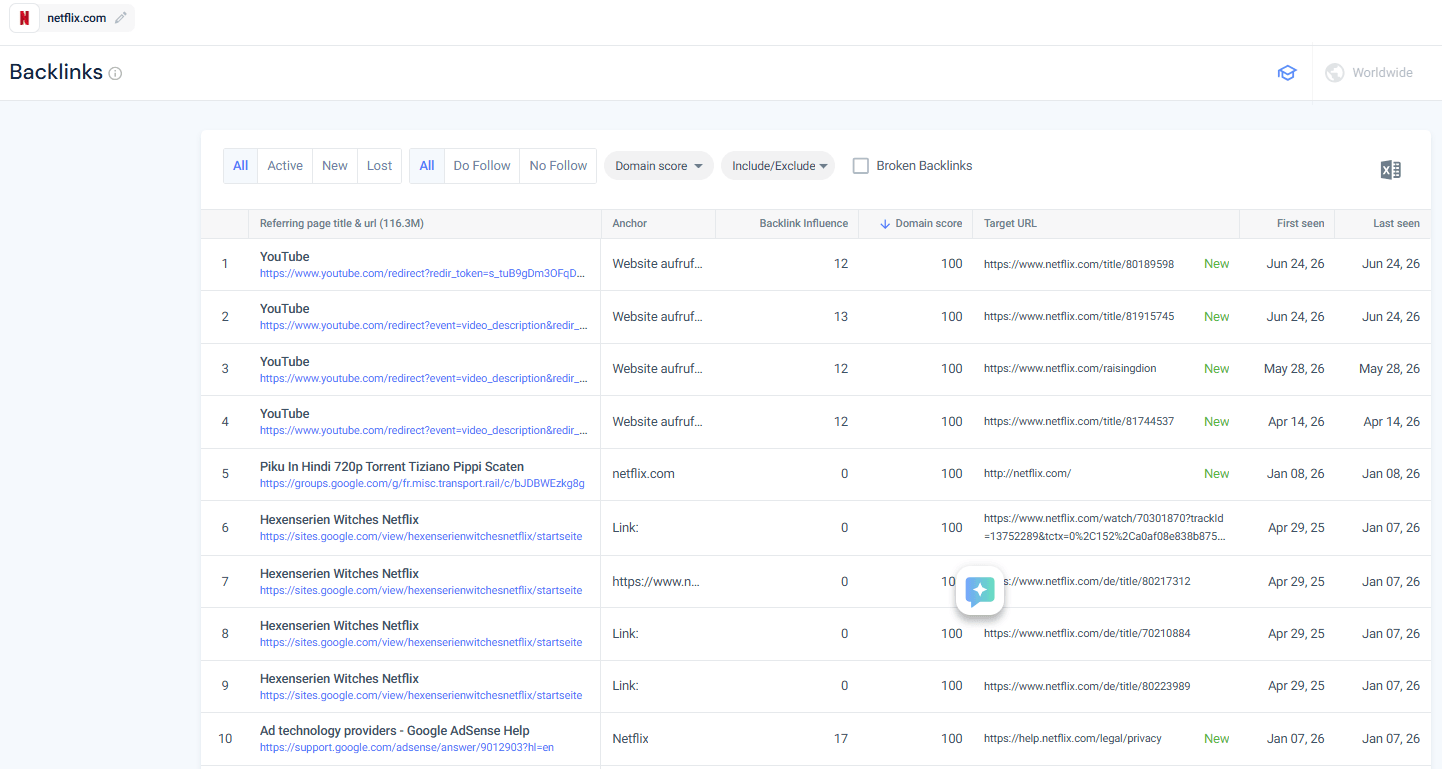
The Backlinks report is where you check whether new links are actually worth anything. Several of the newest backlinks in this data come from YouTube redirect URLs with a Domain score of 100 but a Backlink Influence of just 12 or 13, that gap between a near-perfect domain score and a modest influence score tells you the link is from a trusted domain but isn’t carrying much individual weight, likely because it’s a redirect or utility link rather than an editorial one. That’s the distinction to flag before reporting “we gained a high-authority backlink” to a stakeholder, the domain is strong, but this specific link isn’t doing much work.
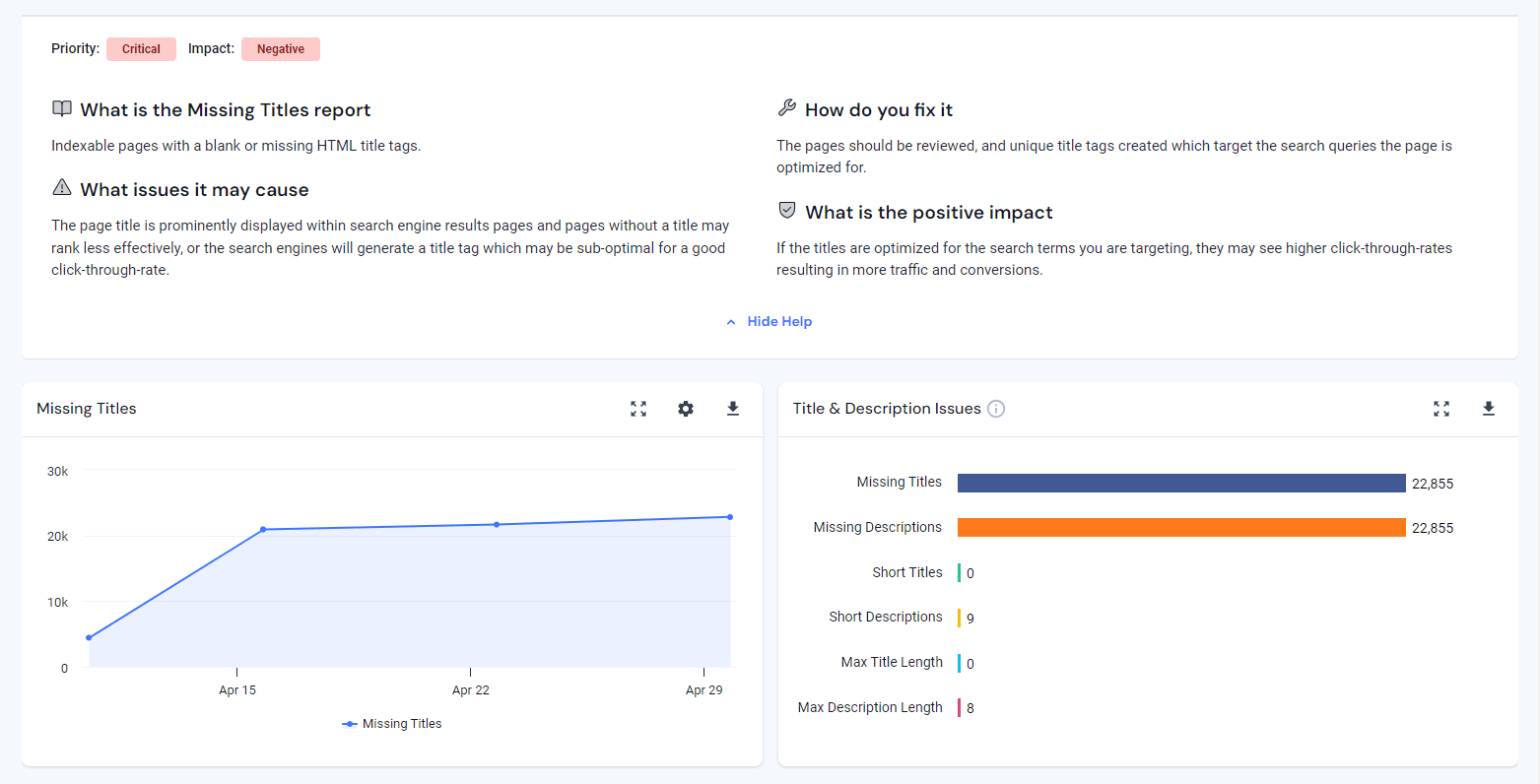
Run site audit with Similarweb SEO Checker before any content push, not after. In this audit, Missing Titles and Pages with Duplicate Body are both flagged Critical with the exact same count, 22,855, and the exact same growth rate, +5.48% (or +6.71% for the duplicates), which is itself a clue: when two unrelated-sounding issues move in perfect lockstep, they usually share a root cause, in this case likely a templated page type that’s generating both problems at once, fix the template and both numbers should drop together rather than needing two separate fixes.
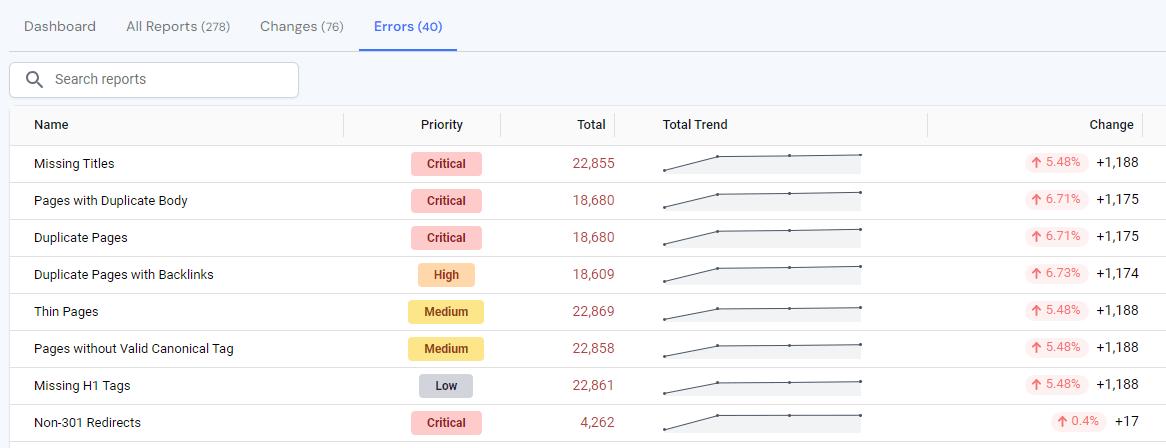
Click into any individual issue and use the trend chart, not just the total, to judge urgency. Missing Titles jumped from roughly 4,000 to over 20,000 in a single two-week window before flattening out, that sharp jump-then-plateau shape usually means a bulk publish or a migration introduced the problem at a specific point in time, which is a faster fix (correct the template or import script) than the same count arrived at gradually, which would suggest an ongoing process issue you’d need to monitor rather than patch once.
Used together, these four tools cover the full SEO loop: find the keyword, build the content, audit the site it lives on, track whether it moves, and check what’s linking to it.
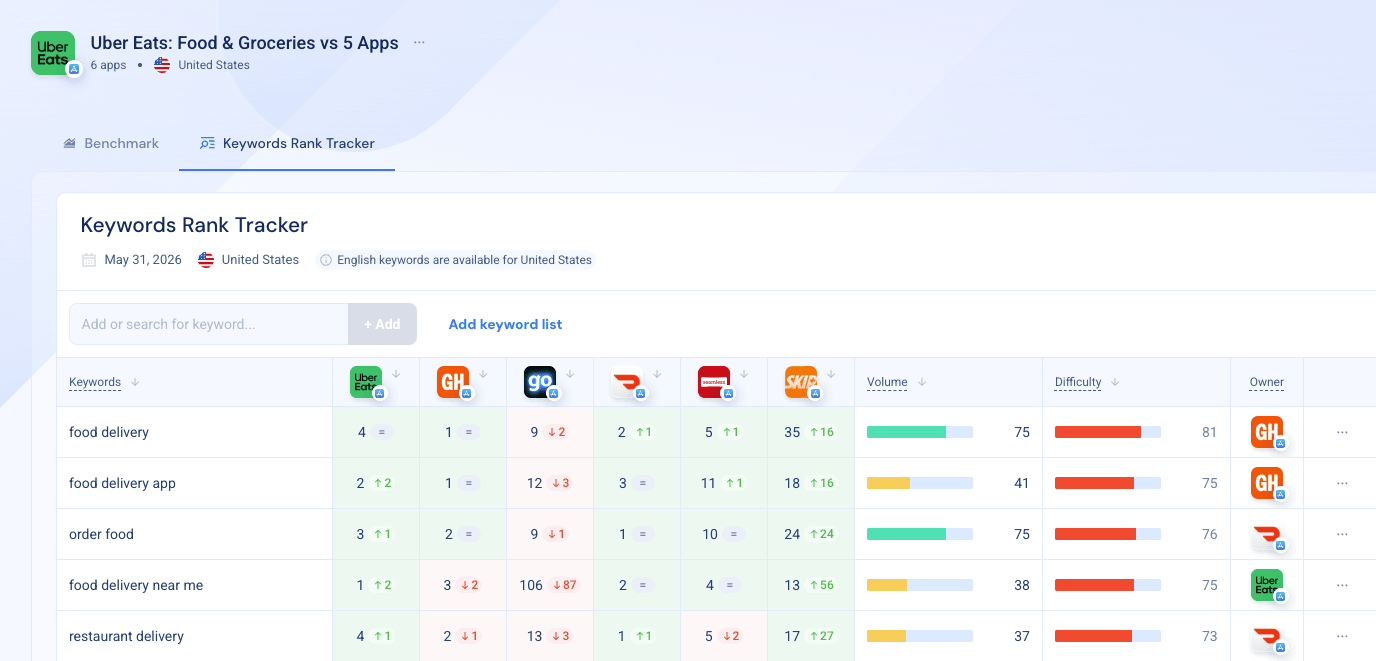
The App Keyword Rank Tracker view is built for relative movement, not your own rank in isolation. Watching “food delivery near me,” Uber Eats holds position 1, but the keyword that deserves attention is “food delivery,” where Skip jumped 16 positions to rank 35, that’s a meaningful single-period move on a high-volume, high-difficulty term (KD 81), and it’s worth checking whether that coincides with a metadata change or a seasonal push before assuming it’s a one-off. The more durable insight is the Owner column: when the same competitor (GH, in this set) owns several of your highest-volume keywords across the table, that’s a pattern, not a coincidence, and it tells you where a focused metadata refresh would have the most leverage.
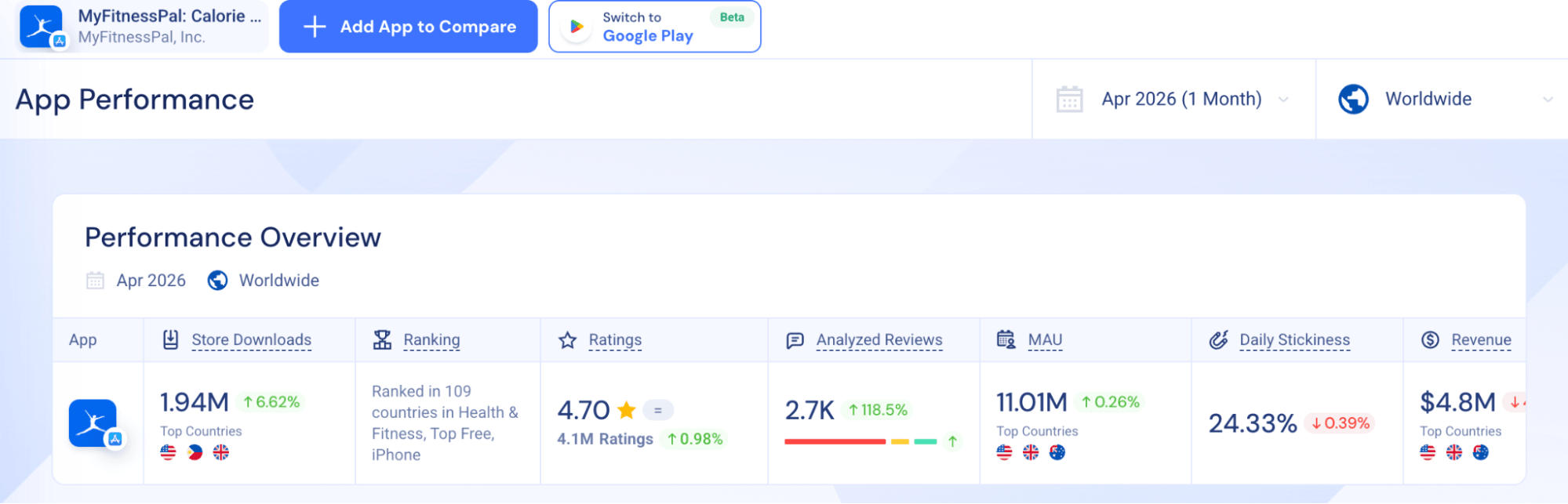
Pair that with the App Analytics view to check whether keyword movement is actually paying off. MyFitnessPal shows downloads up 6.62% and ratings holding steady at 4.70 stars, both healthy, but Daily Stickiness is down 0.39% even as Monthly Active Users ticked up. Rising installs with falling stickiness is the combination to watch for: it means ASO is successfully winning the discovery step, but something in onboarding or early product experience isn’t holding the new users it’s bringing in, which shifts the next fix out of the keyword list and into the product itself.
Most teams with both an app and a website get more out of ASO and SEO when they’re sequenced rather than run in isolation:
ASO and SEO keyword research work differently and need separate tools. Run them independently, then find where web intent tips into app store intent, a cluster of web queries around “best expense tracker for freelancers” eventually leads to someone typing “expense tracker” into the App Store. That handoff is where your SEO content and ASO metadata should connect.
Watching app keyword rank and web keyword rank in the same cadence makes it easier to spot whether a dip in installs traces back to a store ranking drop, a web traffic drop, or both.
A technically broken website caps how much your SEO content can rank, and an unconverted app store listing caps how much your ASO keywords can deliver. Running a site audit and an app store listing review on the same schedule, checking for missing metadata, thin content, and outdated screenshots, keeps both funnels from quietly leaking while you focus on the other one.
A comparison or how-to page can rank for a question with real search volume, build trust over a longer read, and then hand off to the app store listing for the actual install decision.
Most app businesses have both a marketing site and an app store presence, and that’s exactly where the either/or framing breaks down. SEO builds compounding assets that keep generating traffic long after a page is published, and that traffic warms up the exact audience your ASO needs to convert in the store. ASO closes installs that SEO starts. Running one without the other means either paying to acquire users your organic web presence could have reached for free, or building a keyword footprint in the store with no top-of-funnel content to back it up.
If you have both an app and a web presence, the answer is both. The only real question is how to run them so each one feeds the other, and that starts with having the right tools behind both.
Is ASO the same as SEO for apps?
Not exactly. ASO shares the keyword-driven logic of SEO, but it optimizes a single app store listing page rather than an entire website, and it’s judged on install rate and reviews rather than backlinks and on-page content depth.
Do I need ASO and SEO, or just one?
If you have only an app and no supporting website, ASO alone may be enough. Most products with any web presence benefit from running both, since SEO drives top-of-funnel discovery that eventually feeds app store installs.
How does keyword research differ between ASO and SEO?
They need separate tools and produce different results. ASO keyword research surfaces short, transactional terms people type directly into the App Store or Google Play. SEO keyword research surfaces longer, more exploratory queries people type into Google, often before they’ve even decided they need an app. The research needs to be run independently for each channel, then mapped to find where web intent leads into app store intent.
Does SEO actually drive app downloads?
Yes, indirectly. Many users discover apps through a web search first, read a blog post or comparison page, and then click through to the app store to install. That makes web content an upstream driver of app store conversions, even though the install itself happens inside the store.
What tools track both app rankings and website rankings?
Similarweb covers both sides: the App Ranking Tracker monitors app store keyword positions, while Rank Tracker, Keyword Research, Backlink Analysis, and Site Audit cover the website side of the funnel.
Can I track my app’s keyword rankings against named competitors?
Yes. Similarweb’s App Ranking Tracker lets you build a tracker with your app plus up to several competitor apps, then monitor keyword-level rank, search volume, and difficulty for each app side by side. This makes it easy to spot when a specific competitor jumps several positions on a shared keyword, rather than only seeing your own app’s ranking in isolation.
Do ASO and SEO need completely separate teams?
Not necessarily. The core skills overlap enough that a single growth team can run both, especially in the research and tracking phases. What does require separation is tooling and measurement: ASO and SEO keyword research work differently, rank tracking happens on different platforms, and success metrics are different on each surface. Teams that treat them as one unified workflow usually end up with both done poorly.
Does rank tracking for SEO account for AI Overviews and other SERP features?
Yes. Modern rank tracking goes beyond the ten blue links. Similarweb’s Rank Tracker reports on SERP feature presence, including AI Overviews, Sitelinks, People Also Ask, Video Boxes, and Image Packs, showing what share of each feature you currently capture versus what’s available and who the current leader is. A strong organic position with no AI Overview presence on a high-volume query is a meaningfully different signal than position alone would suggest.

Senior SEO Specialist at Similarweb
Maayan is a senior SEO specialist with 7+ years of experience in SEO. She loves complex research projects, creating SEO strategies and performing technical audits.
The Top 100 Most Visited Websites in the USA (August 2026)
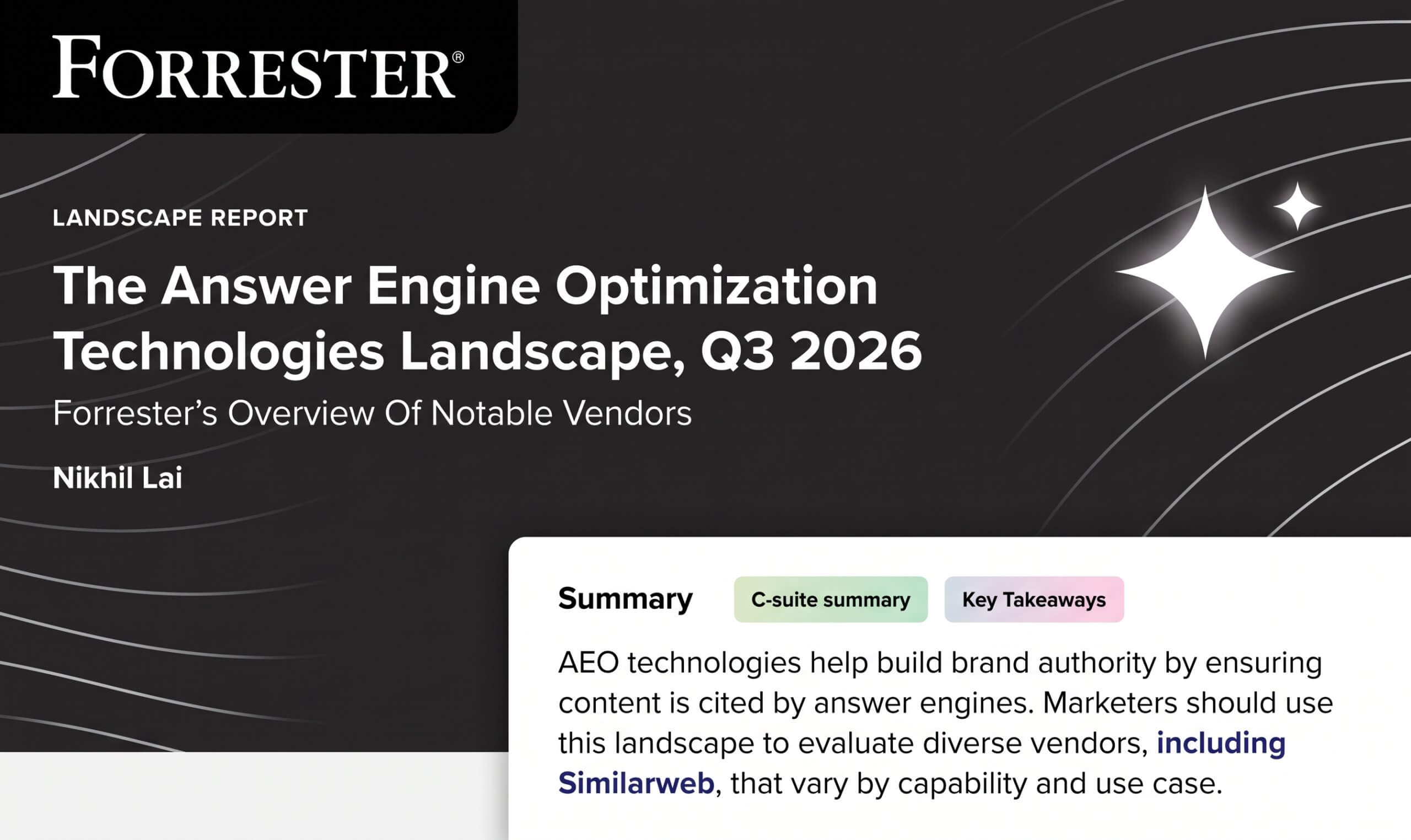
Similarweb Named in Forrester's Answer Engine Optimization Technologies Landscape, Q3 2026
Anthropic IPO: What Claude's Web and App Data Show
Here are two ways you can get started with Similarweb today!
