The Top 100 Most Visited Websites in the World (August 2026)
by Shai Belinsky10 Min.
Sep 17, 2026
 Research Intelligence
Market presence is about how loud your brand’s voice is, and who’s listening.
For marketing leaders, growth strategists, and research pros, it’s a must-know. Your market presence reflects how much influence you hold in your space.
And when that presence is strong, three things happen:
That visibility leads to trust. That trust leads to sales. And just like that, you’re setting the pace.
So, how do brands pull it off?
With the right market research, the right tools, and a strategy that doesn’t rely on guesswork. Let’s break down what market presence means, what drives it, and how to grow it using real data and insights.
Market presence is about being noticed, remembered, and preferred, a combination of visibility, credibility, and competitive muscle that puts your brand front and center.
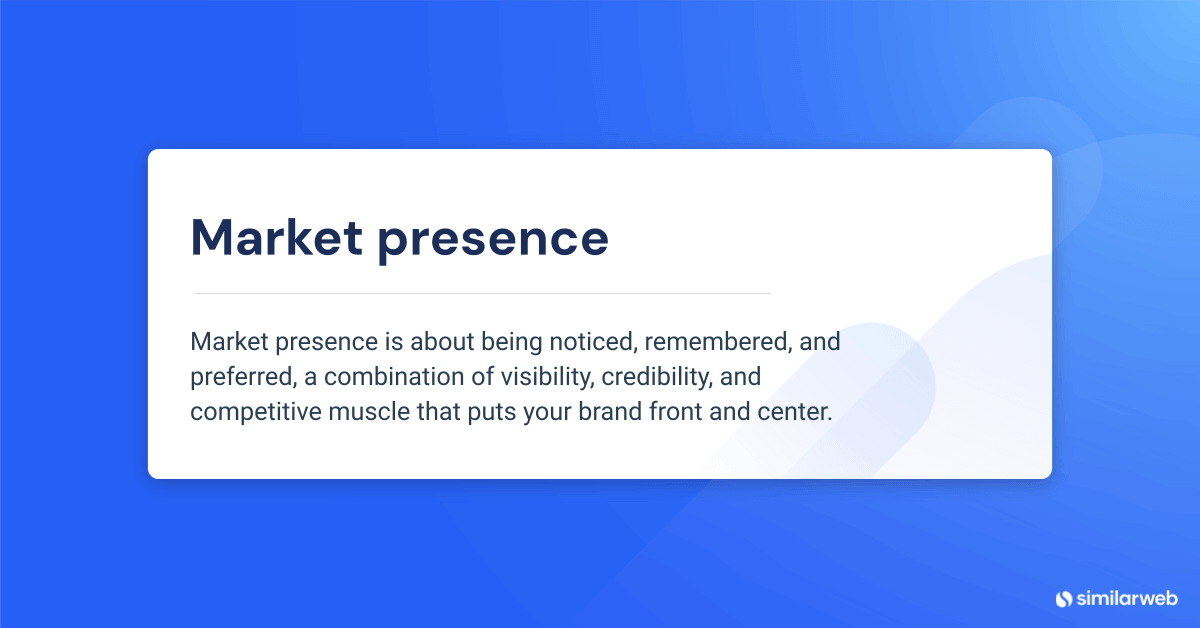
So, what does market presence mean?
It’s the sum of how recognized your brand is, how often it shows up where your audience hangs out, and how effectively it stacks up against the competition. In short, it’s your brand’s footprint in the market, and how deep that footprint goes.
The four components of market presence:
This is ground zero. If people don’t know you exist, they’re not buying. Strong brand awareness means customers recognize your brand, remember what you offer, and trust you enough to click or buy.
How much of the pie are you actually eating? Your market share shows how your brand is performing relative to competitors and how much influence you have in your space.
Website traffic, organic search visibility, and social media reach all count. Your online presence needs to be strong because that’s where most people meet your brand first.
What makes you different? Whether it’s pricing, product innovation, or killer customer experience, your competitive positioning defines why a buyer picks you over the next guy.
Together, these four pillars shape your market presence. Nail them, and you’re not just in the game, you’re setting the pace.
Let’s talk examples.
Apple. Amazon. Nike. These aren’t just brands – they’re full-blown ecosystems. Their voice is instantly recognizable. Their presence spans every marketing channel, and messaging is consistent. Their dominance? Hard to miss. That kind of scale builds unshakable loyalty and a competitive moat few can cross.
But market presence isn’t just for the Fortune 100.
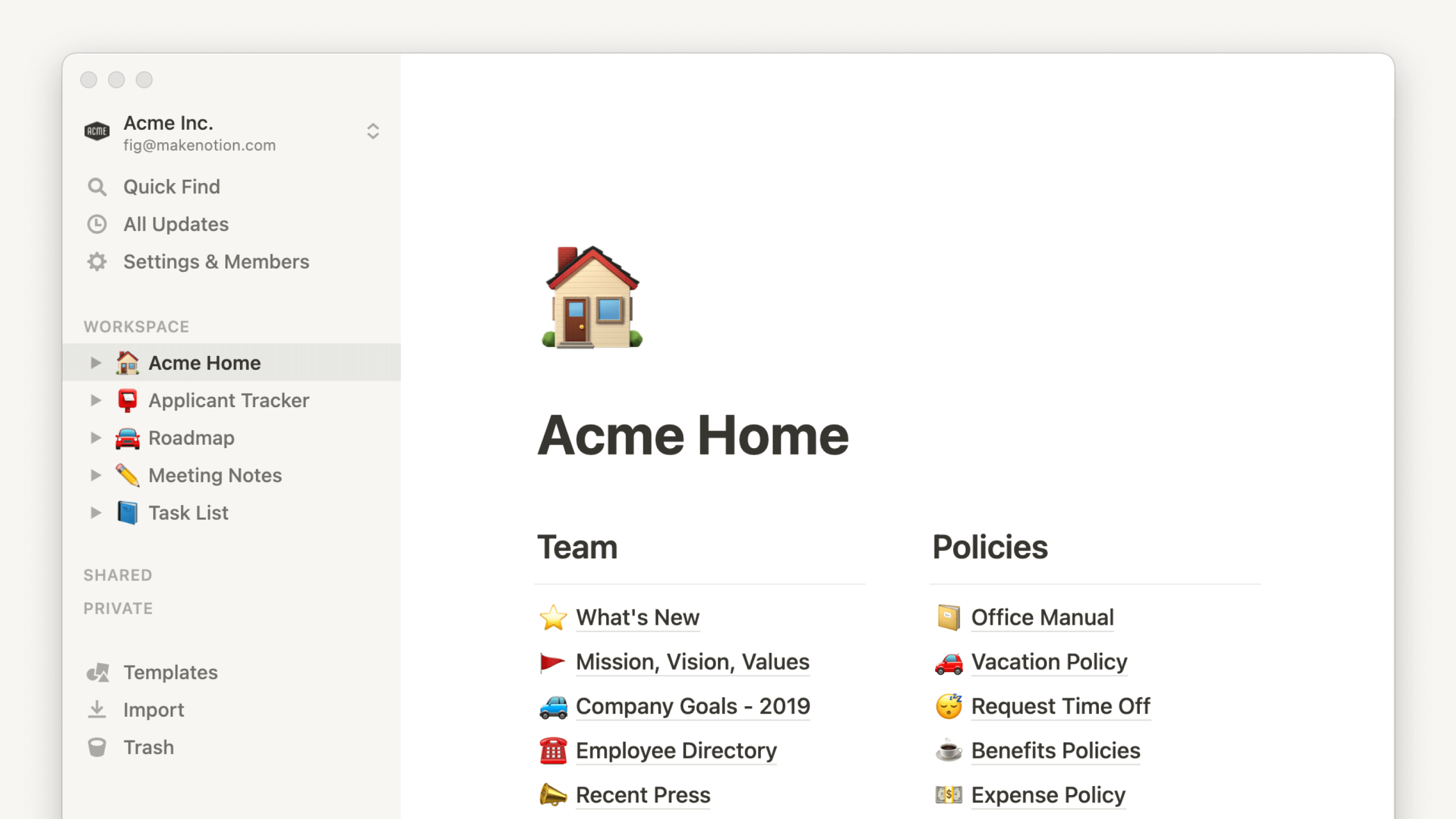
Take Notion. Launched in 2016, it didn’t waste time. It tapped into something more powerful: its users. With a focus on community-led growth and product flexibility, Notion’s marketing strategy encouraged users to build and share their own templates. It went viral, and it worked. User interest soared. Word of mouth took over.
We pulled 37 months of global traffic data using Similarweb’s Web Intelligence tool, and the trend speaks for itself.
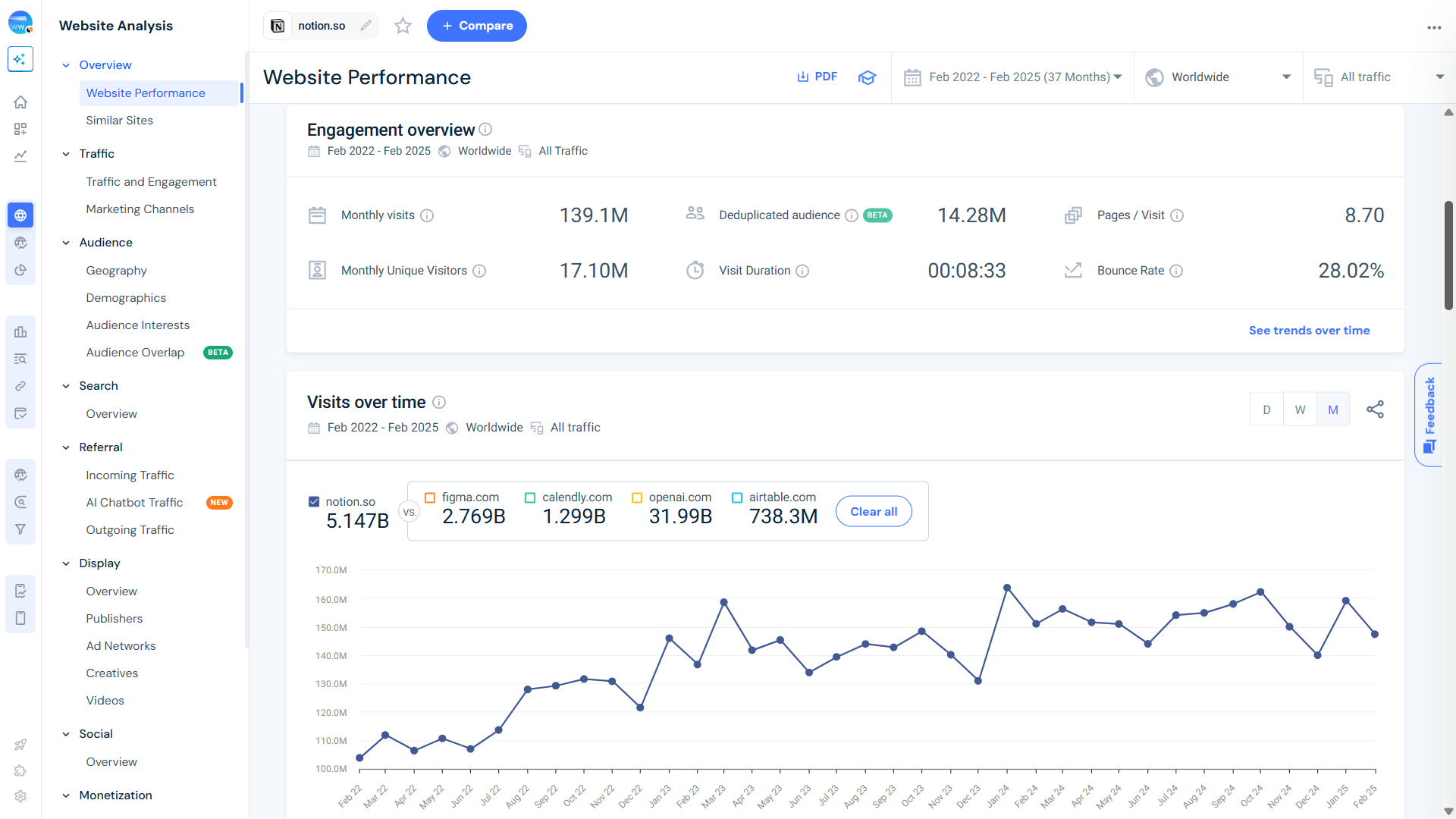
Traffic’s been climbing. Steadily. Month after month.
By positioning itself as the all-in-one workspace, Notion appealed to solo users, startups, and enterprise teams alike. That wide appeal gave it fast traction across multiple segments.
Trying to size up a brand’s online footprint? Market presence is built on hard numbers, website visits, search visibility, social buzz, and competitive benchmarks.
Here’s how to get a clear view of where you stand:
Start with the basics: how many people are coming to your site, where they’re coming from, and what they’re doing once they land.
For this, you’ll need to use Similarweb’s Website Analysis. Head over to the Engagement table to benchmark your performance against key rivals.
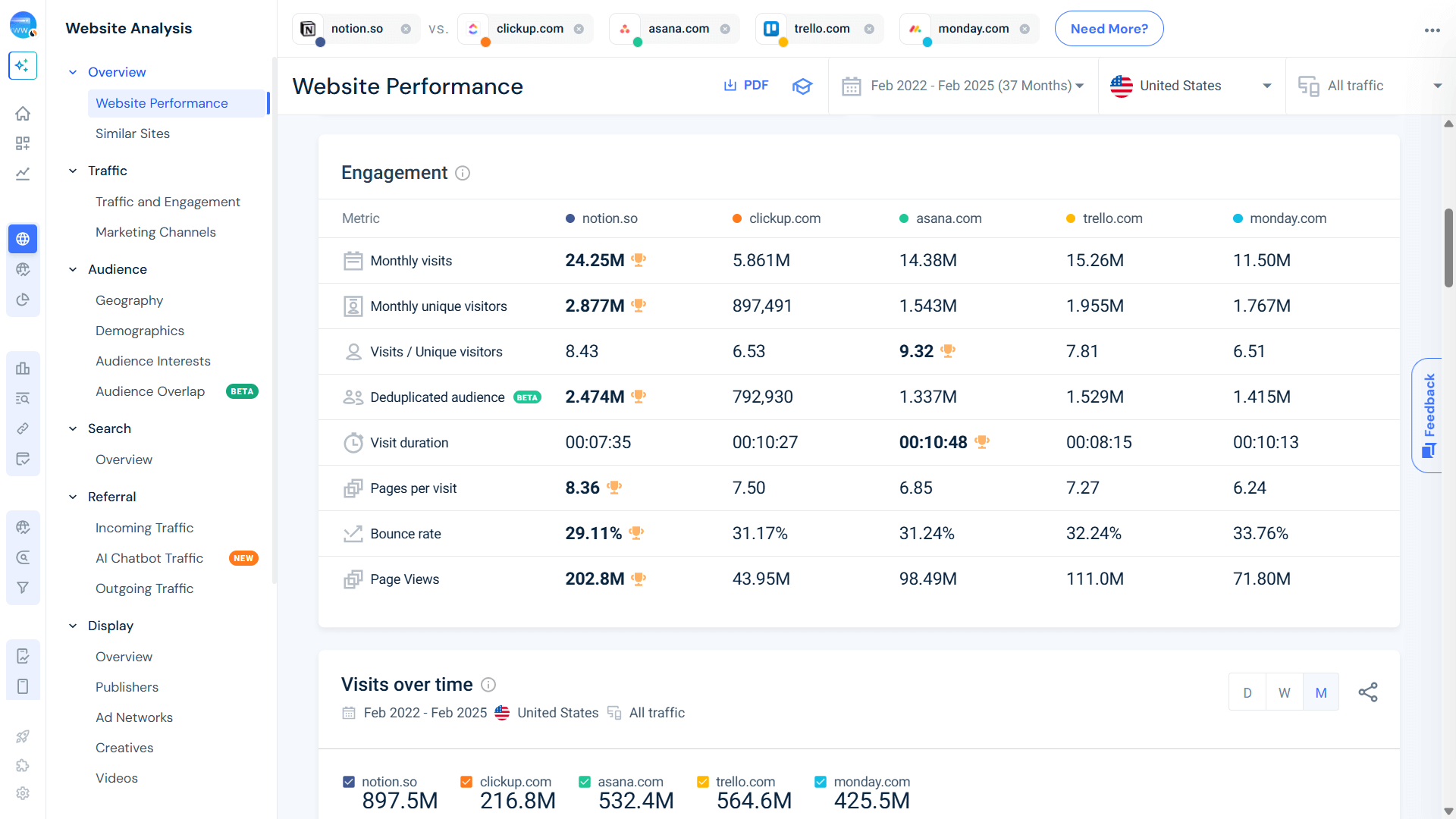
💡 Key insights:
Then go a step deeper, jump into Marketing Channels > Channel Traffic to review organic traffic data. This is where you can spot what’s working for their SEO teams, what’s not, and where they are bleeding (or gaining) traffic.
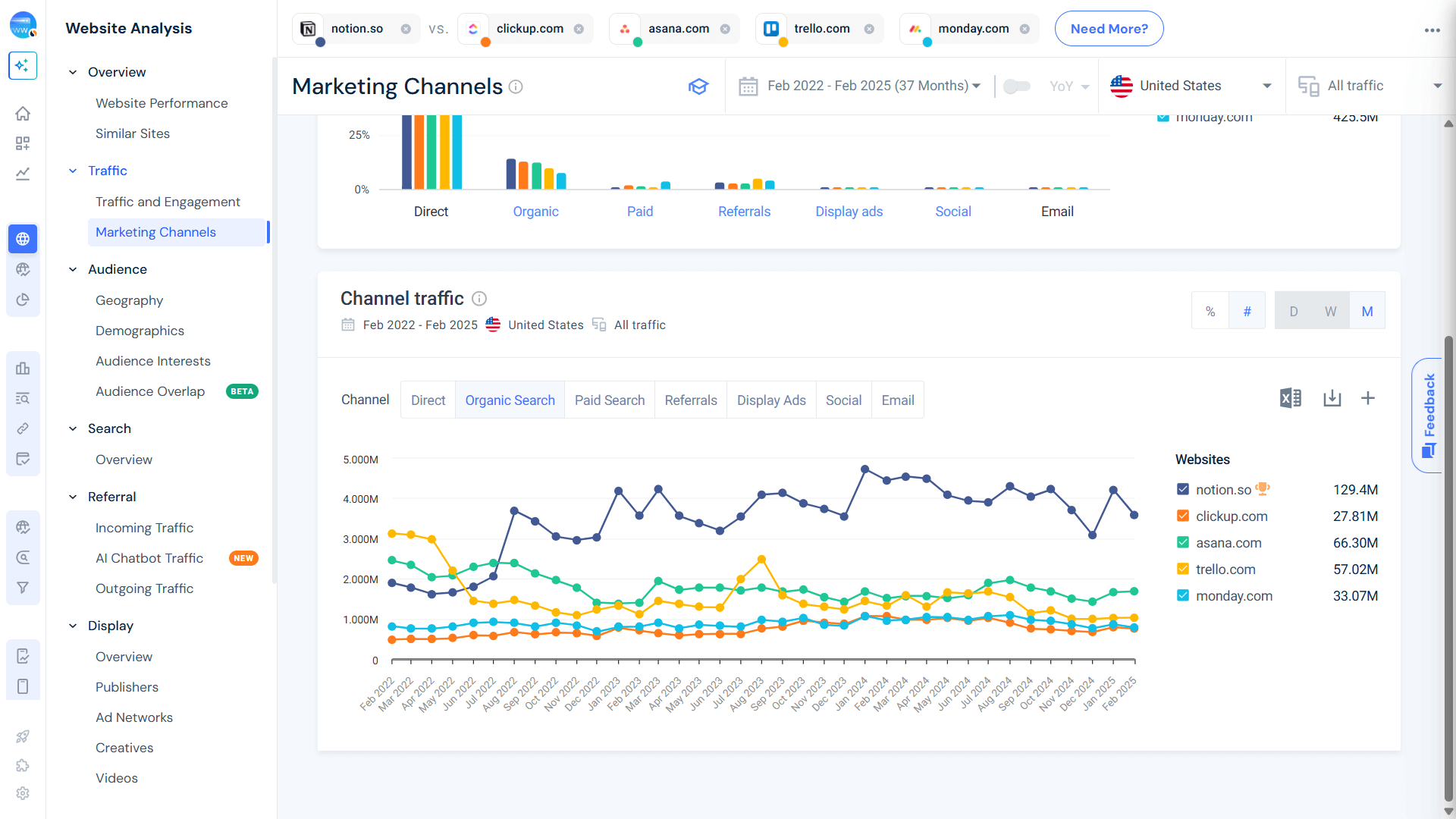
Use these findings to track behavior patterns, capitalize on traffic trends, and figure out where you can claw back market share.
This is one of the most telling indicators of online dominance. Use the Keywords feature, which can be found under the Keyword Research tool, to gauge where you stand. This area gives you a full readout of your keyword performance, including organic traffic and the non-branded terms bringing visitors to your door.
Look for three things:
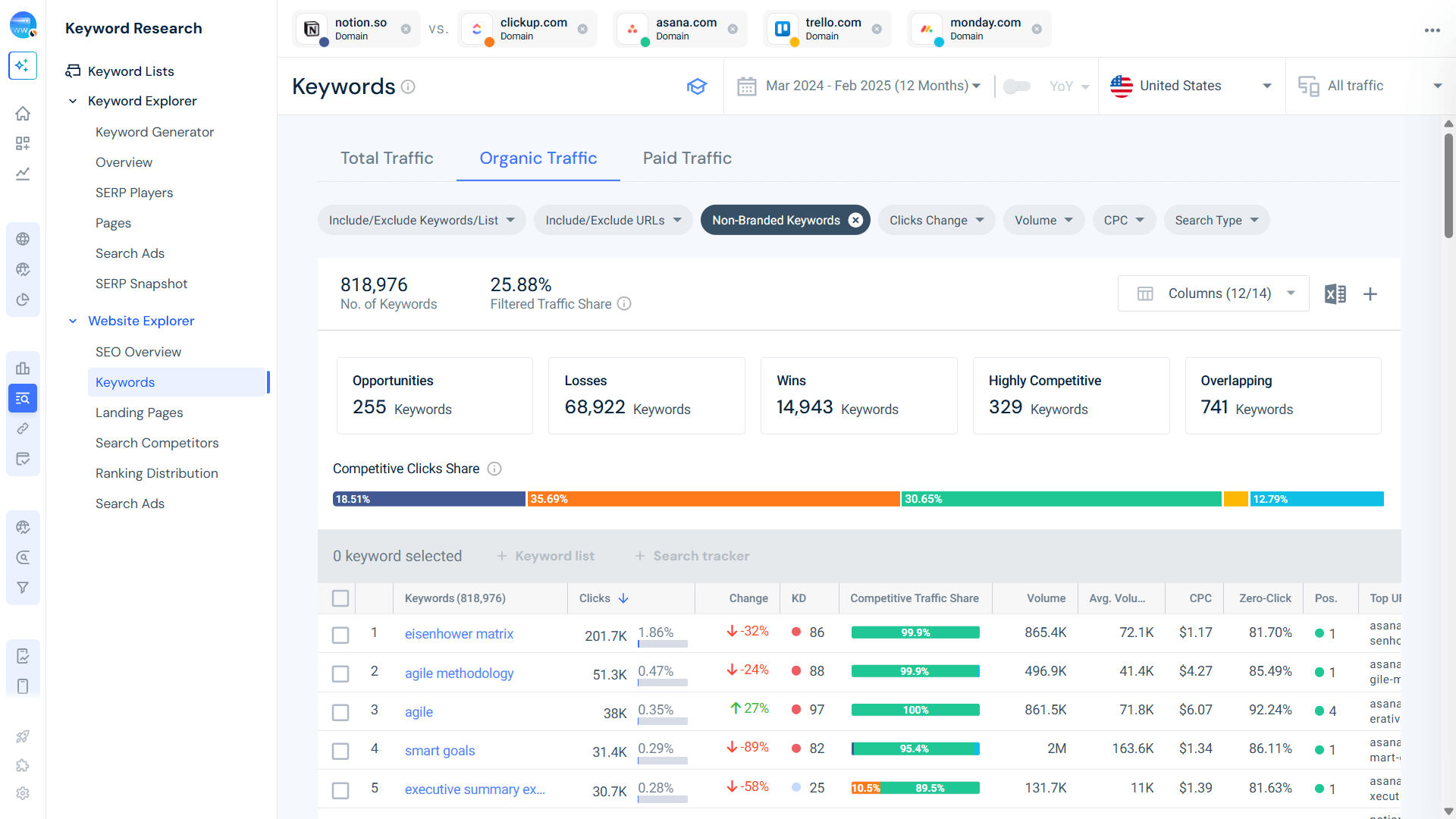
💡Key insights:
Tracking these metrics keeps your content strategy competitive, your SEO sharp, and your market presence on the offensive.
What are people saying about you – and where?
Monitor brand mentions across social platforms, forums, and reviews. This gives you a live pulse on public sentiment.
Think of it as your reputation dashboard. Volume and tone help you understand affinity, identify fans (and critics), and measure brand reach.
Pair it with social engagement metrics for a fuller picture of your visibility and value.
Now, stack yourself up against the competition.
In Website Analysis > Website Performance, you’ll find rankings at the global, national, and industry levels. Click the percentage (%) icon in the Total Visits section to get a detailed look at market share. This tells you how much of the traffic pie you’re eating, and how much you’re leaving on the table.
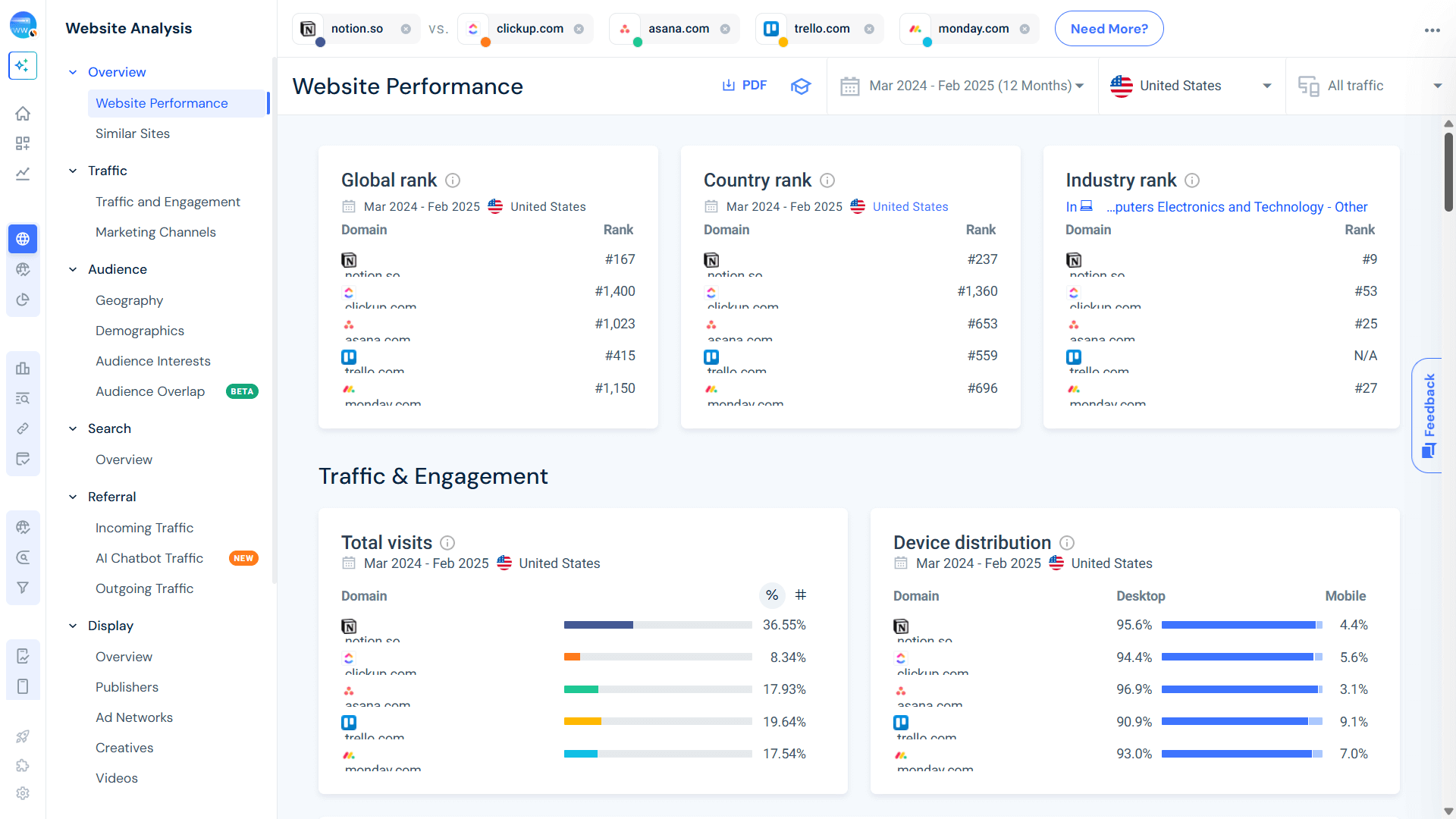
Make a comparison against your direct competitors to see any gaps and sharpen your market positioning.
These are practical, no-fluff strategies that your business can use to sharpen your edge and grow your presence, especially in a competitive market:
Want to know what’s working for your competitors? Reverse-engineer their wins as part of your competitive analysis.
Start by digging into Similarweb’s Popular Pages section. This lets you see exactly which content is pulling traffic for competing brands.
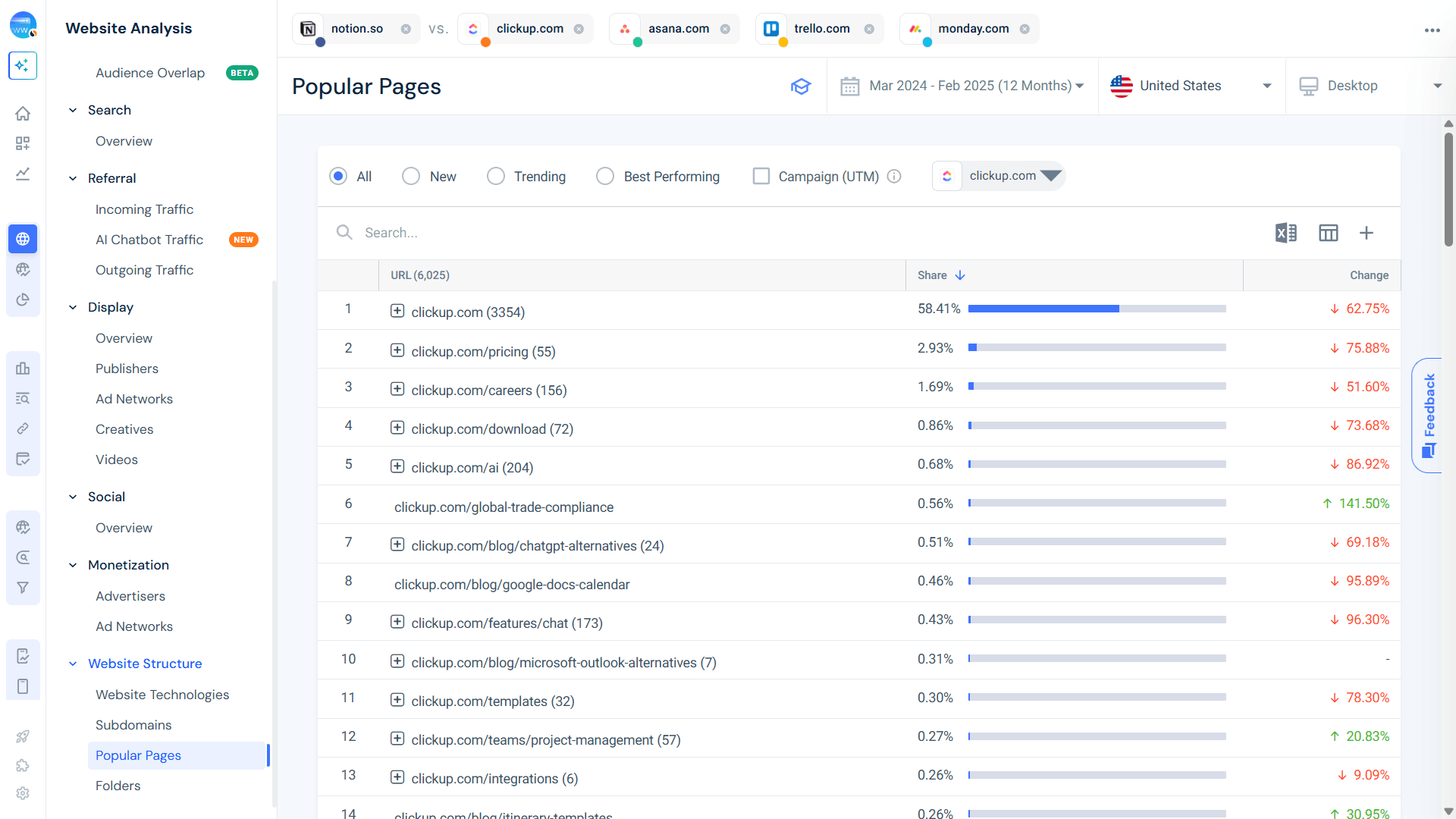
Maybe one of them is dominating thanks to a high-performing keyword you’re not even targeting yet. Or perhaps their blog is ranking for an emerging search trend you’ve overlooked.
With the right market research tool, you can turn this data into actionable insights that drive more visibility, more traffic, and yes, more market share.
Time to tighten up your SEO.
Head over to Keyword Research > Keywords and apply a non-branded keyword filter. In this example, we’ll look at “project management” to keep it industry-specific.
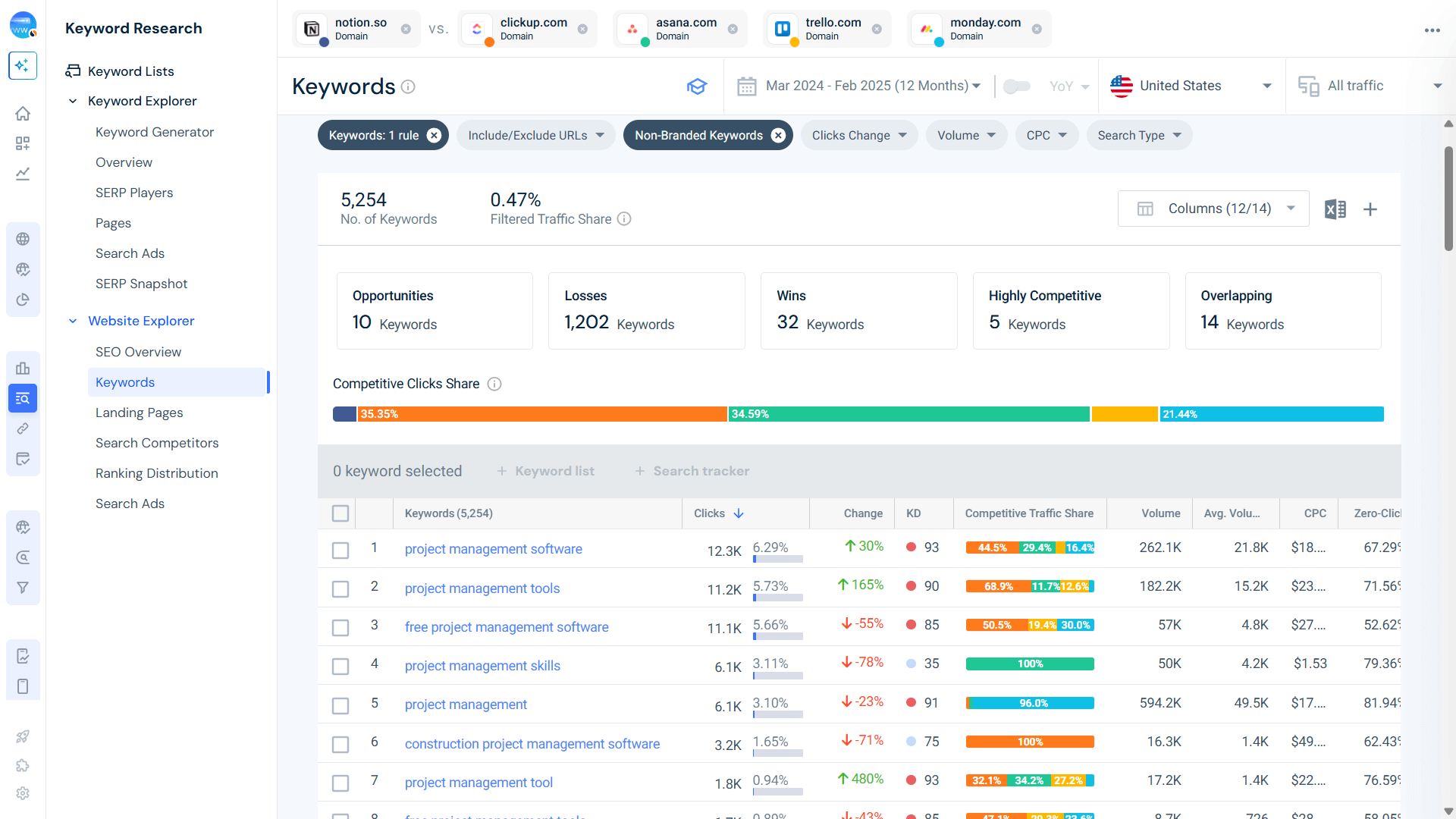
You’ll quickly see here that competitors like ClickUp and Asana are leading the charge. Why? Because their content strategy is focused on dominating that search space.
That’s your signal to course-correct.
The goal is to get more organic traffic, increase user interest, and establish a stronger online footprint.
Want reach without blowing your ad budget? Think partnerships.
Team up with influencers, niche publications, or brands that complement your product. When done right, these collaborations open the door to new audiences without starting from scratch.
Think co-branded webinars. Shared content series. Cross-promotions.
This is about trust by association, and it pays off in traffic, user participation, and long-term equity.
This is where brands win or lose.
Your tone, storytelling, and positioning need to show up everywhere, from your homepage to your social posts to that one-pager your sales team sends to prospects.
Start with a messaging audit. Does everything match with your brand’s mission and tone of voice? Are you reinforcing your core value proposition across every touchpoint?
Consistency builds trust. And in a competitive market, trust builds market share.
To lead the market, you need to stay in tune with it and keep leveling up.
That’s where Similarweb proves its value.
With the tools it offers, you can benchmark performance, spot gaps in your strategy, and zero in on market growth opportunities before your competitors even see them. Think of it as your data-powered cheat code for gaining market share.
So don’t just wait for trends, track them and adjust fast. And by layering in a rich market intelligence tool, you can see how your brand stacks up, understand what’s changing in your category, and make moves that keep you one step ahead.
How can companies use tools to track market performance?
Think of tools like Similarweb as your virtual radar. They scan your online presence, site traffic, keyword rankings, and social engagement and surface the data that matters. Use them to spot trends, plug performance gaps, and fine-tune your online strategy in real time.
Why does competitor benchmarking matter so much in strategy?
Benchmarking shows you exactly where you stand, who’s outperforming you, where you’re gaining ground, and what you’re missing. It’s your competitive cheat sheet. Use it to double down on your strengths, fix the weak spots, and change your strategy with precision.
How does SEO influence market visibility?
Traffic is not the only concern when you’re doing real SEO. It’s how people find you, learn about you, and decide if you’re worth their time. Nailing the right keywords means your brand shows up when it counts. That visibility drives organic growth, improves credibility, and carves out space for your brand at the top of the funnel and the top of the market.
How do partnerships help grow market share?
The right partnership can open doors you didn’t even know existed. Whether it’s influencers, media brands, or complementary businesses, strategic alliances let you reach new audiences fast. Joint campaigns, co-branded content, cross-promos, they all work to build trust, stretch your reach, and turn borrowed credibility into bottom-line growth.
What’s the best way to keep your brand message consistent?
Say the right thing, everywhere. That means tight messaging, a clear tone, and brand-aligned visuals across all channels. Brand guidelines and regular audits help ensure consistency and alignment at every touchpoint.

by Roie Gortler
Senior Product Marketing Manager
With 15+ years in product marketing, strategy, branding, and PR, Roie has driven growth at top agencies and tech firms through product launches and go-to-market strategies.
Contact us to set up a call with a market research specialist