

Progressive Muscle Relaxation. im Vergleich zu PMR - Progressive Muscle Relax Nutzung und Statistiken
SETTINGS & FEATURES
• This app includes all exercise forms of PMR.
• select BEGINNER, ADVANCED or EXPERIENCED mode
• select to practice lying down or sitting
• adjust volume of voice, music & nature sounds
• set duration for tension (3-10 sec)
• set pause lengths for relaxation (10-40 sec)
• with / without Intro / Outro
• the total runtime is displayed after each selection
• set timer to continue music / nature sounds
• 5 music tracks & 17 nature sounds
• combine 2 nature sounds simultaneously
ABOUT PMR & CONTENT OF THE APP
Edward Jacobson's Progressive Muscle Relaxation (PMR) - also called Deep Muscle Relaxation (DMR) - is a scientifically recognized relaxation method that helps to get into a state of deep relaxation through muscle tension and relaxation. PMR is a - scientifically proven - very effective relaxation method. It is recommended by doctors and therapists for many symptoms that are mostly stress-related, such as:
• tensions
• migraine or headache
• inner unrest
• sleep disorders
• back pain / pain
• states of excitement,
• anxiety and panic attacks
• high blood pressure
• psychosomatic complaints
• burnout
• stress and much more
With regular practice it is getting easier and easier to get into deeper relaxation states. If you have enough practice with the long form of PMR (Basic Form: 17 Muscle Groups), you can switch to the Short Forms with 7 and 4 Muscle Groups and finally to the mental form: Body Scan. Then you can relax your body just mentally.
ALL COMMON 4 FORMS OF PMR
• Basic Form (17 muscle groups)
• Short Form I (7 muscle groups)
• Short Form II (4 muscle groups)
• Mental Form (Body Scan)
for BEGINNER, ADVANCED and EXPERIENCED are taught and practiced in this app. This provides a total of 12 complete versions of the PMR.
BASIC FORM: 17 MUSCLE GROUPS
1. Right hand and forearm
2. Right upper arm
3. Left hand and forearm
4. Left upper arm
5. Forehead
6. Upper cheek part and nose
7. Lower cheek part and jaw
8. Neck
9. Chest, shoulders and upper back
10. Abdominal
11. Buttocks and pelvic floor
12. Right thigh
13. Right lower leg
14. Right foot
15, 16, 17 (-> left side)
SHORT FORM I: 7 MUSCLE GROUPS
1. Right hand, forearm, and upper arm
2. Left hand, forearm and upper arm
3. Forehead, cheek part, nose and jaw
4. Neck
5. Chest, shoulders, back, abdominal, buttocks and pelvic floor
6. Right thigh, lower leg and foot
7. Left thigh, lower leg, and foot
SHORT FORM II: 4 MUSCLE GROUPS
1. Both hands, forearms and upper arms
2. Face and neck
3. Chest, shoulders, back, abdominal, buttocks and pelvic floor
4. Both thighs, lower legs and feet
MENTAL FORM: BODY SCAN
Guided relaxation through the whole body, starting from the face to the feet. This guide is the last stage of the PMR, in which the perception is directed to individual parts of the body without tensing them. The relaxation is now only mental. Soothing imaginations will help you.
MUSIC & NATURE SOUNDS
You can choose between 5 relaxing music tracks and 17 nature sounds. The volume levels can be adjusted individually. If desired, music and sounds can also be used alone (without voice) to relax or fall asleep.
OUTRO: FOR SLEEPING / WITH RETURN
At the end of the exercises, there is an Outro for falling asleep or with return, which can also be omitted.
DURATION OF TENSION & PAUSES FOR RELAXATION
Select your preferred duration for tension and relaxation between the muscle groups.
TIMER FUNCTION
After the end of the exercise an unlimited time for the music and nature sounds can be set so to deepen your relaxation.
NOTE
This app can and should be used offline (flight mode).
- Apple App Store
- Bezahlt
- Gesundheit und Fitness
Rang speichern
- -
Your doctor or health professional may have introduced you to progressive muscle relaxation (PMR) as part of a therapy. Our app helps you to go through PMR sessions by yourself.
Our PMR app guides you through a complete PMR session. It enables you to focus solely on your tension and relaxation. It tells you, by voice and in writing, what you need to do at what time within each exercise. Our three-dimensional model shows you how to tense and relax which muscles. The app leads you through a complete program and frees you from counting exercises, their timing and their sequence.
Choose your own rhythm by selecting the duration of the tension and relaxation phases yourself, as well as the number of iterations for each exercise. This allows you to vary between a 3-minute short session and a long relaxation program lasting a quarter or half an hour.
Our app offers you a selection of pleasant voices to guide you through your PMR session. You can adapt the pace and the pitch of voices, or load further voices through the Settings app. We explain exercises in detail to beginners, using speech and visual demonstrations. Advanced users may reduce the announcements to a minimum. You may play music during your session if that sooths you.
We aim at making our PMR app accessible to the visually impaired through voice over. If you are affected and use voice over, please let us know how this works for you and how we can further improve in this direction.
Progressive muscle relaxation (also progressive relaxation (PMR) or deep muscle relaxation) developed by Edmund Jacobson is a relaxation technique that involves learning to monitor the tension in specific muscle groups by first tensing each muscle group. This tension is then released, as attention is directed towards the differences felt during tension and relaxation. The individual muscle parts are tensed in a certain order. The concentration of the person is directed to the alternation between tension and relaxation and to the sensations associated with these different states. The aim of the procedure is to lower the muscle tension below the normal level due to improved body awareness. Over time, the person should learn to induce muscular relaxation whenever they want to. Relaxing the muscles can reduce signs of physical restlessness or excitement, such as palpitations, sweating or tremors. In addition, muscle tension can be traced and loosened, thus reducing pain.
PMR is often used in behavioral therapy, such as the treatment of anxiety disorders, where it is used as part of a systematic desensitization treatment. Good results can also be achieved for high blood pressure, headaches, migraines, chronic back pain, sleep disorders, and stress.
The first few sessions are free of cost. Later on, we will ask you for a contribution in the form of a subscription. If you cannot yet decide to subscribe at that point, we will finance further cost-free sessions with advertisements. We recommend a subscription, though, as ads may disturb your concentration. Subscriptions are not renewed automatically, but you may start a new subscription at any time. If you opt for a subscription, we do not collect any data from you, and the purchasing data is only handled by the Apple App Store. If you opt for ads, ad providers may collect certain data from you through Google Ads, as described in Google's privacy policy.
Excerpts of this text originate from Wikipedia.
- Apple App Store
- Kostenlos
- Gesundheit und Fitness
Rang speichern
- -
Progressive Muscle Relaxation.vs. PMR - Progressive Muscle Relax Ranking-Vergleich
Vergleichen Sie Progressive Muscle Relaxation. den Ranking-Trend der letzten 28 Tage mit PMR - Progressive Muscle Relax
 Progressive Muscle Relaxation.- -
Rang
Progressive Muscle Relaxation. im Vergleich zu PMR - Progressive Muscle Relax Ranking im Ländervergleich
Vergleichen Sie Progressive Muscle Relaxation. den Ranking-Trend der letzten 28 Tage mit PMR - Progressive Muscle Relax
Alle Kategorien
Gesundheit und Fitness
Stellen Sie mit unserer kostenlosen Testversion Vergleiche mit jeder Website an
Progressive Muscle Relaxation. VS. 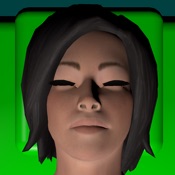 PMR - Progressive Muscle Relax
Januar 10, 2026